

OTTAWA — U.S. President Donald Trump’s renewed talk of annexing Greenland has triggered growing concern among Canada, Denmark, and NATO allies, raising profound questions about Arctic security, diplomacy, and the future of long-standing transatlantic alliances.
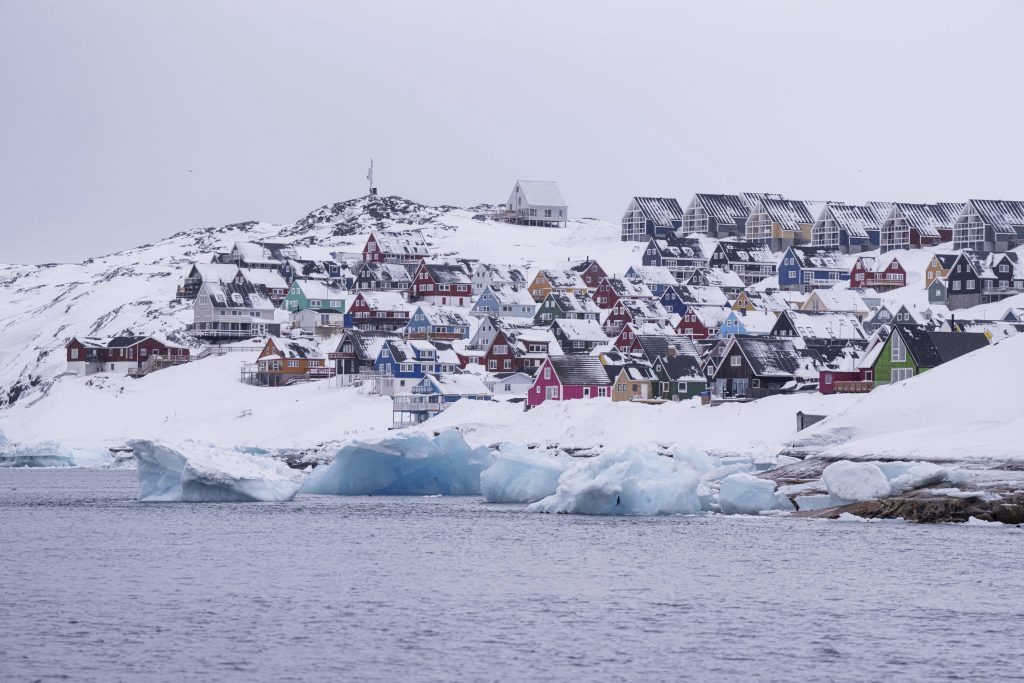
Greenland, a self-governing territory within the Kingdom of Denmark and home to roughly 56,000 people—most of them Inuit—has emerged as a focal point of global strategic interest due to its location, climate-driven accessibility, and vast untapped natural resources. While Denmark controls its foreign policy, Greenland’s own government has repeatedly stated that its future will be decided solely by its people, firmly rejecting any notion of U.S. annexation.
From a security perspective, Greenland has played a central role in North American and North Atlantic defence since the Second World War. The island forms part of the strategically vital GIUK Gap—the maritime corridor between Greenland, Iceland, and the United Kingdom—used by NATO to monitor Russian naval activity. The United States already operates the Pituffik Space Base in northwestern Greenland under long-standing defence agreements with Denmark, supporting missile warning, missile defence, and space surveillance operations for both the U.S. and NATO.
Experts note that an American takeover would provide no additional security benefit beyond what already exists through alliance arrangements. Instead, such a move could destabilize NATO itself. Danish leaders have warned that any attempt by the U.S. to seize Greenland would effectively fracture the alliance that has underpinned North Atlantic security for more than seven decades.
Climate change is further intensifying interest in the Arctic. Thinning ice is opening potential new shipping routes and increasing competition among major powers, including Russia and China, both of which are expanding their Arctic presence. Greenland is also rich in rare earth elements—critical to high-tech manufacturing, clean energy, and defence industries—making it strategically attractive as Western nations seek to reduce reliance on China for these materials.
For Canada, the issue carries direct national security and diplomatic implications. Greenland lies just off Canada’s northeastern coast, and Ottawa is set to open a new consulate in Nuuk as part of its updated Arctic foreign policy. The move is aimed at strengthening research, commercial ties, and diplomatic engagement in the North, while reinforcing Canada’s role in Arctic governance and security.
Canadian officials have emphasized that Arctic stability depends on respect for sovereignty, international law, and alliance cooperation. Analysts warn that any unilateral U.S. action against Greenland would be a “seismic event,” forcing Canada to reassess every aspect of its relationship with Washington and fundamentally altering the security landscape of the Arctic and the North Atlantic.
As rhetoric around Greenland escalates, Canada and its allies are watching closely, underscoring that the future of the Arctic must be shaped through diplomacy and partnership—not coercion.