

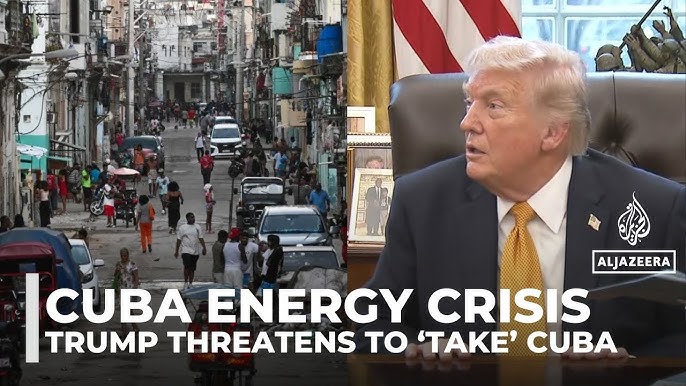
U.S. President Donald Trump suggested the United States could potentially “take Cuba” as the island struggled with a nationwide power collapse amid a deepening energy crisis.
Speaking at the White House, Trump said he has long heard discussions about the United States taking control of Cuba and described it as a potential “honour.” He said the United States could either “free it” or “take it,” adding that different options were possible.
Trump did not clarify whether he was referring to a political or military action when asked by reporters.
His comments came as Cuba experienced a widespread blackout after the country’s electrical grid collapsed. Officials said the power failure occurred even though the operating power units showed no immediate technical faults.
Cuba’s national electricity operator said efforts were underway to restore power across the island. By Tuesday afternoon, electricity had returned to about 55 per cent of customers in the capital city of Havana, along with hospitals and health centres.
Power was also gradually restored in parts of western and central Cuba, although full recovery was expected to take time.
Cuba has faced frequent nationwide outages in recent years due to its aging power infrastructure and a severe shortage of fuel. The country relies heavily on imported oil to generate electricity.
Cuban officials say the crisis has worsened because of U.S. economic pressure that has effectively cut off oil supplies to the island. Critics inside Cuba have also blamed long-term underinvestment in the country’s power system.
The shortages have affected daily life across the island. Fuel prices have surged on the unofficial market, reaching as high as $9 per litre, making it extremely expensive for most Cubans to operate vehicles.
The energy crisis has also forced the government to introduce emergency measures, including shorter school hours, reduced transportation services and delays to sporting and cultural events.
Hospitals have reduced some services, while garbage collection has slowed due to a lack of fuel for trucks.
Residents say blackouts have become a regular part of life. Many people are now preparing for outages by storing water, using wood-burning stoves or installing small solar systems when possible.
The crisis has also disrupted tourism and air travel. Several international airlines have suspended flights to Cuba due to shortages of aviation fuel.
Air Canada recently announced it would temporarily halt flights to the island until November because of fuel shortages.
Internet traffic in Cuba has also sharply declined during the blackout, reflecting the widespread disruption caused by the power outage.
The current situation follows a major shift in regional politics earlier this year when the United States disrupted oil shipments from Venezuela to Cuba after a military operation removed Venezuelan leader Nicolás Maduro from power.
Cuban officials have condemned U.S. actions, saying the economic pressure is causing severe hardship for ordinary citizens.
Cuban President Miguel Díaz-Canel said the country has not received oil deliveries for three months and described the impact of the blockade as severe.
Despite the tensions, Cuban officials say they have held discussions with the United States in an attempt to address some of the issues affecting relations between the two countries.