

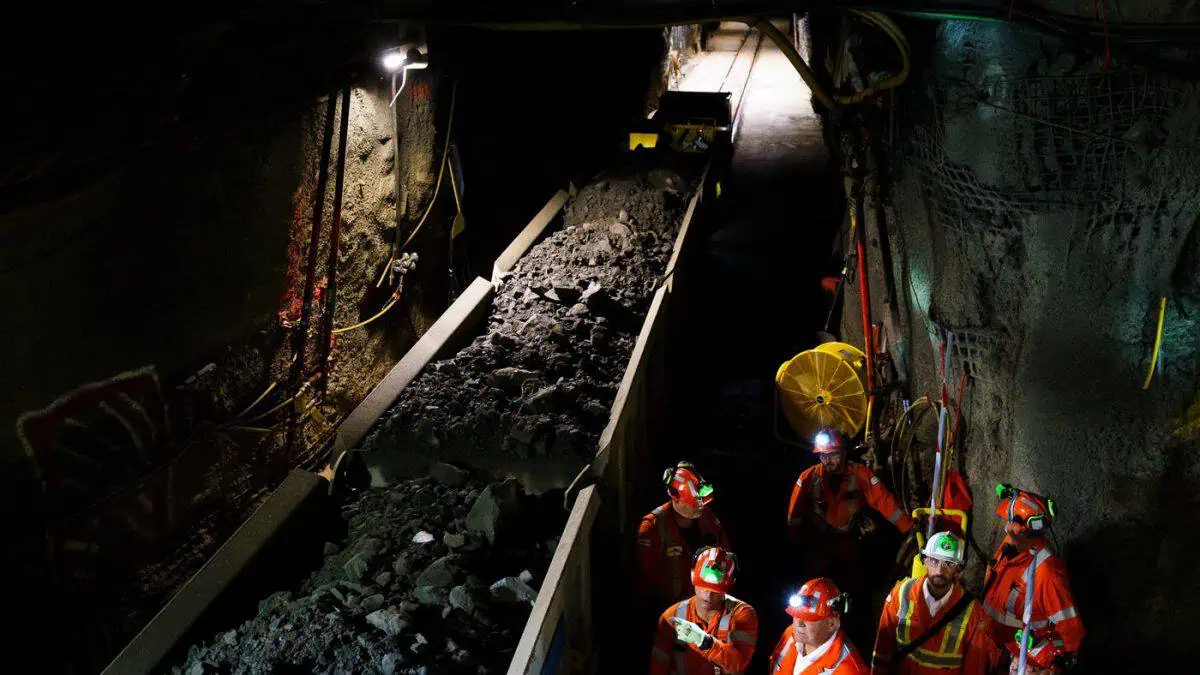
SUDBURY, ON — While U.S. President Donald Trump’s escalating trade war has created anxiety in Ontario’s steel and auto communities, Sudbury is showing little sign of panic—even as Premier Doug Ford threatens to use Ontario’s critical minerals as leverage against Washington.
Greater Sudbury Mayor Paul Lefebvre says the region is better protected than many Ontario communities because its key exports, nickel and copper, are not currently subject to U.S. tariffs. He argues Washington can hardly afford to target them.
“They need our nickel,” Lefebvre said, suggesting tariffs would ultimately hurt American manufacturers themselves.
The United States relies heavily on critical minerals for defence, automobiles, electronics and advanced manufacturing while trying to reduce its dependence on China. America has only one operating nickel mine, in Michigan, and its nickel is processed in Sudbury.
Ontario is Canada’s leading nickel-producing province, while the United States remains a major customer for Canadian nickel exports.
Ford recently warned that Ontario could consider restricting critical mineral exports—and even electricity supplies to U.S. states—if Trump continues imposing heavy tariffs on Canadian industries.
During a visit to Sudbury’s mining sector, Ford emphasized just how important Ontario’s resources are to Washington, declaring that Trump “needs it desperately.”
Sudbury business leaders, however, say it remains largely “business as usual.” Instead of concentrating on the dispute with Washington, the region is working to attract investment, expand international markets and strengthen economic ties outside the United States.
Experts say Sudbury’s relatively diversified economy also gives it greater protection than Ontario communities heavily dependent on a single industry such as steel or automotive manufacturing.
The message from Sudbury is therefore one of confidence rather than fear: Ontario’s nickel is not simply another Canadian export caught in a trade war—it is a strategic commodity the United States itself needs.
And that dependence could give Ontario one of its strongest bargaining cards if the Canada-U.S. trade dispute continues.