

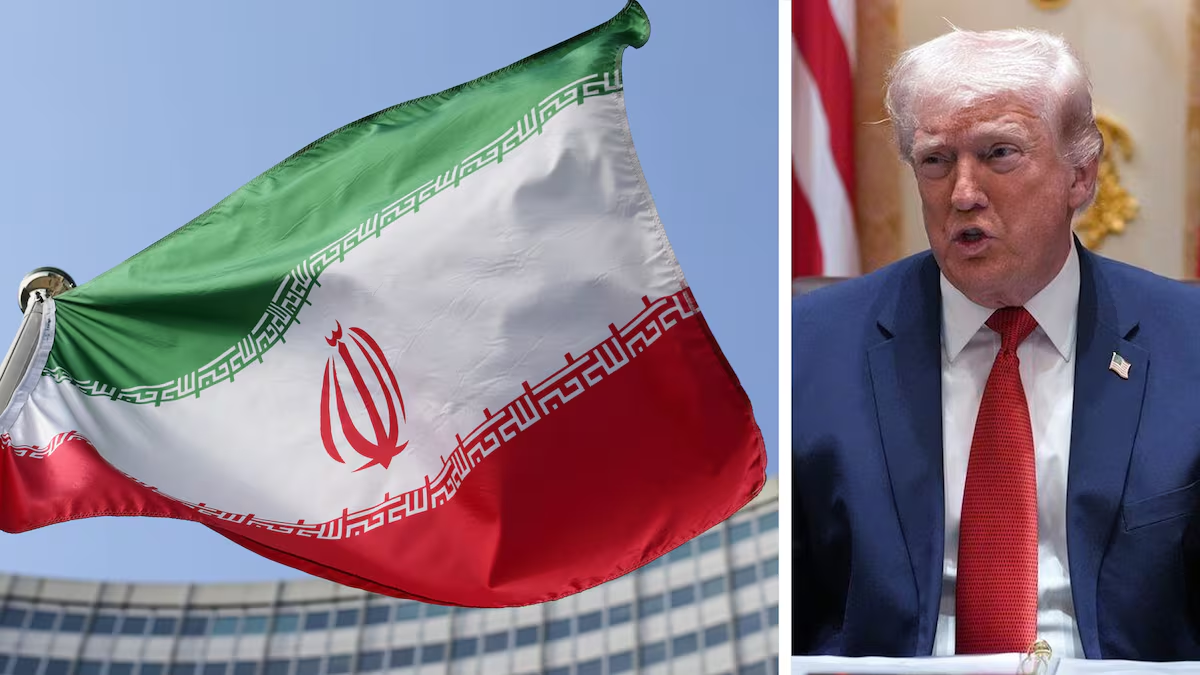
U.S. President Donald Trump has extended the deadline for military action against Iran’s energy infrastructure, signaling a temporary pause in escalation even as tensions in the Middle East continue to intensify. The extension pushes the deadline for Iran to reopen the strategically vital Strait of Hormuz to April 6, amid ongoing conflict and stalled ceasefire efforts.
The move comes at a time when both the United States and Iran appear locked in a deepening standoff, with neither side showing willingness to compromise. While Washington continues to press for restrictions on Iran’s nuclear and missile programs and an end to its support for regional armed groups, Tehran has rejected ceasefire proposals and instead advanced its own set of conditions, including demands tied to sovereignty and reparations.
Iran has tightened its control over the Strait of Hormuz, a critical global shipping route through which roughly 20 per cent of the world’s oil and natural gas passes. Reports indicate that Iran is selectively allowing ships through while blocking others perceived to be linked to U.S. or Israeli interests. Gulf officials and maritime analysts have described the situation as a “de facto toll system,” with some vessels reportedly paying fees for safe passage.
The escalating tensions have had immediate global economic consequences, with oil prices surging sharply. Brent crude has climbed above $100 per barrel, fueling concerns of a broader energy crisis that could impact fuel costs, food prices, and global supply chains.
On the military front, the situation remains volatile. The United States has deployed additional forces to the region, including Marines aboard the USS Tripoli and paratroopers from the 82nd Airborne Division, signaling preparedness for potential escalation. At the same time, Israel has intensified its operations, sending more troops into southern Lebanon and launching strikes targeting Iranian infrastructure and military assets.
Iran, meanwhile, has continued missile attacks targeting Israel and other regional areas, while maintaining its grip on key waterways. The conflict has resulted in significant casualties across multiple countries, including Iran, Israel, Lebanon, Iraq, and among U.S. forces, underscoring the widening scope of the war.
Diplomatic efforts remain uncertain and fragmented. The U.S. has reportedly used intermediaries such as Pakistan to communicate a proposed framework for negotiations, while Egypt has also attempted to facilitate dialogue. However, Iranian officials have denied engaging in formal talks, describing indirect communications as insufficient for meaningful negotiation.
As both sides harden their positions, the temporary pause announced by Trump offers only limited relief in an increasingly unstable situation. With the extended deadline approaching and military activity intensifying across the region, the risk of a broader conflict—and its global economic fallout—continues to grow.