

Ongoing trade tensions between Canada and the United States are creating economic instability for businesses and households, with experts warning that uncertainty could persist for months. As Canada awaits U.S. President Donald Trump’s trade policy announcement on April 1 and prepares for the 2026 review of the Canada-U.S.-Mexico Agreement (CUSMA), concerns about potential tariffs and economic disruption continue to mount.
Earlier this week, Canada secured a 30-day reprieve from new U.S. tariffs, providing short-term relief for businesses. However, economists remain cautious, warning that Trump’s mention of structuring a “final economic deal” suggests further trade negotiations and potential tariff threats.
“This uncertainty acts as a tax on businesses that can’t operate the way they normally would,” said Royal Bank of Canada chief economist Frances Donald, adding that investments may slow as companies wait for clarity.
Similarly, Derek Holt, an economist at the Bank of Nova Scotia, warned that the lack of a long-term resolution could lead to businesses delaying expansion plans and reducing hiring, impacting economic growth.
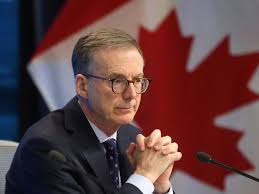
The Bank of Canada (BoC) is now faced with a difficult decision as it prepares to make its next policy rate announcement on March 12. If Trump implements tariffs in early March, analysts predict the central bank may be forced to aggressively cut interest rates to counteract potential economic slowdowns.
“Typically, they want to react based on evidence, not speculation,” said Desjardins Group chief economist Jimmy Jean. “But if a full-blown trade war erupts, the Bank of Canada may have no choice but to cut rates by more than 25 basis points.”
The BoC recently lowered its policy rate by 25 basis points to 3%, with Governor Tiff Macklem emphasizing that trade uncertainty complicates monetary policy decisions. If trade tensions escalate, the Canadian economy could shrink by up to 3% in the first year, according to central bank estimates.
With Canada’s economic growth projected at 1.8% for 2025, economists expect the Bank of Canada to ease interest rates further.
- BMO economists now anticipate 50 basis points of rate cuts by summer, revising their 2025 growth forecast from 1.9% to 1.7%.
- Rosenberg Research economist Robert Embree argues that Canada’s interest rates remain too high, even if tariffs are avoided.
“If trade tensions intensify, we may see a much more aggressive monetary response from the Bank of Canada,” said Embree.
With trade concerns looming, policymakers are exploring strategies to bolster Canada’s economy. Provincial leaders are advocating for the removal of interprovincial trade barriers, while Prime Minister Justin Trudeau is set to host a Canada-U.S. Economic Summit in Toronto this Friday. The event will bring together business and labor leaders to discuss long-term economic strategies and trade diversification.
“While Canada’s economic outlook has been weak in recent years, trade tensions have sparked renewed attention on policies that could define our economic future,” said Frances Donald.
As businesses and investors brace for Trump’s trade policy announcement and the Bank of Canada’s next move, all eyes remain on how Canada will navigate its economic future amid ongoing uncertainty.