

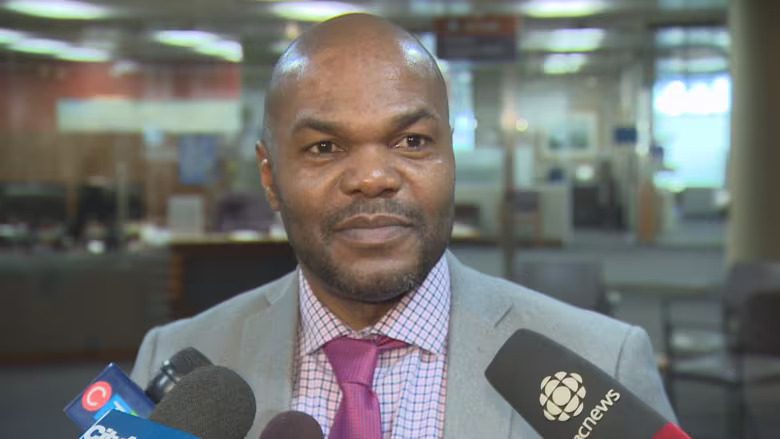
Ward 13 Councillor Chris Moise is under scrutiny after financial disclosures revealed that he received $10,800 in campaign contributions from senior employees of Fitzrovia Real Estate during the 2022 municipal election. While individual donations from corporate leaders are legal, concerns were raised after Moise supported a Fitzrovia project involving the construction of two apartment towers in the Moss Park area. Critics argue this presents a potential conflict of interest, while Moise insists his decisions are not influenced by donors.
Development Concerns
The project in question includes two 43-storey apartment towers at Sherbourne and Shuter streets, significantly larger than surrounding buildings. Some local residents, including Serguei Zernov and Pat Perkel, expressed concerns about the impact on the neighborhood, citing issues like increased shadowing, traffic, and rising rents. Zernov described the project as an “architectural abomination” and criticized the approval process, suggesting that the councillor did not fully consider community objections.
Corporate Donations Debate
Corporate and union donations have been banned in Toronto elections since 2009, but corporate leaders and their employees can still make personal donations. Duff Conacher, co-founder of Democracy Watch, criticized the practice, arguing that large individual donations from corporate executives still allow for potential influence. He called for a reduction in the maximum donation limits to limit the power of wealthy individuals in political campaigns. Conacher emphasized that even though individual donations are legal, they can still create a perception of undue influence, particularly when linked to major development projects.
Moise’s Response
Moise has firmly denied any influence from campaign donations on his decisions as a city councillor. He stated that he receives donations from a wide range of individuals, including those working in various industries, and that his support for the Fitzrovia project was based on its potential to address local housing needs. Fitzrovia’s CEO, Adrian Rocca, also defended the donations, asserting that they were made in a personal capacity with no connection to company interests.
The controversy surrounding Moise’s campaign funding has reignited calls for reform in election donation rules. Conacher, along with other critics, advocates for a significant reduction in individual donation limits, similar to Quebec’s cap of $100 annually, to minimize corporate influence. However, Ontario’s Ministry of Municipal Affairs and Housing has yet to commit to any changes, though it reviews election processes following each municipal election.
As Toronto prepares for future elections, the debate over campaign donations and corporate influence is likely to intensify, with residents and political watchdogs calling for stricter regulations to ensure transparency and accountability in the electoral process.