

A strong majority of Canadians who participated in a new poll say they approve of the federal government’s handling of the escalating trade conflict with the United States, as Ottawa and Washington impose new tariffs and trade negotiations remain suspended.
The poll attracted 4,339 responses, with 77.1 per cent, or 3,345 respondents, saying the Canadian government is handling the trade conflict well. Another 22.9 per cent, representing 994 respondents, disagreed.
The results represent a significant 54.2-percentage-point gap between the two sides, with approximately 3.4 respondents supporting the government’s approach for every respondent who opposed it.
The poll comes at a particularly tense time in Canada-U.S. relations following another escalation in tariffs between the two countries.
The United States imposed a 50 per cent tariff on $27.6 billion worth of Canadian goods effective Aug. 22. Canada responded by announcing that it would match the latest U.S. tariffs dollar for dollar and rate for rate through additional duties on American imports.
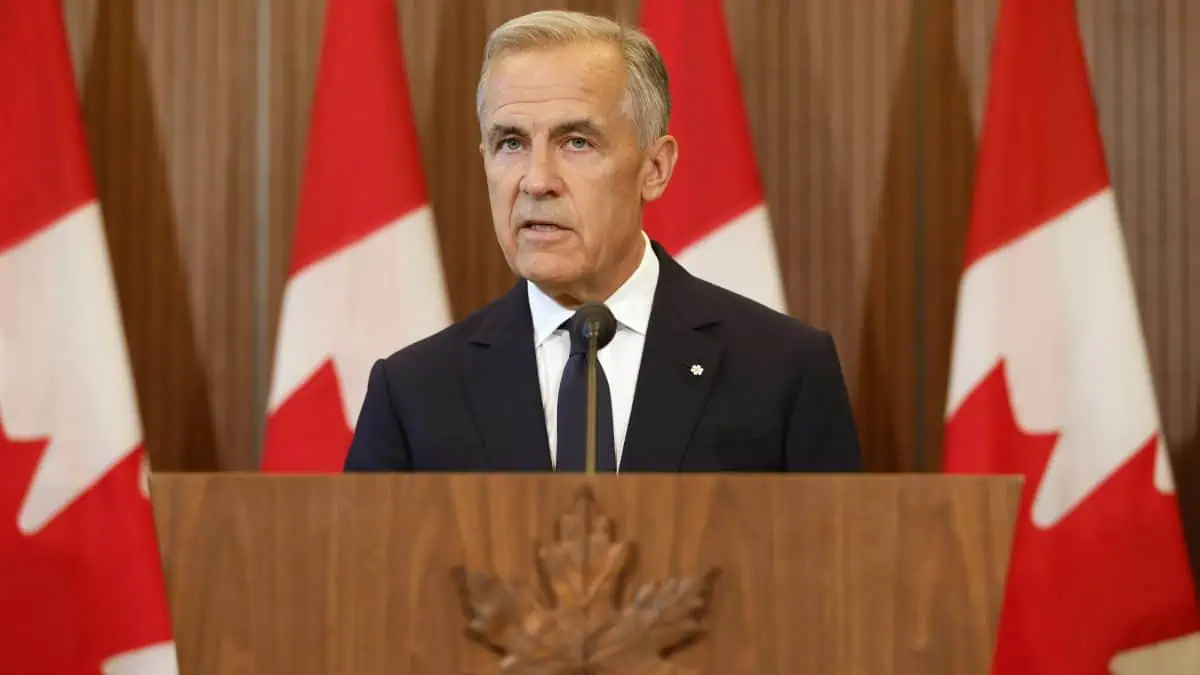
Prime Minister Mark Carney announced on Aug. 21 that Canada was suspending trade negotiations with the United States after last-minute changes to the proposed American terms. Carney described the revised conditions as “unfair” and “uneconomic” and said they raised serious questions about the reliability of any potential agreement.
The prime minister said Canada’s objectives remain focused on preserving tariff-free access to the U.S. market for the vast majority of Canadian businesses, substantially reducing American tariffs affecting strategic Canadian industries, protecting small and medium-sized businesses and maintaining Canada’s economic flexibility, independence and sovereignty.
Ottawa is now preparing another round of counter-tariffs scheduled to take effect at 12:01 a.m. on Sept. 8. The measures will cover approximately $27.6 billion in imports from the United States.
The counter-tariffs are expected to affect products in several major sectors, including steel and aluminum, dairy products, household appliances, agricultural equipment, pulp and paper, plastics and electronics. Depending on the product, tariff rates will be set at 15, 25 or 50 per cent to correspond with the applicable U.S. measures.
At the same time, the federal government has announced $7.5 billion in new and expanded assistance for Canadian workers and businesses affected by the trade dispute. The package includes measures aimed at improving business liquidity, encouraging market diversification and providing additional support to employers and workers facing tariff-related disruptions.
Carney has emphasized that the government intends to strengthen Canada’s domestic economy while expanding trade and economic relationships with countries outside the United States. He has also maintained that Canada will not accept a trade agreement simply to meet a deadline or end the dispute.
The poll results suggest that this approach has considerable support among those who participated, despite concerns about the potential economic consequences of a prolonged trade confrontation with Canada’s largest trading partner.
However, the poll asked only whether respondents believed the Canadian government was handling the trade conflict well. It did not measure public opinion on individual tariffs, the financial impact on Canadian households and businesses or specific elements of Ottawa’s negotiating strategy.
The poll was also not a scientific survey and represents only the views of people who voluntarily participated. Its results therefore should not be interpreted as representing the views of all Canadians.
Nevertheless, with more than three-quarters of participants supporting Ottawa’s handling of the dispute, the results indicate strong approval among respondents at a time when Canada-U.S. trade relations are facing one of their most serious periods of tension in recent years.