

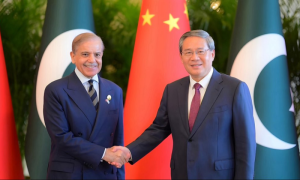
Prime Minister Shehbaz Sharif and Chinese Premier Li Qiang reaffirmed their commitment to expanding the China-Pakistan Economic Corridor (CPEC) on Thursday during what Shehbaz described as a “warm and most productive” meeting in Beijing. The talks, part of the Pakistani leader’s six-day visit to China following the Shanghai Cooperation Organisation summit, marked the formal launch of CPEC’s second phase.
According to Pakistan’s Press Information Department, both leaders agreed to advance work on CPEC 2.0, which includes five new corridors focusing on industrial cooperation, infrastructure, agriculture, information technology, and energy. Shehbaz pressed for early progress on major projects such as the Main Line-1 railway upgrade, the Karakoram Highway realignment, and the full operationalisation of Gwadar Port. He also invited Chinese firms to expand investment in Pakistan, highlighting opportunities in textiles, minerals, agriculture, and IT.
The two sides oversaw the signing of memorandums of understanding and agreements tied to CPEC’s development and other areas of cooperation, including science, technology, and media. The signing of the Joint Action Plan 2024–2029 was described as a key milestone in strengthening what both governments repeatedly called their “iron-clad, all-weather strategic cooperative partnership.”
Shehbaz expressed gratitude for China’s financial and political support, including the $3.4 billion loan rollover earlier this year that shored up Pakistan’s foreign reserves. He also announced plans to float Panda Bonds on the Chinese capital market and highlighted the success of a Pakistan-China business conference attended by hundreds of companies from both countries.
The Chinese leadership praised Pakistan’s economic reform agenda and reaffirmed Beijing’s support for Pakistan’s sovereignty and development goals. Premier Li described Pakistan as an “ironclad brother,” while President Xi Jinping, in an earlier meeting, pledged to strengthen cooperation in industry, agriculture, and mining, as well as to upgrade the Pakistan-China Free Trade Agreement.
As Pakistan and China prepare to celebrate 75 years of diplomatic relations next year, both leaders said CPEC would remain the central pillar of their partnership. Shehbaz called the project “a defining pillar” of Pakistan’s economic development and said its second phase would unlock new opportunities for industrial relocation, special economic zones, and regional connectivity.