

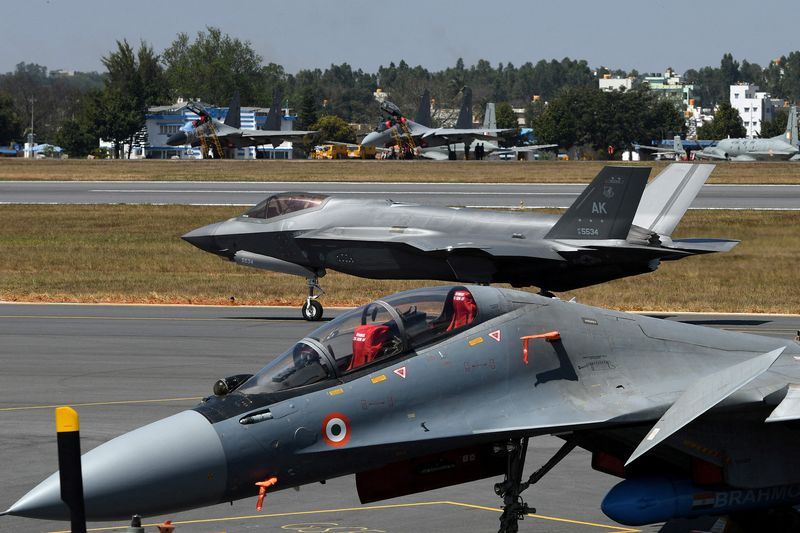
Moscow: Russia has thrown down a tantalizing gauntlet, offering India a fast track to produce the cutting-edge Su-57 fifth-generation fighter jet using the same infrastructure already churning out Su-30 MKI aircraft. With a renewed push in February 2025 ahead of Aero India 2025, Russia’s state arms giant Rosoboronexport is dangling a trio of irresistible prospects before the Indian Air Force (IAF)—a deal that could reshape India’s aerial arsenal and leave the U.S., under Donald Trump, scrambling to respond.
First floated in February, the “Su-57E” project promises ready-made aircraft deliveries, joint production on Indian soil, and a helping hand for India’s own fifth-gen ambitions. Now, a March 7 report from Russia’s TASS news agency doubles down: the Su-57E could roll off the same Hindustan Aeronautics Limited (HAL) lines that have already built over 220 of India’s 260 Su-30 MKI jets under Russian license. “If India says yes, we can flip those factories to Su-57E production in no time,” Rosoboronexport declared in a statement that day.
The Eurasian Times breaks it down: Russia’s package is a triple threat. First, local Su-57E production—leveraging HAL’s proven Su-30 MKI setup—could catapult India into the fifth-gen club fast. Second, an upgrade program for the Su-30 MKI fleet, integrating Indian-made missiles to juice up its lethality, with Russian tech and Indian muscle working in sync. Third, a lifeline for India’s Advanced Medium Combat Aircraft (AMCA) program, offering expertise to turbocharge New Delhi’s homegrown stealth fighter dreams.
The Su-57E isn’t just a jet—it’s a statement. Rosoboronexport says it’s ready to modernize India’s Su-30 MKI fleet, marrying Russian engineering with Indian innovation for a deadlier edge. With China’s J-20 and Pakistan’s looming fifth-gen threats, the timing couldn’t be sharper. But the ball’s in India’s court: does it seize this Moscow lifeline—or hold out for its own AMCA, still years from takeoff?
Meanwhile, Trump’s reaction looms large. After pitching the F-35 to India in February, the U.S. now faces a Russian gambit that plays to India’s “Make in India” ethos—something Washington’s tight tech controls can’t match. As Modi’s government weighs its options, the skies over South Asia—and the geopolitical chessboard—hang in the balance.