

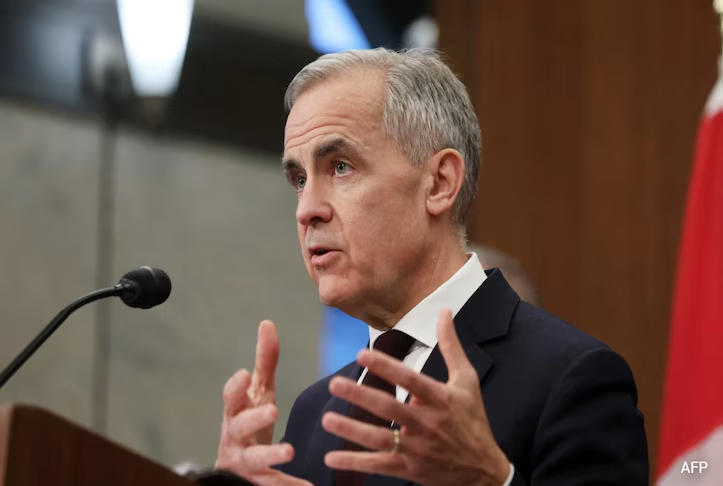
OTTAWA — Prime Minister Mark Carney on Thursday called on the United States to “respect Canadian sovereignty” following reports that U.S. State Department officials held meetings with representatives linked to Alberta’s separatist movement.
Carney’s comments came in response to a report by the Financial Times that leaders of the Alberta Prosperity Project (APP) have met with U.S. officials in Washington three times since April. The group recently received approval to collect signatures for a referendum that would seek to make Alberta an independent country — a vote that could take place as early as this fall, though current polling suggests separatists would likely lose.
“I expect the U.S. administration to respect Canadian sovereignty,” Carney told reporters while standing alongside provincial leaders, including Alberta Premier Danielle Smith.
The issue gained additional attention after U.S. Treasury Secretary Scott Bessent appeared to express sympathy for Alberta’s independence push during an interview with a right-wing U.S. broadcaster, describing Alberta as “a natural partner” for the United States due to its resource wealth and independent political culture.
In response, a senior U.S. State Department official told Agence France-Presse that the department “regularly meets with civil society types” and that “no commitments were made” during the reported meetings.
Carney said U.S. President Donald Trump has not raised Alberta separatism — or Quebec sovereignty — in any direct discussions with him.
While Quebec’s independence movement has a long and organized history, Alberta separatism has traditionally been a fringe issue. However, political tensions have intensified in recent years, fueled by resentment toward federal climate policies and perceived opposition to Alberta’s oil and gas sector under former prime minister Justin Trudeau.
Smith reiterated her position that Alberta should remain part of Canada, saying she supports a “sovereign Alberta, within a united Canada,” and emphasized that any foreign interference in a potential referendum would be unacceptable. She also suggested that advancing new pipeline infrastructure to the Pacific coast could ease separatist sentiment — though such proposals face strong opposition from British Columbia and First Nations communities.
B.C. Premier David Eby earlier this week described reported meetings between Alberta separatists and U.S. officials as “treasonous.”
According to a Jan. 23 Ipsos poll, 28 per cent of Albertans currently say they would vote in favour of independence.