

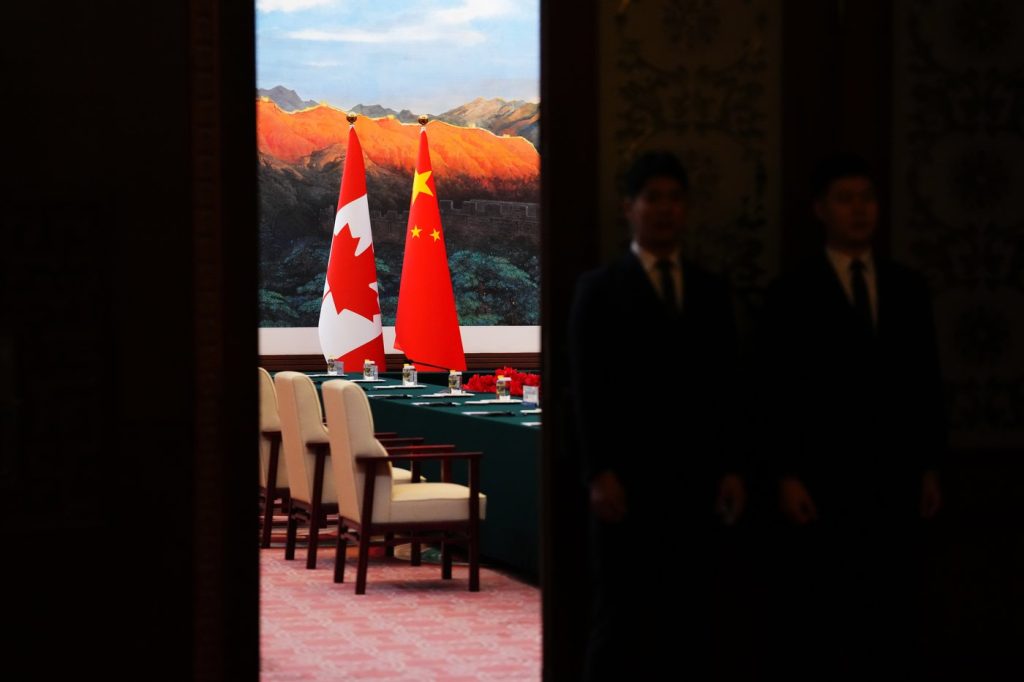
Concerns over transparency, foreign interference and the protection of diaspora communities are intensifying after Jenny Kwan called on the federal government to publicly release details of a policing agreement between Canada and China.
In an open letter addressed to Gary Anandasangaree and Anita Anand, Kwan said Canadians deserve to know what information is being shared between the Royal Canadian Mounted Police and China’s Ministry of Public Security of the People’s Republic of China under a confidential memorandum of understanding.
Kwan raised concerns about whether sufficient safeguards exist to prevent information shared under the agreement from being used against dissidents, journalists, human rights activists or members of diaspora communities living in Canada.
She also questioned what oversight mechanisms are in place to ensure compliance with the Canadian Charter of Rights and Freedoms and Canadian privacy laws.
The agreement reportedly covers co-operation on issues such as transnational crime, cybercrime, narcotics investigations, corruption cases and law enforcement collaboration between the two countries.
However, the federal government has refused to publicly release the full text of the agreement, citing confidentiality requirements for law enforcement partnerships with foreign governments.
The issue has become increasingly sensitive amid ongoing concerns over alleged foreign interference activities linked to Beijing and reports of transnational repression targeting Chinese, Hong Kong, Uyghur and Tibetan communities living abroad.
Kwan said many Canadians, particularly within diaspora communities, are deeply concerned about any policing arrangement involving Chinese authorities given previous allegations of intimidation campaigns, unofficial overseas police stations and surveillance activities connected to the Chinese government.
Public Safety Canada has stated that any information sharing under the agreement must comply with Canadian laws and that the memorandum does not create legally binding obligations.
Federal officials say the agreement is governed by principles of sovereignty, equality and mutual benefit, and that the RCMP follows strict internal procedures to ensure compliance with Canadian legal and human rights standards.
The government also stated that countering foreign interference and transnational repression remains a priority for the RCMP and forms part of risk assessments surrounding international co-operation.
Despite those assurances, Kwan argues that secrecy surrounding the agreement is undermining public trust and creating uncertainty among affected communities.
She is now calling on Ottawa to:
- Publicly release the full text of the memorandum of understanding
- Explain all oversight, accountability and privacy protection mechanisms
- Brief Parliament and relevant committees about the agreement
- Consult directly with diaspora communities concerned about foreign intimidation and surveillance
The controversy follows growing public debate in Canada over balancing international law enforcement co-operation with national security, civil liberties and protection for vulnerable communities.
Critics argue that while combating organized crime and cybercrime is important, Canadians must be confident that co-operation with foreign governments — particularly those accused of human rights abuses — does not compromise democratic freedoms or public safety within Canada.