

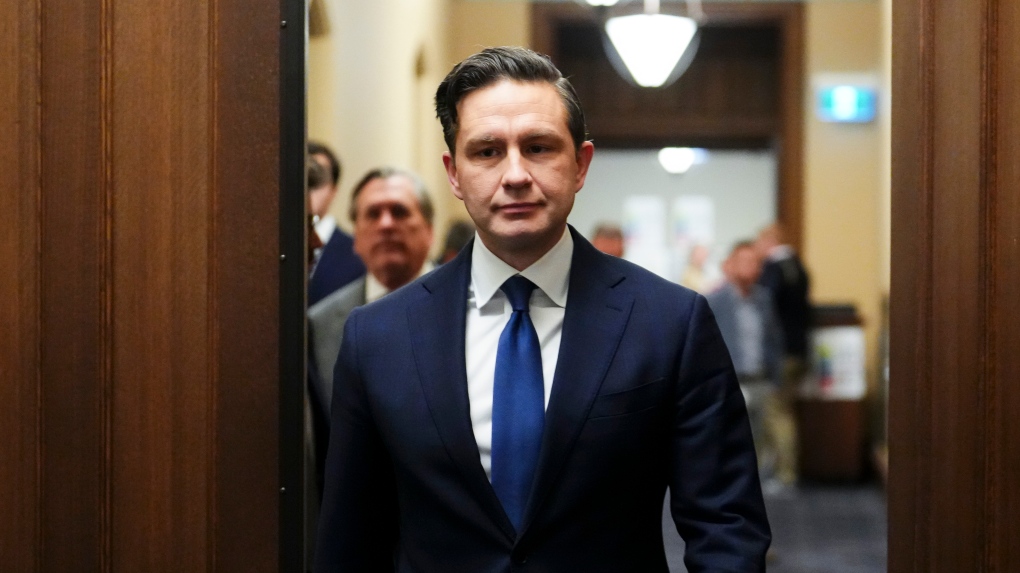
In a stunning break from tradition, the Conservative Party of Canada announced Tuesday that journalists will be barred from traveling with Leader Pierre Poilievre on his campaign plane and bus during the upcoming federal election. The decision, revealed by national campaign director Jenni Byrne, marks a significant departure from decades of practice where media embeds have been a staple of major party campaigns, offering unparalleled access to candidates vying to lead the country.
Historically, major broadcasters like CBC/Radio-Canada, CTV, and Global, alongside print outlets and The Canadian Press, have embedded journalists with party leaders during elections, as seen with past Conservative leaders Andrew Scheer and Erin O’Toole in 2019 and 2021. These embeds allowed reporters to document campaign events, engage with staff, interact with voters, and provide in-depth coverage, often from remote regions or “news deserts” where local media presence has dwindled due to newsroom closures.
Byrne justified the move by citing rising travel costs and advancements in digital access. “Costs for travel have risen considerably. At the same time, so has the capacity for digital and remote access to public events,” she wrote in a letter to media outlets. She added that there will be “no media contingent on a Conservative bus or plane,” though the party encourages journalists to attend public events. Media outlets have traditionally paid substantial fees—often tens of thousands of dollars—to travel with leaders, a cost Byrne’s statement suggests the party is unwilling to accommodate.
The Conservatives promised to make the campaign “one of the most accessible and transparent in recent memory,” offering two-to-three-day advance notice of Poilievre’s event locations, “full conferencing services” for remote questioning, and a party-controlled “professional-grade feed” of announcements for broadcasters unable to send crews. However, this setup likely means local and regional reporters will dominate coverage, rather than the federal politics journalists who typically follow the campaign trail.
The decision has drawn sharp criticism from opponents. A Liberal Party spokesperson told , “Why does Pierre Poilievre’s team feel like they need to hide him from the media and Canadians in the next federal election? He’s the wrong choice at the wrong time.” Meanwhile, the Liberals, NDP, and Bloc Québécois have confirmed they will continue the tradition of allowing journalists to travel with their leaders.
Poilievre’s relationship with the media has long been contentious. He has publicly criticized outlets like CBC News, denounced members of the Parliamentary Press Gallery, and pledged to defund the CBC if elected. This latest move further strains his rapport with the press as the election looms, expected in late April or early May following Prime Minister Mark Carney’s anticipated call.
The Conservatives’ decision comes at a pivotal moment. After months of leading in public opinion polls, the party has seen its support wane amid U.S. President Donald Trump’s tariff threats and provocative “51st state” comments, which have shifted the political landscape. As Poilievre pivots his messaging—recent internal surveys suggest the party is adapting its strategy—the lack of media access could limit scrutiny of his campaign, raising questions about transparency at a critical juncture.