

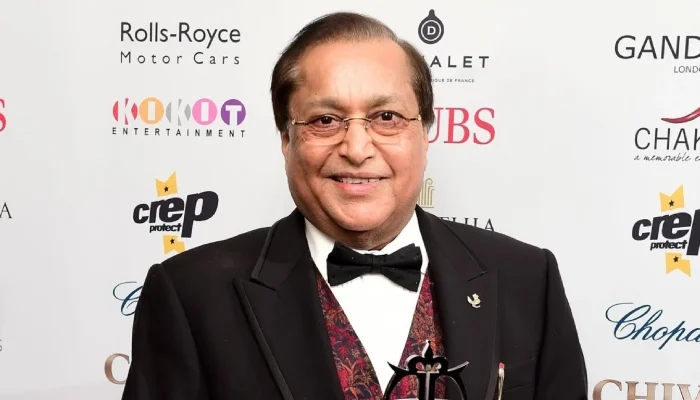
A high-profile legal battle is unfolding in the United Kingdom after Pakistan-born Sikh businessman and Conservative peer Lord Rami Ranger launched a court challenge against the British government over the revocation of one of his royal honours.
Lord Ranger, who was born in Gujranwala before building a successful business career in Britain, is seeking to overturn the decision that stripped him of his Commander of the Order of the British Empire (CBE), arguing that the action was unfair, disproportionate, and harmful to freedom of expression.
The 78-year-old entrepreneur was awarded the CBE in 2016 in recognition of his contributions to business and efforts to promote community cohesion across the United Kingdom. However, in December 2024, an official notice published in the London Gazette announced that the honour had been cancelled following recommendations made through the government’s honours forfeiture process.
While Lord Ranger retains his Member of the Order of the British Empire (MBE), the removal of the higher-ranking CBE honour has reportedly caused significant personal distress and reputational damage.
At the centre of the dispute are a series of social media posts and conduct complaints that led to investigations by parliamentary authorities and the honours forfeiture system.
One matter involved findings by the House of Lords regarding allegations that Lord Ranger harassed and bullied journalist Poonam Joshi. Separate controversy arose from social media comments in which he criticized supporters of the Khalistan movement and made remarks that attracted criticism from various communities.
The honours forfeiture process ultimately concluded that his conduct had brought the British honours system into disrepute, leading to the withdrawal of the CBE.
Lord Ranger strongly disputes that conclusion and argues that he has become a victim of what he describes as “cancel culture.” Through his legal team, he contends that the decision-making process was fundamentally flawed and violated his rights.
The case is directed against the government of Prime Minister Keir Starmer because responsibility for the Honours Forfeiture Committee falls under the authority of the Cabinet Office, which operates under the Prime Minister’s oversight.
During proceedings before the High Court in London, Lord Ranger’s legal representatives argued that the committee relied upon allegations and evidence that were never properly presented to him, depriving him of a fair opportunity to respond.
His lawyers further claimed that the committee failed to follow its own procedures, provided irrational reasoning, and improperly interfered with his right to freedom of expression.
A key aspect of the case relates to Lord Ranger’s outspoken opposition to the Khalistan movement, which advocates for an independent Sikh homeland. His legal team maintains that some of the statements cited against him were part of a broader political debate and should be protected as free speech.
Government lawyers have defended the decision, arguing that the forfeiture of honours involves moral, ethical, and political considerations that are not appropriate for judicial review. They contend that the committee acted within its authority and that the Prime Minister’s acceptance of its recommendation was entirely justified.
Lawyers representing the Cabinet Office told the court that the decision was based on a conclusion that Lord Ranger’s conduct had undermined the integrity and reputation of the British honours system.
The government also argued that decisions regarding the granting or removal of royal honours fall within a constitutional area traditionally reserved for executive discretion rather than judicial intervention.
The case has attracted attention across political, business, and community circles in Britain because it raises broader questions about free speech, accountability for public figures, the standards expected of recipients of national honours, and the extent to which courts can review decisions involving the honours system.
Lord Ranger remains one of the most prominent British Sikhs and among the few members of the House of Lords born in Pakistan. His business achievements and community work have earned recognition over several decades, making the outcome of this legal challenge particularly significant.
The High Court is expected to determine whether the case can proceed to a full judicial review, a decision that could have wider implications for future challenges involving the removal of honours and awards in the United Kingdom