

Ontario is pressing ahead with a controversial plan to prioritize certain international medical graduates for residency positions, this time by embedding the policy in legislation after recently withdrawing a nearly identical version that had sparked legal and professional backlash.
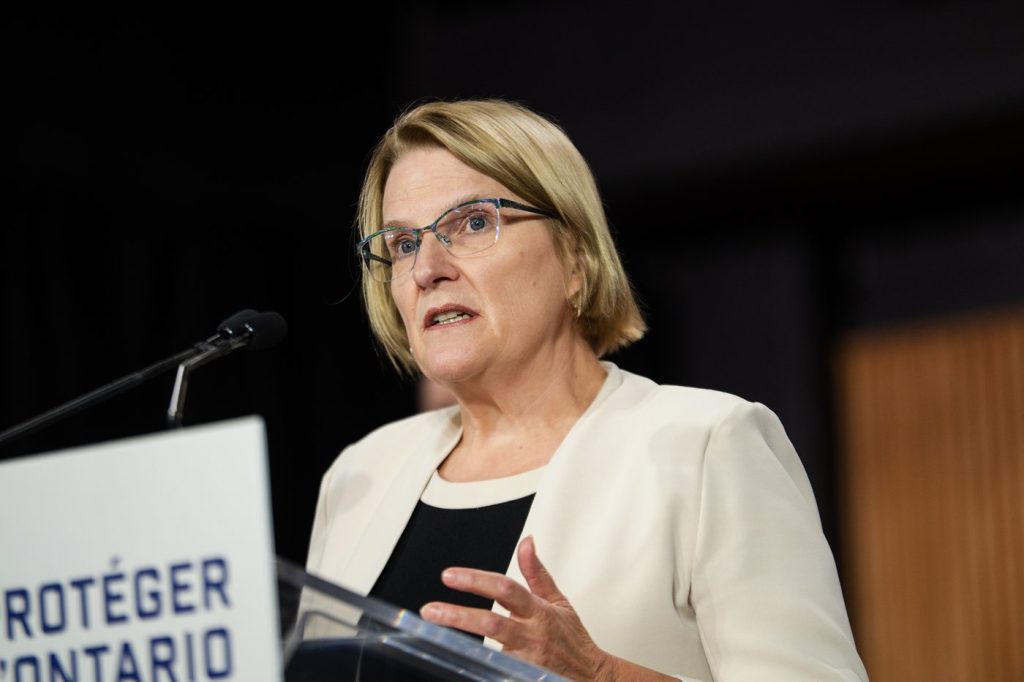
The move signals the province’s determination to reshape access to medical residency placements in favour of applicants who can demonstrate a meaningful connection to Ontario. Health Minister Sylvia Jones said the goal is to help Ontarians — including those who left Canada to study medicine abroad — return home to complete their training and eventually practise in the province.
The earlier version of the policy, introduced last fall and later rescinded, had reserved certain first-round residency opportunities for international medical graduates who had attended an Ontario high school for at least two years. Its sudden implementation during an active application cycle drew criticism from medical organizations and applicants, many of whom argued the change created uncertainty and unfairly altered the rules midstream.
Now, the province is reintroducing the concept with broader eligibility criteria and a stronger legal foundation. Under the proposed legislation, a dedicated first-round stream would be available to international medical graduates who meet at least one of several Ontario connection requirements: attending an Ontario high school for two years, studying in person at an Ontario university for at least two years, or living in the province for at least 24 weeks in the year before applying.
Jones said the revised model reflects systems already used in provinces such as Nova Scotia, New Brunswick and Prince Edward Island. By placing the rules in legislation rather than relying on administrative policy, she argued the government is making its intentions clear and providing greater consistency.
The issue comes at a sensitive time for Ontario’s health-care system, which continues to face physician shortages, long wait times and growing demand for family doctors. Residency positions are a critical gateway for medical graduates to enter independent practice, making competition for available spots especially intense.
Several leading medical organizations, including the Canadian Medical Association and the College of Family Physicians of Canada, previously warned that restricting access could discourage internationally educated doctors already living and working in Canada from choosing Ontario. They argued many of these candidates are citizens or permanent residents who already contribute to the health system and could help address urgent staffing gaps.
Critics also cautioned that policies perceived as exclusionary may undermine broader recruitment efforts aimed at attracting skilled physicians from around the world. Supporters, however, say the province has a legitimate interest in helping Ontarians who pursued medical education abroad return to serve their home communities.
Jones acknowledged that the timing of the original change drew fair criticism, but maintained the broader objective remains sound. She said many young Ontarians leave the country for medical school because of limited domestic opportunities, and residency placements offer the most natural path for them to return.
The renewed policy now sets the stage for another debate over fairness, workforce planning and how Ontario should balance local priorities with the urgent need for more doctors. As the province seeks solutions to its health-care pressures, the legislation will likely become a closely watched test of whether targeted residency reform can strengthen the system without narrowing the talent pipeline.