

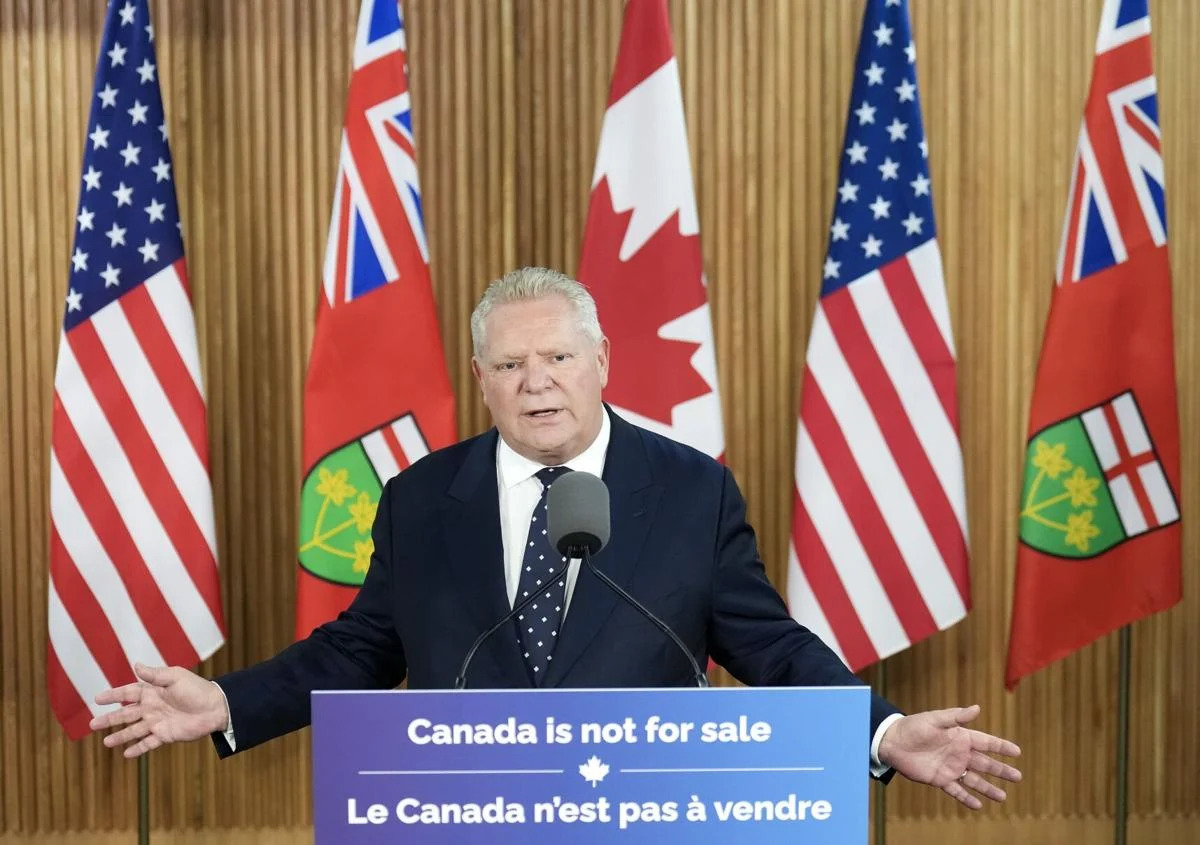
Ontario has officially implemented a 25% surcharge on electricity exports to the United States, a move expected to generate up to $400,000 per day in revenue. Premier Doug Ford and Energy Minister Stephen Lecce are set to address the new policy in a news conference today.
The tax, part of Ontario’s broader response to escalating trade tensions with the U.S., follows recent actions such as the removal of American-made alcohol from LCBO shelves. The surcharge applies to all electricity sales to U.S. buyers, adding $10 per megawatt-hour to the cost of power. Ontario currently supplies electricity to about 1.5 million homes and businesses in states like New York, Michigan, and Minnesota.
The move comes in response to U.S. President Donald Trump’s recent 25% tariff on most Canadian goods. Ford condemned the tariffs, calling them “a disaster for the U.S. economy,” and vowed to use every available tool to protect Ontario’s economic interests.
“Until the threat of tariffs is gone for good, Ontario won’t back down,” Ford stated. “We will stand strong and do whatever it takes to protect Ontario.”
The province enacted the surcharge through an “urgent amendment” to the Independent Electricity System Operator (IESO) market rules. Government officials indicated that Ontario has the flexibility to adjust the surcharge, potentially increasing it beyond 25% if the U.S. trade policies persist. Ford has even suggested the possibility of doubling the tax to 50% or cutting off electricity exports altogether.
Ontario’s government says the surcharge revenue—estimated between $300,000 and $400,000 daily—will be used to support local workers, families, and businesses. Energy Minister Lecce emphasized the significance of Ontario’s electricity exports to the U.S. and called for stronger trade relations rather than economic confrontation.
“For decades, Ontario has powered American homes, factories, and businesses,” Lecce said. “Now, at a time when families are facing rising costs, Canada and the U.S. should be working together—not against each other—to build a prosperous future.”
British Columbia Premier David Eby has also hinted at potential electricity export restrictions. Speaking to CTV’s Question Period, he confirmed his province is considering similar countermeasures, stating that B.C. is “all in” on a unified Canadian response to the tariffs.
“We are passing a law that will allow us to impose export charges or even restrict energy exports to the U.S.,” Eby said. “But we recognize that this is a significant step.”
Despite Trump’s temporary exemption of certain Canadian goods until April 2, Ontario has remained firm in its stance, refusing to roll back countermeasures until the tariffs are completely removed. The escalating trade dispute continues to strain relations between Canada and the U.S., with further retaliatory actions possible in the coming weeks.