

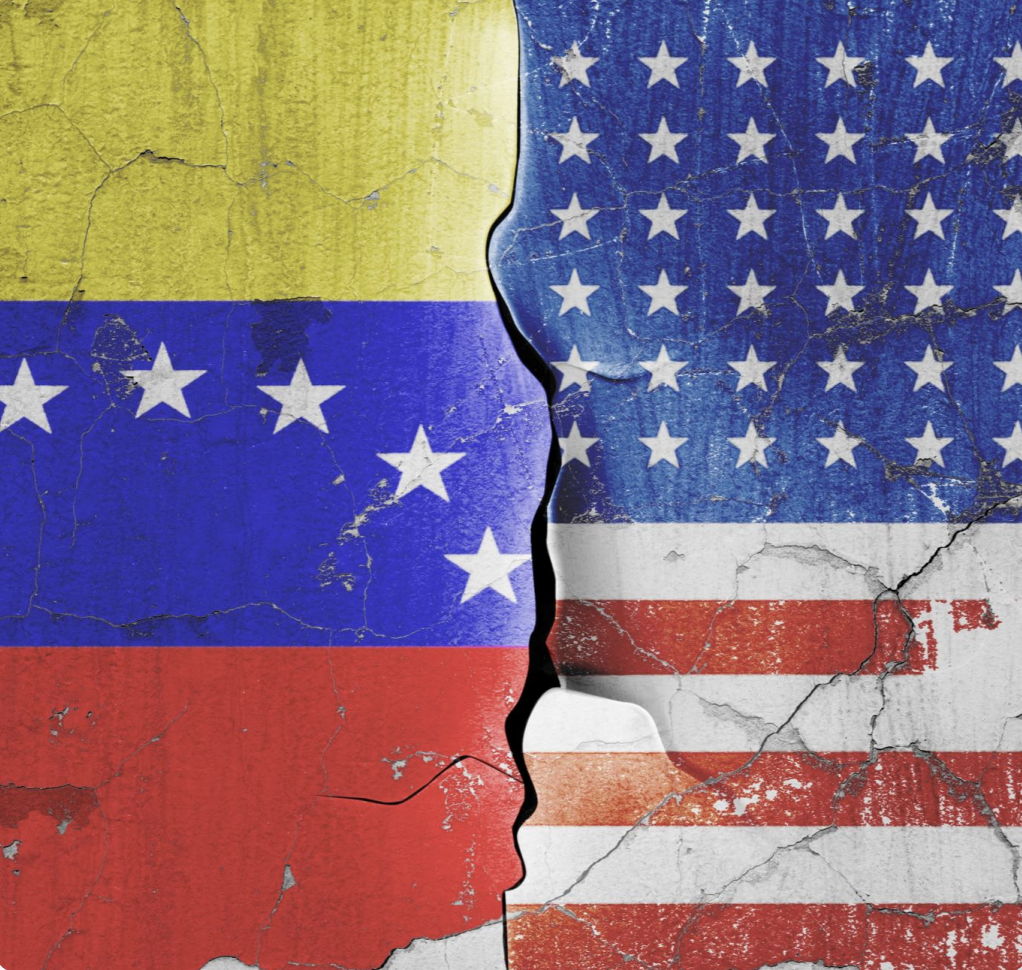
Concerns about Canadian sovereignty appear to be rising amid heightened U.S. foreign policy rhetoric and recent military action in Venezuela, according to a new public opinion survey by Leger.
The poll found that 31 per cent of Canadians believe it is likely the United States could take “direct action” to attempt to annex Canada, following U.S. military intervention in Venezuela and renewed comments by U.S. President Donald Trump about expanding American territory.
Venezuela strike fuels concern
The findings come after U.S. forces captured Venezuelan President Nicolás Maduro and his wife during a Jan. 3 strike in Caracas. Nearly 65 per cent of Canadians surveyed said they are closely following developments between the U.S. and Venezuela.
A slim majority of Canadian respondents — 53 per cent — said the U.S. intervention in Venezuela was a negative development, arguing it violated the country’s sovereignty and set a dangerous international precedent. By contrast, 23 per cent said the action was justified because it removed a corrupt regime and could lead to better governance. Leger noted that 39 per cent of Americans surveyed shared that view.
When asked about the motivations behind the U.S. military action, 63 per cent of Canadians said they believe the primary goal was to gain control of Venezuela’s oil reserves.
Fears of broader U.S. intervention
Beyond Canada, Canadians surveyed expressed concern about potential future U.S. intervention in several other countries. Among respondents who believe further interventions are likely:
- 55 per cent cited Greenland
- 51 per cent cited Cuba
- 47 per cent cited Colombia
- 47 per cent cited Panama
- 31 per cent cited Canada
The poll also found that 20 per cent of Americans surveyed believe the U.S. government could attempt direct action against Canada.
In addition, 82 per cent of Canadians said U.S. tariffs and foreign military actions have negatively affected Canada’s economy and global stability.
Greenland annexation rhetoric
The survey results emerge amid renewed attention on U.S. interest in Greenland, a semi-autonomous territory of Denmark. Trump has argued that Greenland is strategically vital to U.S. national security, while Greenlandic and Danish leaders have repeatedly said the territory is not for sale.
According to Axios, U.S. Representative Randy Fine, a Republican from Florida, has introduced legislation that would give Trump authority to annex Greenland and designate it as a U.S. state.
Trump has also urged NATO to support U.S. efforts to acquire the island, citing alleged military interests by Russia and China. Officials in Greenland and Denmark have rejected Trump’s claims that the territory lacks adequate defence capabilities.
Earlier this week, CBC reported that Vice-President JD Vance and Secretary of State Marco Rubio met with foreign ministers from Greenland and Denmark at the White House to discuss the issue.
Canada as a “51st state”
Trump has repeatedly floated the idea of Canada becoming the 51st U.S. state over the past year, including on Canada’s April 28, 2025 federal election day. He has suggested Canada would benefit from lower taxes, economic growth, and relief from U.S. tariffs on steel, aluminum, lumber, and energy if it joined the United States.
Poll methodology
Leger’s online survey was conducted between Jan. 9 and 11 among 1,540 Canadian residents and 1,011 Americans aged 18 and older. Participants were randomly recruited online. Because the survey did not rely on a random probability sample, it cannot be assigned a traditional margin of error.