

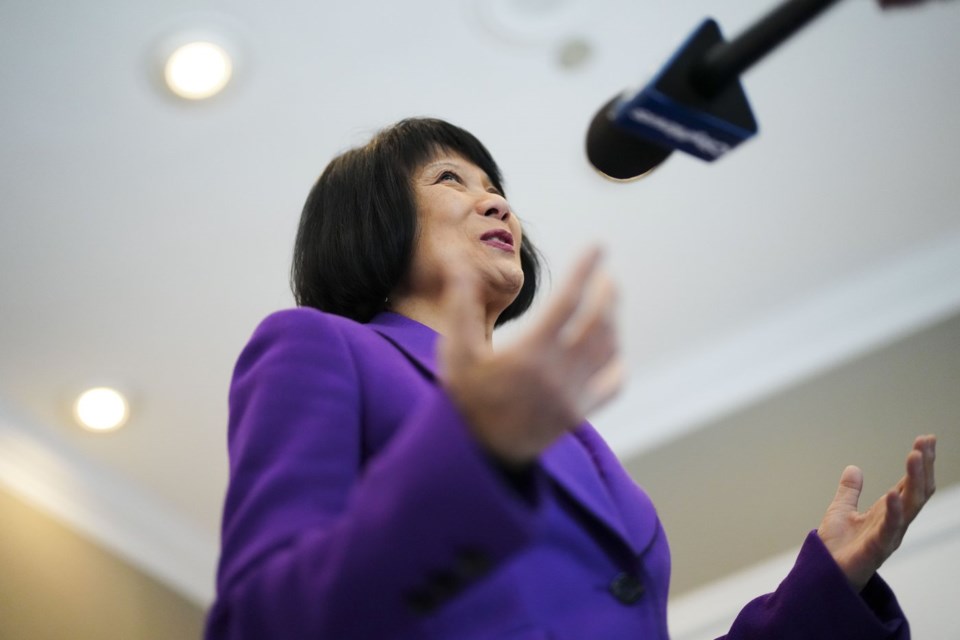
Olivia Chow has officially announced she will seek a second term as mayor of Toronto, setting the stage for what is expected to become one of the city’s most closely watched and competitive municipal elections in recent years.
Chow confirmed her re-election plans Monday, saying she remains focused on governing and addressing key challenges facing Toronto while preparing for the formal campaign period later this year.
In her announcement, Chow emphasized her commitment to making Toronto more affordable, caring and safe, telling residents that she remains firmly “in their corner” as the city continues to confront major issues surrounding housing affordability, transit, infrastructure and public safety.
The 69-year-old mayor made history in 2023 when she won a high-profile byelection following the resignation of former mayor John Tory. Her victory marked several historic milestones, including becoming the first person of Asian descent to serve as Toronto’s mayor and the first woman elected mayor of the amalgamated city since Toronto’s municipal restructuring in 1998.
Chow brings more than four decades of political experience to the race. Her career began in 1985 as a Toronto school board trustee before serving 14 years on Toronto City Council. She later moved to federal politics, serving eight years in Parliament as a New Democratic Party MP alongside her late husband, former federal NDP leader Jack Layton.
In 2014, Chow resigned her federal seat to run for mayor, ultimately finishing third behind Tory and then-city councillor Doug Ford.
This year’s mayoral contest is already beginning to take shape, with at least 16 candidates officially registered since nominations opened earlier this month. Among the challengers is Toronto city councillor Brad Bradford, who has already launched an active campaign positioning himself as a stronger alternative on issues such as traffic congestion, transit reliability and cost-of-living pressures.
Bradford criticized the current state of the city Monday, arguing that residents have been forced to accept worsening traffic, unreliable transit and rising living expenses under the current administration.
The race is expected to feature heated debates over several controversial issues currently dominating Toronto politics, including affordable housing shortages, public transit expansion, infrastructure spending, rising crime rates and escalating rent costs.
Additional political tensions have emerged in recent weeks surrounding proposed transit lines in Toronto’s east end and the provincial government’s push to take over city-owned land for expansion plans tied to Billy Bishop Toronto City Airport.
Premier Doug Ford said Monday that he does not plan to endorse any candidate in the mayoral race, though he praised his working relationship with Chow and signaled a willingness to continue cooperating with her should she win re-election.
Ford stated that despite political differences, he and Chow communicate well and maintain a productive relationship focused on city and provincial issues.
Toronto’s municipal election is scheduled for Oct. 26, and political observers expect the coming months to deliver an intense campaign as candidates compete to define the future direction of Canada’s largest city.