

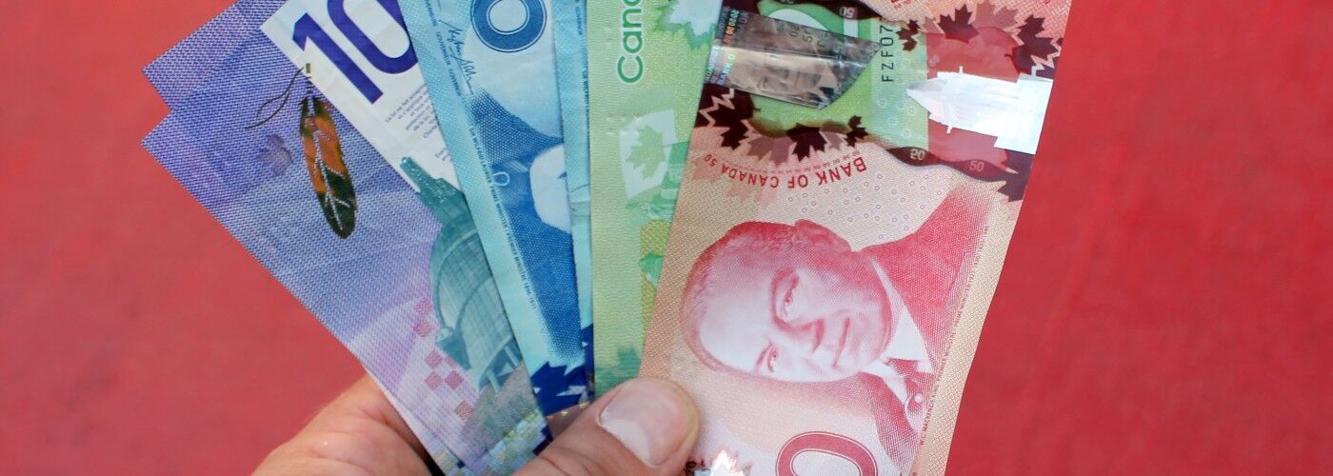
A northern Ontario police service is urging residents and retailers to check their cash carefully after a spike in counterfeit $50 bills—some bearing the same serial number—were reported in circulation.
The North Bay Police Service said in a news release Monday that local retailers flagged multiple fake $50 notes during the holiday season. Several of the counterfeit bills shared the identical serial number AHU5885903, a clear red flag since authentic Canadian bank notes each have a unique serial number.
Police said the counterfeit notes resemble Canada’s polymer $50 bill but show noticeable flaws. The bills appear slightly faded, and the raised Braille feature is printed rather than embossed. Similar counterfeit $50 bills have also been reported in other parts of Ontario.
The warning follows broader concerns raised by the Retail Council of Canada, which has noted an increase in counterfeit currency during the busy holiday shopping period.
“Retailers play an important role in keeping our community safe,” said acting Insp. John Cook in the release. “Familiarize yourself with how to identify counterfeit bills and always carefully check all cash received. If a bill seems suspicious, do not accept it, remain calm with the customer, then report it to the police.”
What to do if you suspect a fake bill
North Bay police advise businesses and consumers not to accept a suspected counterfeit note. They recommend avoiding confrontation or accusations and, if possible, asking the customer to take the bill to police for verification.
If the customer leaves, police ask that retailers contact them with as much detail as possible, including the time and date, the bill’s denomination, visible inconsistencies and any description of the person who presented it. Anyone who has already accepted a counterfeit bill should report it immediately.
How to spot a counterfeit $50
According to the Bank of Canada, $50 and $100 bills are the most commonly counterfeited denominations. Canada’s polymer notes include several security features designed to make counterfeiting more difficult.
On a genuine $50 bill, the clear polymer window on the right front side features William Lyon Mackenzie King. The $100 bill features Sir Robert Borden.
The Bank of Canada recommends checking for these key features:
- Inspect the clear window: Tiny numbers should match the denomination, and the portrait should match the main image.
- Tilt the note: Images in the window should change colour.
- Feel the portrait: Raised ink should be noticeable.
- Check the maple leaf window: When held to a bright light, tiny numbers should be visible.
If any of these features are missing or incorrect, the note may be counterfeit. In that case, police and the Bank of Canada advise taking the bill to a bank or police station and not attempting to spend it.