

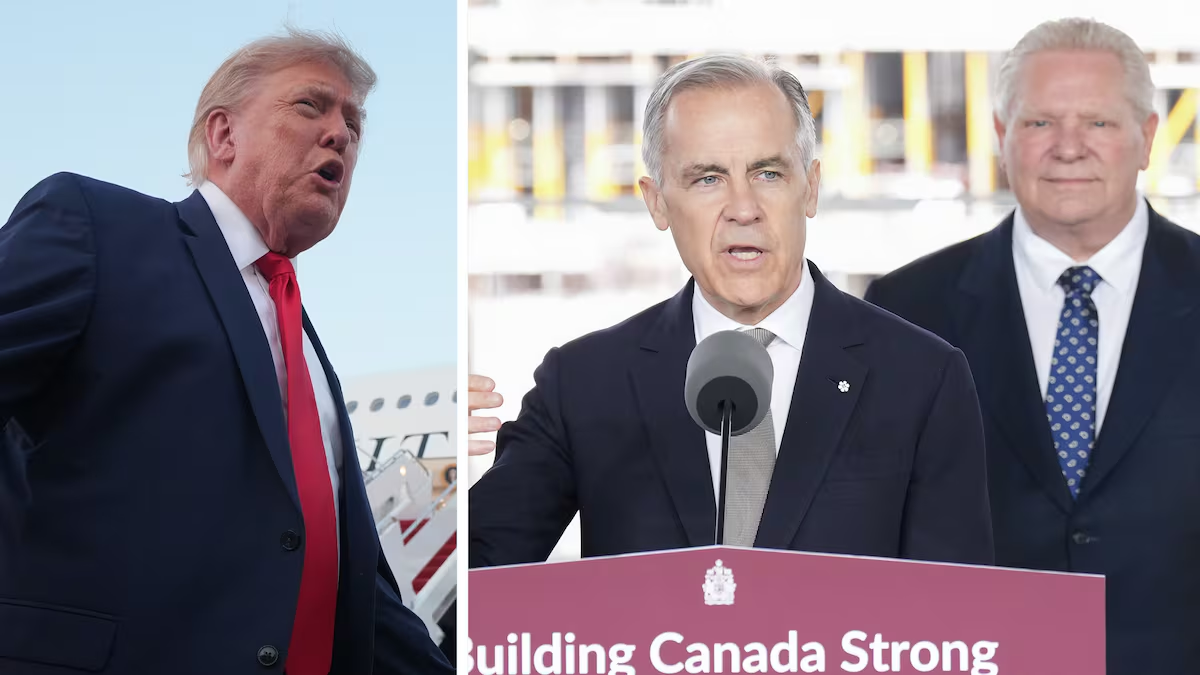
Charlottetown, P.E.I., July 23: Canada’s premiers are calling on Prime Minister Mark Carney to present a clear strategy for confronting the latest round of tariff threats from U.S. President Donald Trump, warning that escalating trade tensions have created a “new level of urgency” for the country’s economy.
The premiers are set to meet Carney on Thursday during the First Ministers’ Meeting, held alongside the annual Council of the Federation conference in Charlottetown.
The meeting comes after President Trump announced plans to impose 50 per cent tariffs on a range of Canadian products, intensifying an already strained trade relationship between the two countries.
Ontario Premier Doug Ford said the federal government must now move quickly with a comprehensive plan to protect Canadian industries and workers.
“He needs to lead the way. He needs to come up with a strong plan over the next 29 days, and I’m interested in sitting down with him and hearing the plan,” Ford said.
Ford emphasized that Ontario is prepared to consider every available option if negotiations fail.
“Everything’s on the table. We can’t keep rolling over for Donald Trump. You negotiate through strength, not through weakness—especially with President Trump,” he said.
Alberta Premier Danielle Smith also expressed optimism that negotiations could still produce an agreement but stressed the need to focus on resolving all outstanding trade disputes.
“This is a window that we have to sharpen the focus,” Smith said, adding that she hopes governments can address every major issue currently affecting Canada-U.S. trade.
Saskatchewan Premier Scott Moe said Canada should use the current negotiations to pursue a modernized Canada-United States-Mexico Agreement (CUSMA).
“This is an opportunity for our negotiating team to intensify discussions in an effort to achieve a reviewed and renewed CUSMA,” Moe said.
While expressing confidence in Canada’s negotiating efforts, Moe acknowledged that reaching a comprehensive agreement remains uncertain.
Despite differences among provinces regarding possible retaliatory measures, premiers agreed that Canada should seek a broad agreement covering all sectors affected by U.S. tariffs, including softwood lumber, steel, aluminum, manufacturing and the automotive industry.
Although Alberta currently faces relatively limited tariff exposure, Smith said every province should continue presenting a united national position.
“Although we’re 97 per cent tariff-free, we’d like to be 100 per cent tariff-free—and we’d like every other province to be there as well,” she said.
Canada-U.S. Trade Minister Dominic LeBlanc is expected to join Prime Minister Carney at Thursday’s meeting.
Federal officials confirmed that LeBlanc recently spoke with U.S. Trade Representative Jamieson Greer, while Carney also held discussions with President Trump aimed at accelerating negotiations over the coming weeks.
According to federal officials, Canada’s negotiating team is examining a range of potential responses should talks fail, including targeted retaliatory measures that could place economic pressure on strategically important U.S. regions.
In their joint communiqué issued at the conclusion of the Council of the Federation meeting, Canada’s premiers also urged Ottawa to maintain close consultation with provinces and territories throughout the negotiations.
Prince Edward Island Premier Rob Lantz, who chaired this year’s meeting, said provincial leaders remain committed to working closely with the federal government to protect Canadians from the economic impact of the growing trade dispute.
“There’s no doubt our conversation with the prime minister tomorrow will have a new level of urgency,” Lantz said.
He added that premiers are united in seeking a coordinated national response that safeguards Canadian workers, farmers, fishers, manufacturers and businesses while strengthening the country’s economy during a period of growing uncertainty.