

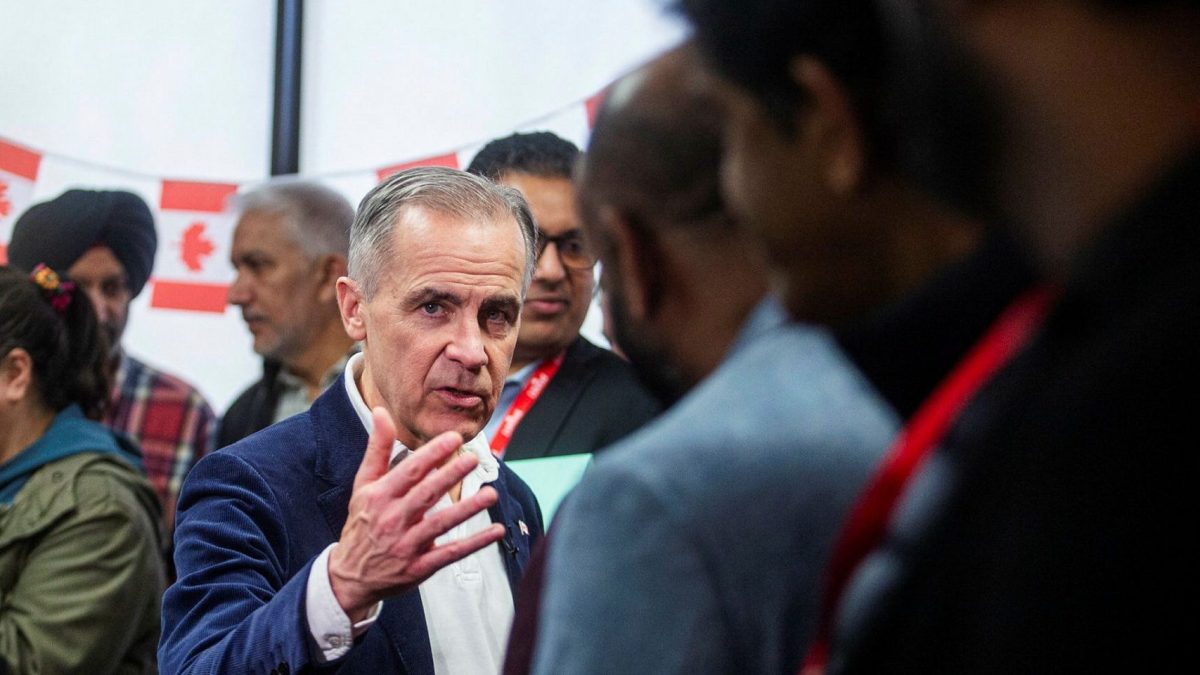
The latest seat projections from Nanos Research suggest Mark Carney’s Liberals are on track to form a minority government—but the race remains incredibly fluid, with more than 50 ridings too close to call.
If the federal election had been held on April 6, the Liberals would have secured 156 seats, down from 173 in the March 30 projections. The Conservatives, led by Pierre Poilievre, would have claimed 114 seats, an increase of eight. The projections, released on Day 19 of the 36-day campaign, highlight just how tight the race is becoming.
“It’s a horse race,” said Nik Nanos, chief data scientist at Nanos Research, in an interview on CTV’s Power Play Thursday. Despite a modest five-point national lead for the Liberals—43% to the Conservatives’ 38.1%—Nanos said geography is everything.
Conservative support is highly concentrated in the Prairie provinces, where the party is leading by margins of up to 20 percentage points. In contrast, Liberal support is more evenly spread, particularly in urban and suburban Ontario and Quebec, translating into more seats.
Riding-by-Riding Breakdown
Toronto appears to be firmly back in Liberal hands after the party’s shocking defeat in last year’s St. Paul’s byelection, once seen as a symbol of voter fatigue with former PM Justin Trudeau. According to Nanos, nearly every Toronto seat is currently leaning Liberal.

In Quebec, the Bloc Québécois is experiencing a major rebound—jumping from 4 to 17 projected seats in just one week. The surge reflects a shift of soft Liberal support outside of Montreal, especially on the South Shore and North Shore, where Bloc leader Yves-François Blanchet predicted a comeback if voters sensed a Liberal win was imminent. Despite this, Liberals remain competitive in many of those ridings.
Meanwhile, the NDP is struggling to maintain a foothold. Their projections remain stuck at four seats nationally, including leader Jagmeet Singh’s Burnaby South riding in British Columbia. In B.C., both the Liberals and Conservatives are poised to make gains at the expense of the NDP.
“Carney and Poilievre are circling like vultures,” Nanos quipped, referring to their campaign blitzes across the province. “They see the NDP back on their heels in one of their most critical battlegrounds.”
These projections, based on Nanos’ hybrid model using current polling and historical voting patterns, reflect the growing unpredictability of the race. With 53 ridings too close to call, the path to government remains wide open.
Nanos’ model accurately predicted 86% of federal ridings in the 2019 election, lending weight to this early snapshot. But with just over two weeks until Election Day on April 28, the balance of power could still shift significantly.