

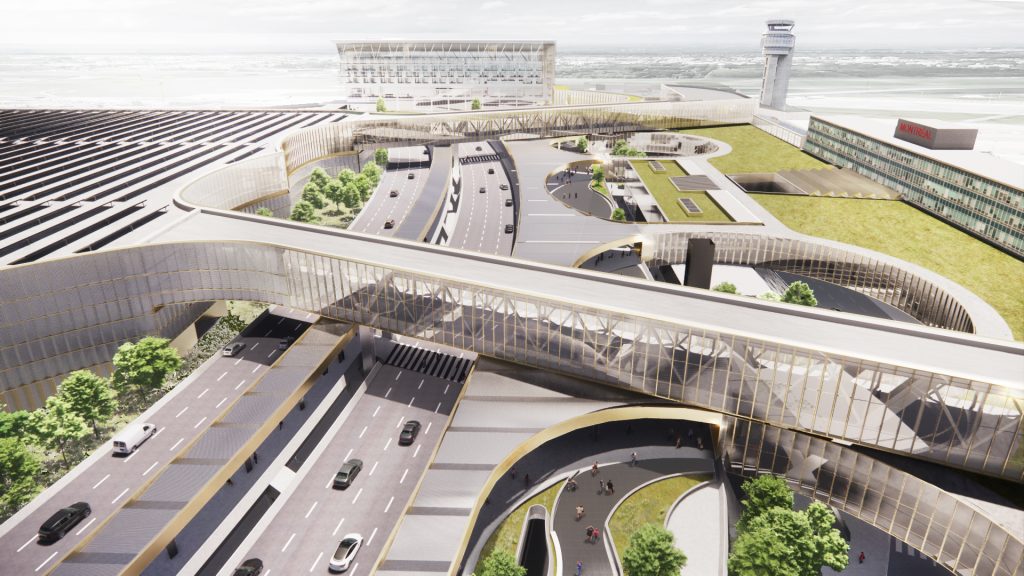
Montreal-Trudeau International Airport is set to embark on a sweeping $10-billion transformation over the next decade, designed to accommodate a surge in passenger volume and modernize infrastructure at one of Canada’s busiest air hubs.
The airport authority, Aéroports de Montréal, has secured a $1-billion loan from the Canada Infrastructure Bank to help fund the ambitious plan. Renovations are aimed at increasing the airport’s capacity to handle 28 million passengers annually by 2028 and up to 35 million by 2035, a sharp rise from the 22 million recorded in 2024.
CEO Yves Beauchamp said the upgrades are essential to meet growing demand. “YUL’s development plan is extensive, but essential to ensure that our international airport can continue to accommodate growing passenger numbers and meet the expectations and needs of its users,” he said in a statement.
The expansion includes a complete overhaul of the road network around the airport to ease traffic congestion, and the demolition of the current multi-level parking garage to make way for a larger facility. A new building is also planned to connect the main terminal with the light rail station scheduled to open in 2027.
Additional upgrades will bring more gates and a satellite air bridge to improve terminal connectivity. The airport authority is significantly ramping up annual infrastructure spending—from $230 million just two years ago to $850 million in 2025, with plans to hit $1 billion annually moving forward.
Beauchamp emphasized that the projects will be funded through loans and internal revenues, including airport improvement fees paid by passengers, with no direct government subsidies.
Macky Tall, chair of the Canada Infrastructure Bank, described the loan as a financial buffer to support long-term investments. While the interest rate was not disclosed, Tall said it was “competitive.”
The infrastructure bank projects that the modernization effort and added passenger capacity will contribute nearly $3.7 billion to Canada’s GDP by 2028 and create thousands of jobs, reinforcing Montreal’s position as a vital international travel gateway.
Ask ChatGPT