

The Liberal government’s recent decision to tighten restrictions on the temporary foreign worker program, after easing them to help businesses navigate post-pandemic labour shortages, has ignited a heated debate about the role of government in addressing workforce gaps.
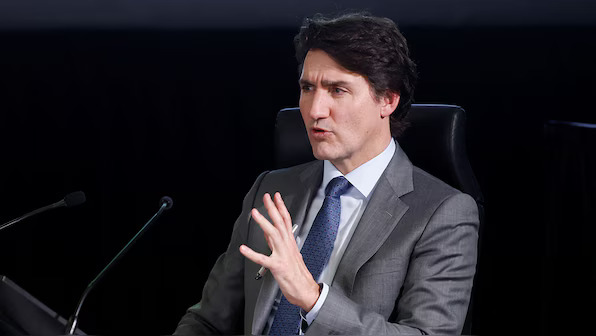
On Monday, Prime Minister Justin Trudeau announced the reintroduction of stricter rules aimed at reducing the influx of low-wage temporary foreign workers. He emphasized the importance of businesses investing in and hiring Canadian workers.
“Two years ago, in the wake of the pandemic and severe labour shortages, we adjusted the temporary foreign worker program to meet the needs of the business community,” Trudeau said during the Liberal cabinet retreat in Halifax. “But today’s economy is different. Inflation is easing, and employment is up. We no longer require the same volume of temporary foreign workers.”
The move has drawn mixed reactions. While business groups have historically supported higher immigration levels and the use of temporary foreign workers to fill labour gaps, some economists are questioning whether government intervention is necessary.
Christopher Worswick, an economics professor at Carleton University, argues that governments should refrain from interfering in labour markets. “Ideally, they should do nothing, but it’s difficult for governments to remain passive when employers are dissatisfied,” he said.
Economists like Worswick suggest that a tight labour market benefits workers and the economy by compelling businesses to raise wages and invest in productivity-enhancing technology. “When businesses and governments talk about shortages, it’s often unclear what they mean. If they’re referring to wanting more workers at lower wages, that’s not how economies function,” Worswick noted.
Data from Immigration, Refugees and Citizenship Canada shows a significant increase in the issuance of temporary foreign worker permits, with 183,820 permits issued in 2023, an 88% rise from 2019.
Following the government’s announcement, Worswick called for the abolition of the temporary foreign worker program, proposing a phase-out of the low-wage stream and a merger of the high-wage stream with the broader economic immigration program.
Prominent economist Mike Moffatt, who attended the Liberal cabinet retreat, echoed Worswick’s sentiments, advocating for the elimination of the non-agricultural low-wage stream of the program.
However, Diana Palmerin-Velasco, Senior Director for the Future of Work at the Canadian Chamber of Commerce, cautioned against such drastic measures. “These calls don’t align with the realities of our economy,” she said, highlighting the need for low-skilled workers in small communities facing demographic challenges.
Palmerin-Velasco also dismissed the argument that temporary foreign workers suppress wages. “If businesses are forced to significantly increase wages to attract workers, those costs will be passed on to consumers, especially at a time when the economy is fragile,” she explained.
While Worswick supports skilled immigration, he argues that it should not be driven by attempts to address labour shortages, given the difficulty in predicting where such shortages will emerge. “It’s better to focus on skill-based immigration and stop fixating on labour shortages. If businesses can’t fill positions, they should raise wages or, as the prime minister suggested, invest in training,” he said.
The federal government’s initial response to post-pandemic labour shortages was met with widespread approval, with business associations and politicians advocating for increased immigration. Premiers, including Ontario’s Doug Ford, welcomed higher immigration targets to address job vacancies.
In 2022, the federal government relaxed the rules for the temporary foreign worker program and later announced a target of 500,000 permanent residents by 2025. Although the loosening of restrictions occurred under his leadership, Trudeau had previously criticized a similar expansion of the program under the Harper government in 2014, advocating for a dramatic scale-back to its original purpose.
“I believe it is wrong for Canada to follow the path of countries that exploit large numbers of guest workers without offering a realistic path to citizenship,” Trudeau wrote in a 2014 Toronto Star op-ed. “It depresses wages for Canadians and undermines our commitment to diversity, creating opportunities for division.”
As for whether the recent immigration policy shift signals a change in the government’s stance on labour shortages, Worswick remains uncertain. “I think the housing crisis has played a significant role in this shift,” he said. “Governments often discuss labour shortages, so I’m not sure that conversation is going away, but the issue of the country’s absorptive capacity is now front and center.”