

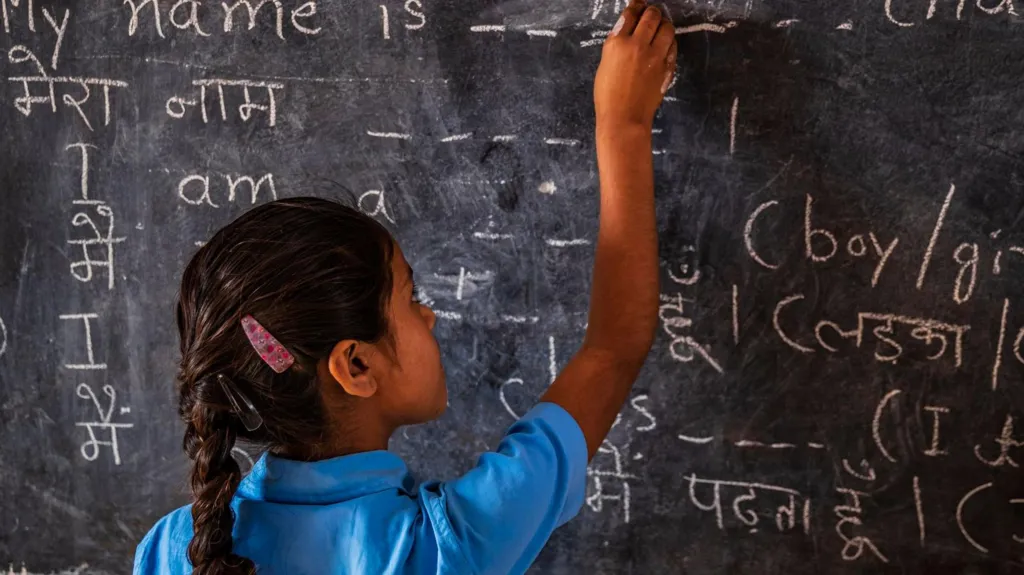
A growing campaign in India is putting the deteriorating condition of government schools under intense public scrutiny, as students, teachers and activists use social media to expose broken toilets, leaking roofs, unsafe classrooms and shortages of basic facilities.
The campaign, called #SchoolThikKaro, or #FixTheSchool, is being led by the Cockroach Janta Party, an online satirical movement that recently attracted national attention through protests over problems in India’s education system. Its latest effort is focused particularly on government schools in rural and economically disadvantaged communities.
The scale of the problem can be seen at a government primary school for girls in Khedi Kalan village in Faridabad, near Delhi. Although the building has recently been painted and appears presentable from outside, local social worker Satpal Narwat says four of its eight toilets are unusable and four of nine classrooms have been abandoned because they are considered unsafe. During heavy rains, classrooms can also flood, leaving children without adequate places to sit.
Such conditions are not limited to one school. Government schools, particularly in rural areas, have struggled with inadequate funding and deteriorating infrastructure. India currently spends about 4.1 per cent of its GDP on education, while the country’s National Education Policy has recommended spending equivalent to six per cent.
Official figures also show that approximately 94,000 government schools closed between the 2014-15 and 2024-25 academic years. Some were merged as authorities attempted to streamline the education system, while declining enrolment has accompanied increasing demand for private education.
Cockroach Janta Party founder Abhijeet Dipke says rural children are being denied opportunities available to students in larger cities. After visiting more than 20 rural schools, he said he had encountered serious shortages of benches, toilets, drinking water and other essential facilities.
The movement has gained significant visibility through social media. CJP leaders have shared videos showing leaking roofs, filthy toilets, students sitting on classroom floors and children expressing frustration about their schools. Dipke says the goal is not merely to repair buildings but to ensure students have decent washrooms, clean drinking water, proper seating and modern classrooms equipped with digital technology.
Students themselves are increasingly joining the campaign. Armed with mobile phones, children in different parts of India have recorded the conditions they face and posted the videos online. Some have gone viral and prompted authorities to respond. In Maharashtra, for example, authorities repaired a road leading to a school after a video made by schoolgirls highlighting its poor condition attracted widespread attention.
The infrastructure crisis is only part of the challenge. Government schools also face shortages of teachers and support staff.
At a primary school in Atmadpur village in Haryana, there are 40 teachers for 910 students. But when the school was visited, 30 teachers had been assigned to voter-list revision duties and another four were absent because of illness, leaving just six teachers to manage hundreds of children.
Head teacher Chatar Singh says teachers hired to educate children are regularly assigned government responsibilities unrelated to classroom instruction, including election and census work. He believes these assignments directly affect the quality of education students receive.
The divide between government and private education is another source of concern. Singh says families that can afford private schooling frequently choose it, while many government-school students come from economically disadvantaged families, including the children of migrant factory workers.
Narwat’s own family reflects that trend. He attended the Khedi Kalan government school as a child and initially sent his children there as well, but later moved them to private schools because of better facilities. He now sends his grandchildren to private school despite the higher cost.
The #FixTheSchool campaign follows an earlier CJP protest in Delhi that expanded from concerns over an entrance-examination controversy into broader criticism of India’s education system. Journalist and author Nilanjan Mukhopadhyay says the growing number of citizens submitting videos of inadequate school infrastructure suggests the new movement is gaining momentum and could become a longer-lasting campaign.
Prime Minister Narendra Modi’s government and the ruling Bharatiya Janata Party had not commented on the campaign at the time of the report, while the BBC said it had contacted India’s education ministry seeking a response.
For activists, parents and students supporting the movement, the issue goes beyond repairing toilets, roofs and classrooms. They argue that the condition of government schools ultimately determines whether children from poorer and rural families receive educational opportunities comparable to those available to students from wealthier families.
As videos from neglected schools continue circulating online, the Cockroach Janta Party’s unusual campaign is turning what were once largely local complaints into a wider national debate over educational inequality, government accountability and the future of millions of children attending India’s public schools.