

NEW DELHI – The deaths of Indian sailors following military strikes on commercial vessels in the Gulf of Oman have sparked a political and diplomatic debate in India, with critics questioning whether the government has responded forcefully enough to the incidents and whether the events challenge India’s long-standing emphasis on strategic autonomy.
The controversy centres on attacks on three commercial vessels operating near Oman – MT Marivex, MT Settebello, and MT Jalveer – all of which reportedly had Indian crew members on board. According to Indian authorities, three Indian sailors lost their lives after one of the vessels was struck, while dozens of other crew members were rescued.
The incidents have generated criticism from opposition voices, former diplomats, and policy analysts who argue that New Delhi should have issued a stronger public response and sought a more direct acknowledgement from Washington regarding the deaths of Indian nationals.
The Ministry of External Affairs condemned the attacks on commercial shipping and expressed concern over the safety of Indian crew members operating in the region. The government also summoned the senior American diplomat in New Delhi to formally register India’s concerns and seek clarification regarding the incidents.
However, critics contend that official statements stopped short of directly naming the United States as responsible for the attacks and did not include an explicit public condemnation of the military action that resulted in Indian casualties.
The issue has become politically sensitive because India and the United States have developed increasingly close strategic, economic, and defence ties over the past two decades. Analysts note that balancing the protection of Indian citizens with broader diplomatic relationships presents a significant challenge for policymakers.
Government officials have pointed out that the vessels involved were foreign-flagged commercial ships operating in a complex regional security environment. They have also emphasized efforts to secure the safety of Indian crew members, coordinate rescue operations, and engage diplomatically with relevant international partners.
Nevertheless, critics argue that the deaths of Indian nationals demand a stronger and more visible response regardless of the country involved. Some former diplomats have stated that India should consistently defend the interests of its citizens overseas and seek accountability whenever Indian lives are lost in international incidents.
The debate has also revived discussion about India’s doctrine of strategic autonomy, a principle that emphasizes independent decision-making in foreign affairs. Observers note that the government’s response is being closely scrutinized as a test of how India balances strategic partnerships with national interests.
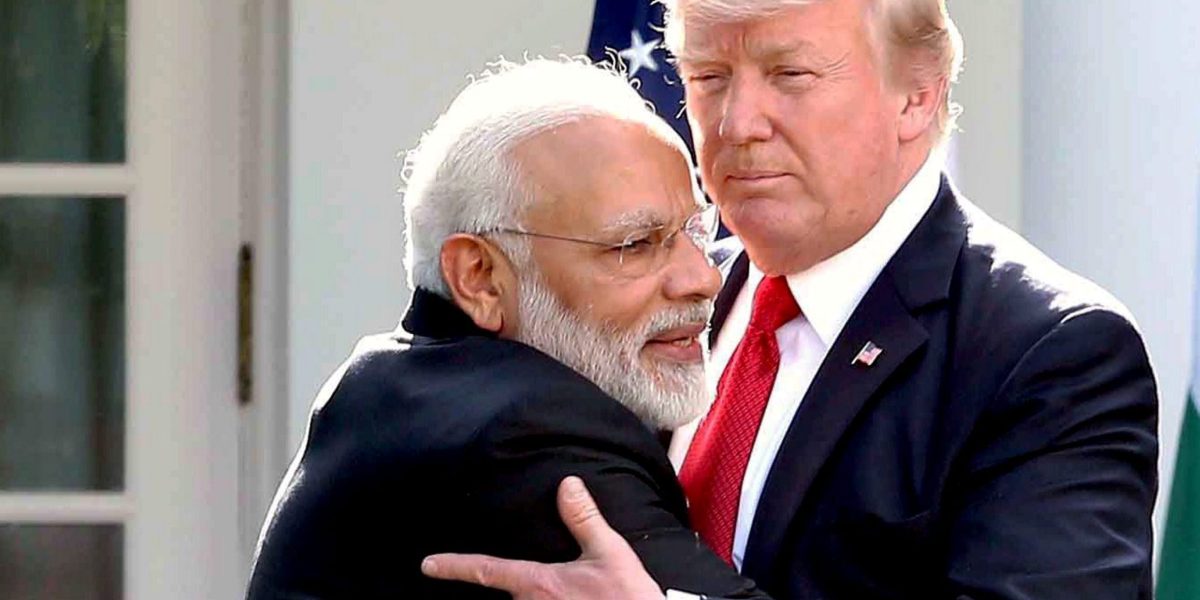
The issue gained further attention after U.S. President Donald Trump publicly congratulated Prime Minister Narendra Modi on completing twelve years in office, with Modi responding to the message while remaining publicly silent on the specific military strikes. Critics viewed the contrast as politically significant, while government supporters argued that diplomatic engagement and public messaging are separate matters.
The Ministry of External Affairs has maintained that India remains focused on ensuring the safety and welfare of Indian seafarers working in international waters. Officials continue to monitor developments in the Gulf region, where escalating tensions have increased risks for commercial shipping and maritime personnel.
As questions continue to be raised in political and diplomatic circles, the deaths of the Indian sailors have become part of a broader discussion about foreign policy, national security, and the responsibilities governments have toward citizens working abroad in increasingly volatile regions of the world.