

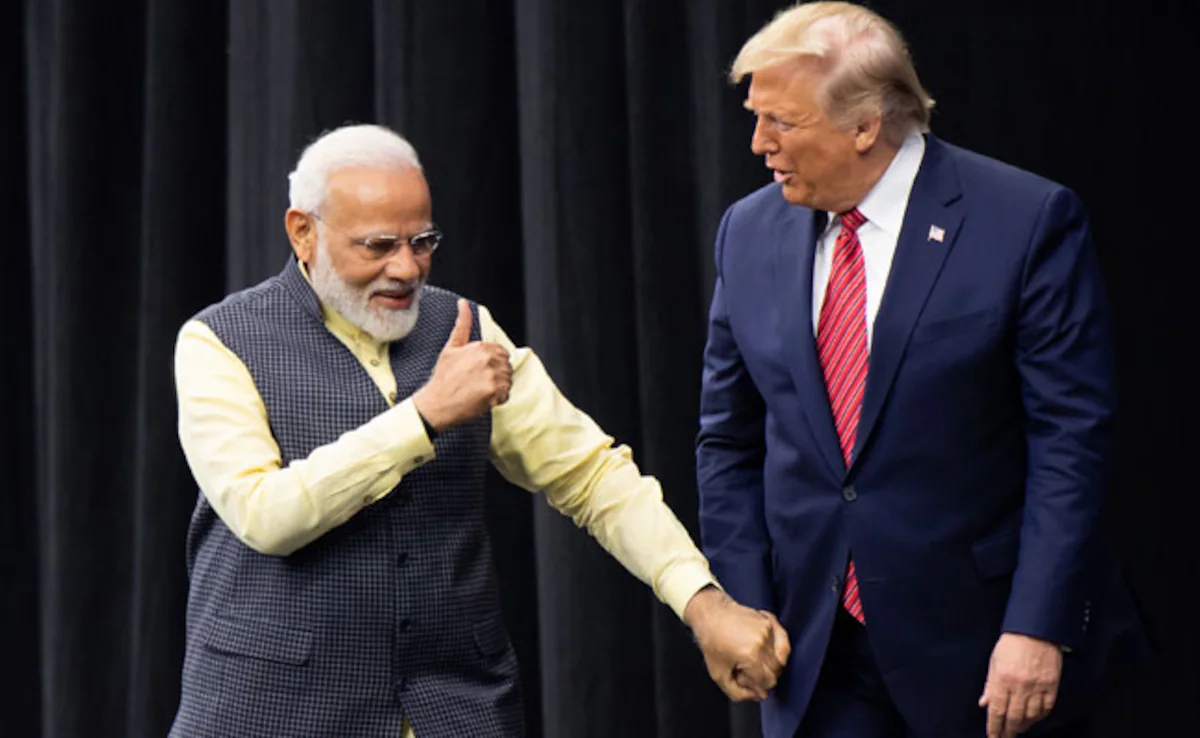
NEW DELHI — India has firmly reiterated its stance on energy security after U.S. President Donald Trump claimed that Prime Minister Narendra Modi had assured him India would stop importing oil from Russia.
Responding to Trump’s comments, Ministry of External Affairs spokesperson Randhir Jaiswal issued a statement emphasizing that India’s energy import decisions are guided by domestic priorities rather than foreign political considerations. “India is a significant importer of oil and gas. It has been our consistent priority to safeguard the interests of the Indian consumer in a volatile energy scenario. Our import policies are guided entirely by this objective,” Jaiswal said.
The ministry underscored that India’s energy strategy rests on two core principles: stable prices and secure supply. “Ensuring stable energy prices and secured supplies have been the twin goals of our energy policy. This includes broad-basing our energy sourcing and diversifying as appropriate to meet market conditions,” the statement read.
On its ties with Washington, the MEA noted that India has been steadily expanding energy cooperation with the U.S. over the past decade, with discussions to deepen that engagement continuing under the current administration.
Trump, speaking to reporters earlier, claimed Modi had given personal assurances that India would phase out Russian oil purchases. “He’s assured me there will be no oil purchases from Russia. He can’t do it immediately. It’s a little bit of a process, but the process is going to be over soon,” Trump said.
Since the start of the war in Ukraine, India’s continued purchase of discounted Russian crude has drawn repeated criticism from Western capitals. External Affairs Minister Dr. S. Jaishankar has consistently defended New Delhi’s position, arguing that India is acting in the best interests of its citizens. He has also highlighted what he called the West’s “double standards,” stating that Europe must grow out of the mindset that “Europe’s problems are the world’s problems, but the world’s problems are not Europe’s problems.”
India’s reliance on Russian oil has also been a factor in Trump’s tariff offensive against New Delhi, part of a broader push to pressure India on trade and energy policy.
Domestically, Trump’s remarks triggered sharp political reactions. Leader of the Opposition Rahul Gandhi accused Modi of ceding ground to Trump, listing a series of perceived concessions in a post on X. “PM Modi is frightened of Trump,” Gandhi wrote, alleging that Modi allowed Trump to dictate India’s energy policy and failed to respond to repeated diplomatic slights.
Union Minister Piyush Goyal hit back at Congress, accusing it of political inconsistency. “A few days ago, I heard the Congress asking why there is no trade deal. It’s a rudderless, leaderless, and directionless party,” Goyal said, adding that the opposition itself no longer looks to Congress for leadership.
The exchange underscores how energy policy, U.S.–India relations, and domestic politics have become increasingly intertwined amid shifting global power dynamics and the ongoing Ukraine conflict.