

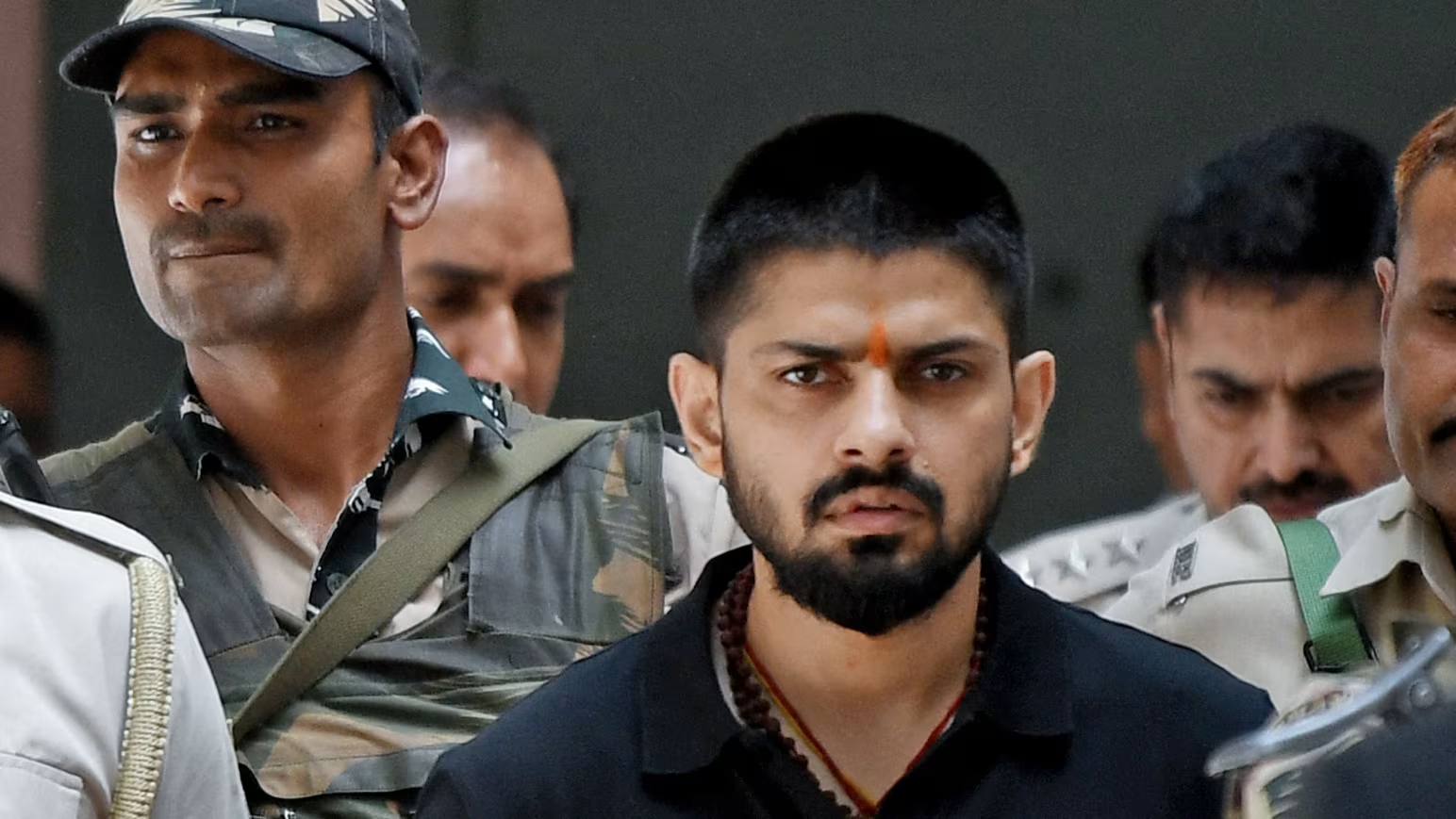
From inside a high-security Indian prison, Lawrence Bishnoi is accused of running a sprawling criminal and terror network that stretches across continents — a network so powerful that Canada has now formally designated his gang as a terrorist entity.
Bishnoi, 32, is no ordinary inmate. According to India’s National Investigation Agency, he leads a network of more than 700 operatives from behind bars, where he faces a long list of charges including murder, extortion, and terror activities. His “command center” is reportedly a smuggled smartphone. From his cell, he has been accused of threatening Bollywood superstar Salman Khan, orchestrating the killing of Punjabi rapper Sidhu Moosewala, and even directing an assassination plot on Canadian soil.
Last month, Canada escalated Bishnoi’s notoriety when it accused India of using his gang to carry out violent acts against Sikh dissidents in Canada. Public Safety Minister Gary Anandasangaree said in a statement that “specific communities have been targeted for terror, violence and intimidation by the Bishnoi Gang. Listing this group of criminal terrorists gives us more powerful and effective tools to confront and put a stop to their crimes.”
The designation transformed Bishnoi from a notorious Indian gangster into an internationally wanted figure. He has denied many of the allegations, and his lawyer told CNN they will investigate Canada’s claims. Indian authorities have not publicly responded to the designation, which comes as Ottawa and New Delhi attempt to repair strained diplomatic relations.
Bishnoi’s story began far from the underworld — in the quiet farming village of Dutarawali in Punjab. The son of a police constable, he was once a promising student at a convent school. Villagers remember him as polite and well-behaved, a boy who played volleyball and cricket in dusty lanes. But after moving to Chandigarh around 2010 to study law at Panjab University — an institution known for its rough-and-tumble student politics — his trajectory shifted dramatically.
Within a few years, he had immersed himself in the violent world of student gangs and built a powerful criminal network spanning Punjab, Haryana, Chandigarh, and Rajasthan. His first arrest came in 2010 for alleged assault. By 2012, he faced more than a dozen criminal cases. In 2014, he was arrested after a shootout in Rajasthan, escaped custody, and was later recaptured in Punjab. Authorities soon discovered that incarceration would not curb his influence; he continued to run his gang seamlessly from within prison walls.
Bishnoi’s network became infamous in 2018 when he publicly threatened Salman Khan over the 1998 blackbuck poaching case. A follower of the Bishnoi community — a Hindu sect known for its strict protection of animals — he vowed revenge, calling it his life’s mission to make the actor “pay.” Four years later, police accused him of masterminding Moosewala’s killing. Bishnoi denied the charge but blamed an aide, doubling down on his threats against Khan in the same interview.
Despite spending nearly a decade behind bars, Bishnoi’s network has reportedly expanded internationally, with alleged operations in the United States, Dubai, and Canada. Canadian authorities say his gang has been linked to violent plots against Sikh separatists, including the 2023 assassination of Hardeep Singh Nijjar in British Columbia. Nijjar was designated a terrorist in India for his role in promoting the Khalistan separatist movement. India has long accused Canada of harboring Sikh extremists, while Canada has accused India of sponsoring violence against its citizens.
Last year, then-Prime Minister Justin Trudeau told a parliamentary committee that India was “using criminal organizations like the Lawrence Bishnoi gang” to carry out violence against Canadian citizens. India denies any involvement in Nijjar’s murder.
With the Canadian designation now in place, authorities have new powers to freeze assets, block funding, and prosecute anyone associated with the Bishnoi Gang. Sikh groups in Canada, including the World Sikh Organization, have welcomed the move, calling Bishnoi’s network “a key player in India’s campaign of transnational repression against Sikhs.”
Bishnoi himself seems unfazed. In a 2024 interview from prison, he said, “I don’t feel bad being called a gangster, it’s the identity God gave me. After spending nine years in jail, I don’t dream of becoming good. I’m good just the way I am.”