

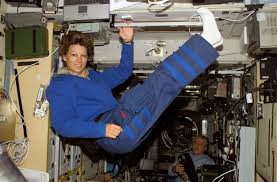
Managing menstruation poses unique challenges for female astronauts during long-duration space missions. When women travel in space for extended periods, planning for their menstrual cycles becomes crucial due to limited access to typical facilities.
While it remains uncertain if astronaut Sunita Williams faced this challenge during her nine-month mission, menstruation management is a significant consideration for female astronauts. To explore this issue, BBC spoke with Dr. Varsha Jain, a space gynecologist collaborating with NASA on women’s health research.
Historically, NASA addressed menstrual health during preparations for the first American woman astronaut, Sally Ride, estimating the number of sanitary products needed. Initially, they significantly overestimated, planning for 100-200 sanitary pads per week. Today, female astronauts commonly use birth control pills to suppress menstruation during missions, ensuring ease of management. Alternatively, standard sanitary products are also viable for healthy astronauts.
Dr. Jain highlighted ongoing research aimed at completely preventing menstruation during space travel, further simplifying health management.
Men and women experience physical effects of space travel slightly differently. Women often report increased fatigue or sluggishness during missions, whereas men frequently face tiredness upon returning to Earth. Men may also experience vision and hearing issues post-mission, while women are more susceptible to blood pressure-related challenges. The precise causes—whether hormonal or otherwise—are still being studied, with further research necessary to fully understand these differences.