

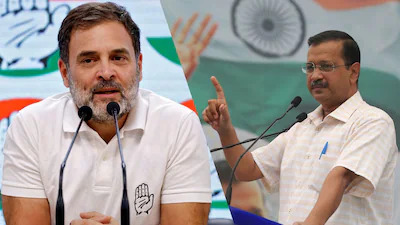
As Haryana gears up for the 2024 Assembly Elections, the Bharatiya Janata Party (BJP), led by Chief Minister Manohar Lal Khattar, is facing a tough battle. A wave of anti-incumbency, internal dissent, and a resurgent opposition led by Rahul Gandhi and the Congress, along with a growing presence of the Aam Aadmi Party (AAP), is challenging the BJP’s grip on power. The outcome of this election could have far-reaching consequences, not just for the state but also for Prime Minister Narendra Modi and his standing within the BJP and RSS (Rashtriya Swayamsevak Sangh).
Key Issues Fueling Anti-Incumbency:
- Kisan Movement Fallout: One of the BJP’s biggest challenges in Haryana stems from its handling of the Kisan Movement. The farmer protests against the now-repealed farm laws have left a significant impact, particularly in agrarian states like Haryana. Farmers still harbor resentment against the BJP for initially defending the controversial laws. This unresolved discontent is a major factor in the rising anti-incumbency sentiment in rural areas.
- Unemployment and Economic Distress: Haryana has been grappling with high unemployment rates, consistently ranking among the worst in the country, with figures crossing 28% in 2023
- The lack of job opportunities, combined with the poverty experienced by many small farmers, has become a focal point for opposition parties. Congress and AAP are both using these issues to galvanize support, particularly among the youth and rural voters, who feel left behind by the BJP’s policies.
- Internal Factionalism: The BJP is also dealing with internal dissent. The party’s decision to deny tickets to some prominent leaders has led to internal rebellions. In key constituencies such as Gurgaon and Rewari, infighting threatens to splinter the party’s base, further complicating its chances of securing a third term.
- Civic Issues in Urban Areas: Urban dissatisfaction, particularly in districts like Gurgaon, has become another thorn in the BJP’s side. Residents are concerned about infrastructure failures, poor roads, water shortages, and pollution, making urban constituencies more vulnerable to opposition gains. These local issues are weakening the BJP’s urban voter base.
Resurgence of Rahul Gandhi and the Congress
Rahul Gandhi has emerged as a central figure in revitalizing the Congress, especially in states like Haryana. His Bharat Jodo Yatra has helped rebuild the party’s grassroots connections and energized its campaign on issues like unemployment, poverty, and social justice. Gandhi’s ability to connect with voters on these pressing issues is boosting the Congress Party’s chances in Haryana. His leadership, along with that of state leader Bhupinder Singh Hooda, is positioning the Congress as a strong alternative to the BJP
AAP’s Growing Influence
The Aam Aadmi Party (AAP) is also making significant strides, contesting 88 seats and promoting its governance reforms, transparency, and a focus on basic services like education and healthcare. AAP’s emphasis on clean governance and addressing civic issues is attracting voters who are disillusioned by both the BJP and Congress(
Impact of a BJP Loss in Haryana on Modi and National Politics
If the BJP loses Haryana, it would have wider repercussions for Narendra Modi at both the national level and within his party. Here’s how:
- Impact on Modi’s Central Leadership: Haryana is a crucial state for the BJP, especially given its proximity to Delhi and its significance in national politics. A loss here could dent Modi’s image as an invincible leader heading into the 2024 General Elections. Modi’s reputation has often been linked to the BJP’s dominance across multiple states, and a defeat in Haryana could raise doubts about his ability to maintain electoral momentum. It would provide a boost to Rahul Gandhi and the Congress, potentially reshaping the narrative ahead of the general elections.
- Internal Criticism from BJP and RSS: Within the BJP, a Haryana defeat could exacerbate the internal dissent that is already visible in the state. Modi’s grip over the party has been strong, but losses in key states could embolden factions within the BJP that are critical of his leadership. Additionally, the RSS, which holds significant influence over the BJP, may start questioning the party’s electoral strategies. The RSS has historically supported Modi but is known to prioritize ideological alignment and long-term vision. A defeat in Haryana, combined with issues like the Kisan Movement, could lead to pressure from the Sangh Parivar for recalibration of the party’s approach, especially regarding rural and agricultural policies.
- Effect on National Strategy: A loss in Haryana would also raise questions about the BJP’s broader electoral strategy, especially in northern India. Modi has relied on a combination of nationalistic rhetoric, governance reforms, and populist schemes to win elections. However, if these strategies fail in Haryana, the party may need to rethink its approach in other key states leading up to the 2024 General Elections. The Congress and AAP could use a Haryana victory to strengthen their base in other states, building momentum for a national challenge against the BJP.