

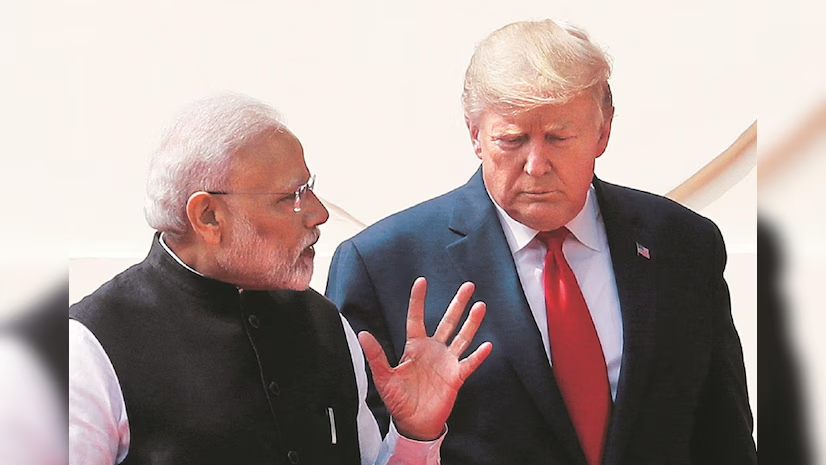
The relationship between former U.S. President Donald Trump and Indian Prime Minister Narendra Modi, once hailed as a symbol of strong Indo-American camaraderie, appears to have frayed significantly amid a series of diplomatic, economic, and political tensions that unfolded over the past year.
While Trump and Modi shared highly publicized moments in the past—including the 2019 “Howdy Modi” rally in Texas—the tone has shifted dramatically in 2025. The latest signs of strain stem from deepening trade disputes, diverging diplomatic strategies, India’s military ties with Russia, the explosive Adani corruption scandal, and Modi’s recent diplomatic snub of Trump during his U.S. visit.
Trade War Clouds Once-Robust Economic Ties
One of the most significant flashpoints is trade. Earlier this year, President Trump reimposed steep reciprocal tariffs of up to 26% on Indian goods, criticizing India’s protectionist policies and high duties on U.S. agricultural and dairy products. India responded with partial tariff cuts but stood firm on protecting its farming sector, which remains politically sensitive and economically vital.
Efforts are ongoing to salvage a trade deal that could double bilateral trade to $500 billion by 2030, but negotiations have stalled amid mounting rhetoric on both sides.
Modi Skips Meeting with Trump During U.S. Visit
In a move that captured headlines globally, Prime Minister Modi visited the United States in September 2024 and met with several key American leaders—but conspicuously avoided any engagement with Trump. This was in stark contrast to earlier public displays of unity.
Analysts suggest Modi’s decision was strategic, aimed at avoiding partisanship ahead of the 2024 U.S. election and fostering broader bipartisan support for India. However, the snub reportedly angered Trump, who later criticized Modi’s government in interviews and social media posts.
Adani Scandal Sparks International Fallout
The fallout from the Adani Group scandal has further complicated matters. In November 2024, U.S. federal prosecutors indicted Gautam Adani and several top executives for allegedly bribing Indian officials to win solar energy contracts. The $250 million bribery and fraud case made global headlines and spotlighted Adani’s ties to Prime Minister Modi.
While the Indian government has denied wrongdoing, and Adani has labeled the charges “baseless,” the scandal has raised uncomfortable questions about corporate favoritism and governance in India. Trump reportedly viewed the scandal as further evidence of “unfair business practices” and used it to justify withholding trade concessions.
Defense Purchases and Russian Ties
India’s continued defense deals with Russia—especially its purchase of the S-400 missile system—have also annoyed the Trump camp. Though Washington stopped short of imposing sanctions, officials expressed deep concern over India’s strategic alignment and urged diversification toward American defense partners.
This defense rift has cast a shadow over broader Indo-Pacific cooperation, a pillar of the U.S.-India relationship in countering China’s growing influence.
Immigration and Deportation Disputes
Another area of friction emerged with Trump’s hardline immigration policies. Over 100 Indian nationals were deported from the U.S. earlier this year, many under what Indian human rights groups described as harsh conditions. Though the Indian government responded diplomatically, the public backlash placed further strain on ties.
Ceasefire Controversy with Pakistan
A diplomatic spat flared after Trump claimed credit for mediating a ceasefire between India and Pakistan following a terrorist attack in Jammu & Kashmir. Indian officials dismissed the claim, stating their decision to de-escalate was made independently. The incident was perceived in New Delhi as undermining Indian sovereignty and portraying Modi as dependent on U.S. intervention.
While the U.S. and India remain critical strategic partners, the personal relationship between Trump and Modi—once seen as a symbol of global populist alignment—is clearly under strain. With Trump eyeing a potential political comeback and Modi facing domestic criticism over foreign policy missteps, the road ahead for U.S.-India relations appears more complex than ever.
As both leaders navigate shifting geopolitical landscapes, their ability to manage these tensions will determine whether the world’s two largest democracies can maintain a stable, cooperative partnership in the years to come.