

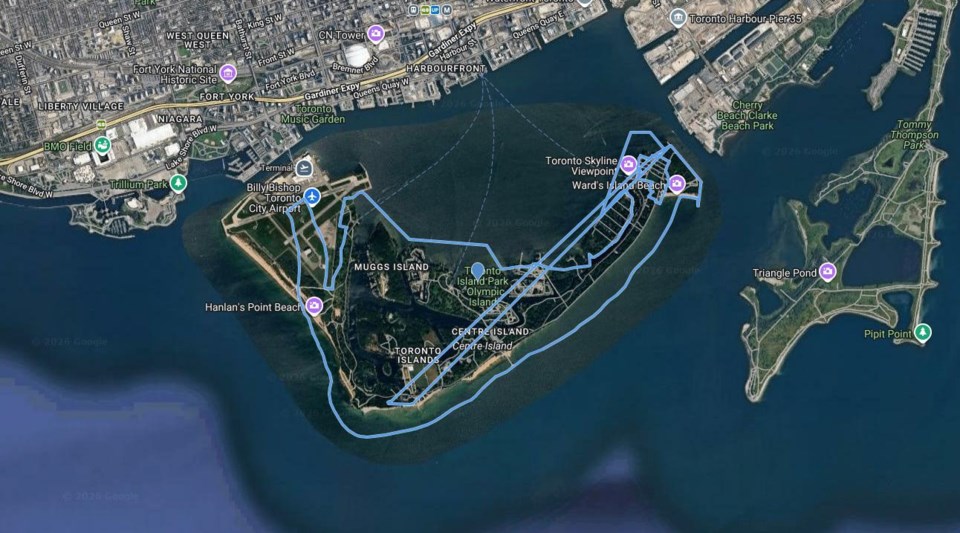
The Doug Ford government says it does not intend to seize the entire Toronto Islands, despite introducing legislation that gives the province broad powers to expropriate large portions of island and waterfront land for the planned expansion of Billy Bishop Toronto City Airport.
The proposed law, called the Building Billy Bishop Act, was introduced by Prabmeet Sarkaria. If passed, it would allow the province to take control of several properties currently owned by the City of Toronto.
Property records attached to the bill identify multiple parcels of land that could be subject to expropriation. These include Little Norway Park, shoreline sections near the airport ferry terminal, Éireann Quay, part of Bathurst Street leading to the airport entrance, and a large portion of the Toronto Islands.
The scope of the legislation sparked concern from critics who fear the province may be seeking control far beyond what is needed for airport upgrades.
Chris Glover warned that public spaces such as Hanlan’s Point, Centreville and the Island School could be at risk.
In response, the transportation minister’s office said the listed parcels do not mean the province plans to take all of that land. Officials said they would work with Toronto to narrow the boundaries and only acquire the land required for the project.
The Toronto Islands remain one of the city’s most visited destinations, attracting roughly 1.5 million visitors each year. During peak summer weekends, daily attendance can reach 20,000 people. The islands are also home to hundreds of residents living in long-established communities on Ward’s Island and Algonquin Island.
Olivia Chow strongly criticized the move, calling it a power grab that bypasses city council and local residents. She said no detailed plan for the airport expansion has yet been presented by the province or the Toronto Port Authority.
Chow also signalled the city is prepared to challenge the move in court, though reports suggest Toronto’s legal options may be limited because municipalities fall under provincial authority.
The dispute sets up a major political battle over the future of one of Toronto’s most treasured public spaces while debates continue over transportation growth and waterfront development.