

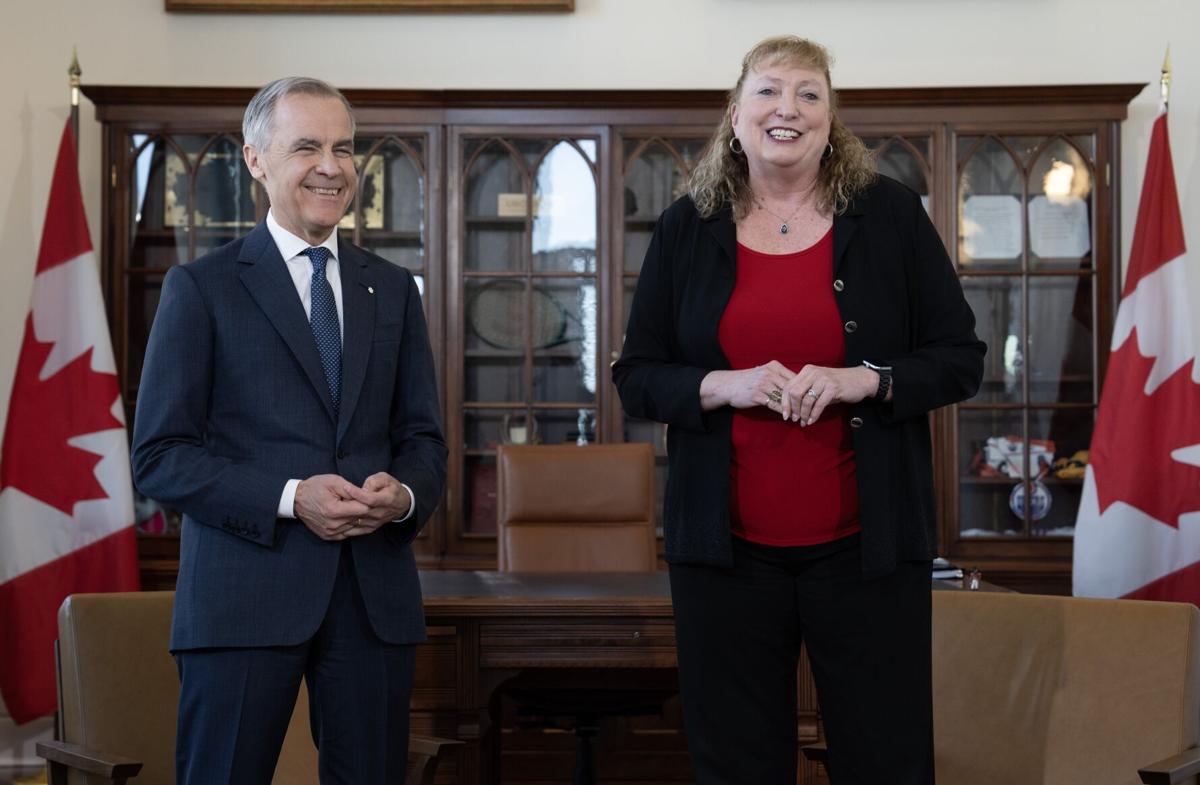
In a dramatic shift that is reshaping Canada’s political landscape, Mark Carney is standing firmly behind his decision to welcome former Conservative MP Marilyn Gladu into the Liberal fold—despite growing questions about ideological differences and political consistency. The move, which has energized Liberal supporters while raising eyebrows across party lines, signals a bold strategy as the Liberals edge closer to a potential majority government.
Gladu’s arrival at her first Liberal convention was nothing short of symbolic, greeted with enthusiasm from party members eager to project unity and momentum. Her high-profile defection has not only strengthened the Liberal ranks numerically but also amplified debate about the evolving identity of the party. For many observers, the moment reflects a broader transformation in Canadian politics, where traditional party boundaries are becoming increasingly fluid.
Carney, addressing concerns head-on, emphasized that the party’s core values remain unchanged. He made it clear that any MP joining the Liberals must align with foundational principles such as protecting individual rights, supporting equality, and upholding the Charter. His message was direct: those who cross the floor are expected to adapt to the party—not the other way around.
At the same time, Carney framed the move as part of a larger vision—building what he described as a “big tent” party that welcomes diverse perspectives and experiences. He argued that a modern government benefits from a mix of voices, backgrounds, and expertise, especially at a time of economic uncertainty and global challenges. Supporters within the party echoed this sentiment, expressing cautious optimism that political differences can evolve over time.
Still, the decision has not been without controversy. Critics have pointed to Gladu’s past positions on key social issues, questioning how they align with Liberal policies. The debate has reignited calls for stricter rules around floor-crossing, including whether MPs should seek a fresh mandate from voters before switching parties. Even within Liberal circles, some voices have expressed unease, highlighting the delicate balance between inclusivity and ideological clarity.
Beyond the immediate political implications, the development carries weight for communities across Canada, including regions like Brampton and the Greater Toronto Area, where voters are closely watching how leadership decisions translate into governance. As the Liberals inch closer to majority territory, the stakes are rising—not just in Parliament, but in public perception.
As Ottawa braces for upcoming byelections that could solidify the Liberals’ position, Carney’s approach underscores a defining theme of this moment: adaptability in a rapidly changing political environment. Whether this strategy strengthens long-term unity or deepens internal tensions remains to be seen, but one thing is certain—the path to power is being redrawn in real time.