

A bid by a Chinese family to immigrate to Canada has been denied after the court found reasonable grounds to believe the husband was complicit in crimes against humanity.
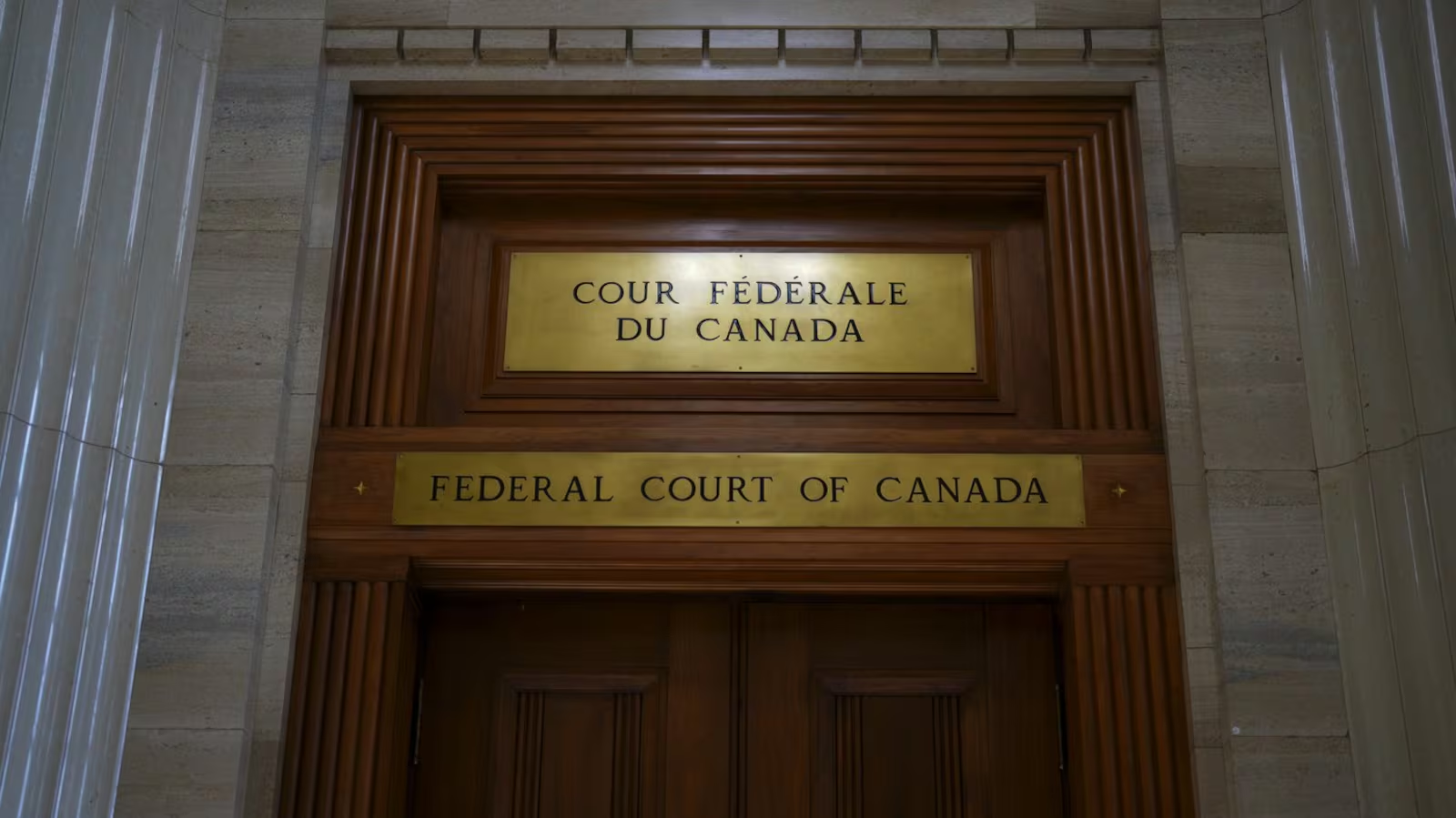
The ruling from the Federal Court of Canada upheld a decision by Immigration, Refugees and Citizenship Canada to refuse permanent residency.
Concerns over police role in China
The case centres on a senior officer from China’s Public Security Bureau in Hebei province.
According to court documents, the officer:
- supervised up to 150 personnel
- oversaw investigations, interrogations and detentions
- held a senior leadership role over a 30-year career
While the officer stated he never personally mistreated suspects, immigration officials concluded there were reasonable grounds to believe he was complicit in systemic human rights abuses.
Decision based on systemic practices
The court noted that torture and rights violations during interrogations are considered systematic and widespread in China, including in Hebei province.
Justice Shirzad Ahmed ruled that even without direct evidence linking the officer to specific acts, his supervisory role within such a system was sufficient to justify the decision.
The judge said the immigration officer’s conclusion was “justified, intelligible and transparent.”
Impact on family application
The immigration application was filed in 2016 by the officer’s wife, Li Li, along with their child.
Under Canadian immigration law, if one family member is found inadmissible, accompanying applicants are typically also denied entry.
As a result, the entire family’s application for permanent residency was refused.
Broader implications
The case highlights Canada’s strict stance on:
- human rights accountability
- admissibility standards for immigration
- indirect or supervisory involvement in alleged abuses
It also reinforces that individuals in positions of authority may be held accountable for systemic practices, even without direct evidence of personal wrongdoing.