

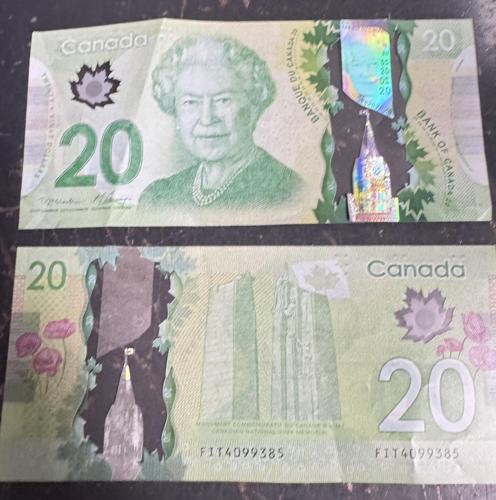
Businesses in the Windsor-area town of Essex are being warned to stay vigilant after reports of counterfeit bills being used in local transactions.
The Essex Centre Business Improvement Area (BIA) issued the alert in a social media post this week, cautioning merchants to double-check larger bills, use counterfeit detection tools whenever possible, and remind staff of the common warning signs.
The BIA also shared key features that can help identify fake Canadian money, including the feel of the bill’s texture, raised ink, and transparent security elements such as the small leaf and large window. Authentic bills also display a metallic portrait, a number value, a border of maple leaves, a building image in the transparent section, and a proper serial number.
Authorities are advising businesses not to accept any suspicious bills and to report them immediately. The Bank of Canada offers further guidance on how to handle counterfeit money both during and after a transaction.
Concerns about fake currency aren’t limited to Essex. Earlier this year, Winnipeg police reported a significant increase in counterfeit Canadian banknotes, warning that many appear to have originated outside the country and could be making their way into Ontario. Police noted that fakes often show differences in colour, fading images, deep creases, or even resemble old paper-style bills. Some counterfeit notes also feature holographic strips that lift from the surface rather than being seamlessly embedded.
Border towns have also been cautioned about counterfeit American money turning up in Canadian businesses. In one case, a fake U.S. $100 bill—marked “for motion picture purposes”—was used at a charity yard sale.
Authorities remind both businesses and consumers to take a quick glance at any cash they receive, looking carefully for unusual markings, foreign writing, or the words “Replica” or “For Motion Picture Use Only.”