

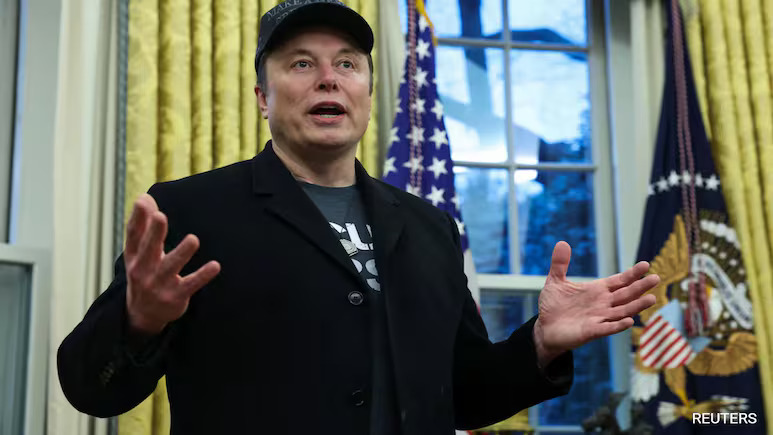
Trump’s Government Efficiency Chief Moves to Cut Workforce Further
Billionaire entrepreneur and government efficiency leader Elon Musk announced on X (formerly Twitter) Saturday afternoon that all federal employees will receive an email requiring them to explain the work they’ve completed over the past week. Employees who fail to respond will be forced to resign, according to Musk.
The move is part of Musk and President Donald Trump’s broader effort to slash government spending and streamline federal operations through the Department of Government Efficiency (DOGE).
- Musk provided few specifics on the timeline, enforcement, or which agencies will be affected but emphasized the directive aligns with Trump’s instructions.
- The announcement follows a Truth Social post by Trump earlier in the day, where he praised Musk’s work but urged him to “get more aggressive” in cutting federal jobs.
- Musk has been a key figure in Trump’s government downsizing initiative, leading efforts to eliminate what they call “wasteful” federal spending.
Additionally, Trump has moved to dismantle certain agencies, including the United States Agency for International Development (USAID) and has ordered the Consumer Financial Protection Bureau (CFPB) to cease operations.
The mass firings have triggered multiple legal challenges from labor unions and advocacy groups. However, a federal judge ruled Thursday against an effort to block the layoffs, stating that the court lacks jurisdiction over the claims.
As the world’s richest man with an estimated net worth of $384 billion—largely derived from Tesla and SpaceX—Musk has played a pivotal role in Trump’s government restructuring strategy. His influence has only grown under the administration, with Trump relying on his business-oriented approach to overhaul federal spending.
While the directive is expected to face significant pushback from government employees and unions, Musk and Trump appear determined to continue their aggressive downsizing efforts.
Federal employees now await official communication regarding the email directive, as speculation grows over which agencies will be further impacted. The move has sparked concerns over job security, government functionality, and long-term administrative stability.