

Mixed Fortunes for Party Leaders as Canadians Deliver Another Liberal Mandate
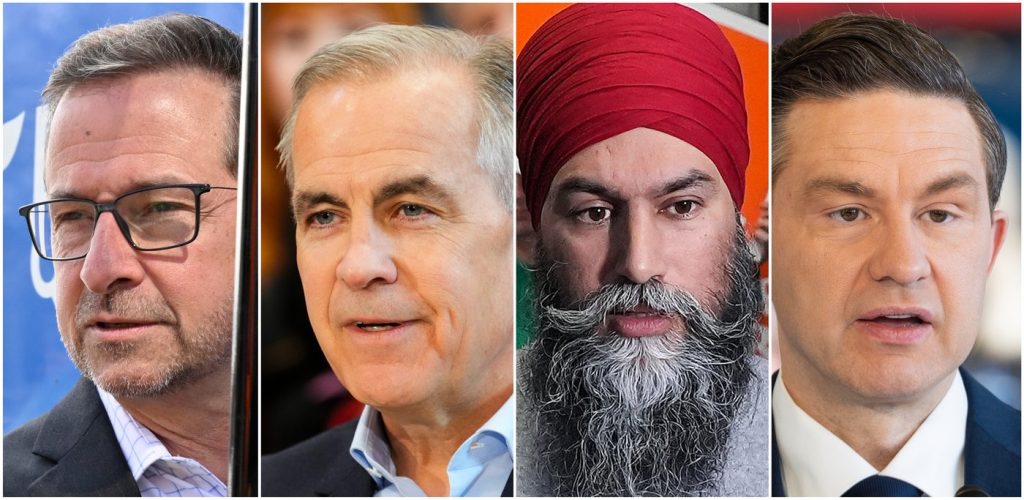
As Canadians returned the Liberal Party to power for a fourth consecutive term, this time with a minority government, the 2025 federal election produced a night of mixed and often dramatic outcomes for the leaders of Canada’s major political parties.
Prime Minister-elect Mark Carney secured his first seat in the House of Commons, winning decisively in the Ottawa riding of Nepean. With nearly all polls reporting, Carney had captured 63.7 per cent of the vote, earning 44,980 ballots compared to 23,600 for Conservative challenger Barbara Bal. Carney’s entry into Parliament comes just over a month after assuming leadership of the Liberal Party and reflects strong local support for the former Bank of Canada governor.
In a stunning upset, Conservative leader Pierre Poilievre lost his seat in Carleton to Liberal challenger Bruce Fanjoy. Despite holding the riding since 2004, Poilievre was narrowly defeated, earning 38,581 votes (46.1 per cent) to Fanjoy’s 42,374 (50.6 per cent), with nearly all polls reporting. Carleton’s 91-candidate ballot—tied for the longest in federal election history—had already drawn national attention, and Elections Canada had warned results might take longer to report due to the unprecedented number of names on the ballot.
The night was equally disappointing for NDP leader Jagmeet Singh, who not only lost his Burnaby Central seat but also announced his intention to step down as party leader once an interim replacement is chosen. Singh placed third in the newly redrawn riding, trailing both Liberal candidate Wade Chang and Conservative James Yan. With most polls reporting, Singh had secured just 18.1 per cent of the vote, well behind Chang’s 41.8 per cent and Yan’s 39 per cent.
Singh’s defeat capped off a challenging campaign for the NDP, which is poised to lose official party status after failing to secure the required 12 seats. Singh, visibly emotional during his concession speech, thanked his supporters and vowed that the NDP’s progressive movement would continue, even if the results fell short.
The Green Party also saw contrasting results for its two co-leaders. Jonathan Pedneault, running in Montreal’s Outremont riding, was projected to finish well behind with only 9.9 per cent of the vote, as Liberal cabinet minister Rachel Bendayan won her seat for the fourth time with over 54 per cent. However, Elizabeth May held on to her Vancouver Island seat in Saanich–Gulf Islands, securing reelection with 39.2 per cent of the vote.
Bloc Québécois leader Yves-François Blanchet had a stronger showing, winning his Beloeil–Chambly riding in Quebec with 48.6 per cent. Though the Bloc lost ground nationally, Blanchet retained his seat and will continue leading the sovereigntist party in Parliament.
Meanwhile, People’s Party of Canada leader Maxime Bernier suffered another defeat in the Beauce riding, finishing fourth with just 5.8 per cent. The Conservative candidate led the race with over 60 per cent of the vote.
While the Liberal Party emerged as the overall victor, the fate of individual party leaders underscored a shifting political landscape. Carney’s victory brings a new face to the prime minister’s office, while the defeats of Poilievre and Singh signal deeper questions about the future direction of both the Conservative and New Democratic parties.