

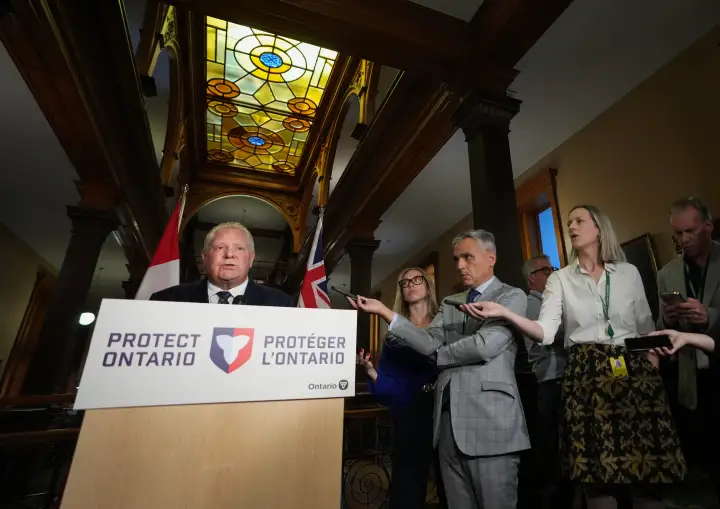
Ontario Premier Doug Ford says his government’s plan to change transparency rules is intended to protect calls and messages made on his personal cellphone.
The Ontario government is proposing changes to freedom-of-information laws that would exempt call logs and text messages from the premier, cabinet ministers and their staff from public access requests.
The move comes just months after the government lost a court case over access to the premier’s phone records. A panel of judges ruled that if government business is conducted on a personal phone, those records could fall under freedom-of-information rules.
Speaking to reporters at Queen’s Park, Ford said conversations between cabinet members, even when conducted on personal phones, should not be subject to public disclosure.
He argued that releasing call records could expose sensitive personal information and suggested reporters might use the information inappropriately.
However, under existing rules, certain types of personal information — including health records, constituency matters, cabinet discussions and caucus documents — are already protected from disclosure.
During a long-running legal battle over access to his cellphone records, Ford’s lawyers previously acknowledged that he uses one phone for multiple roles, including family calls, discussions with constituents and conversations related to government business.
Legal filings stated that the premier often performs different roles throughout the day and uses the same device to communicate in both personal and official matters.
Critics say the proposed changes would limit transparency because the premier is the central decision-maker in the provincial government. If approved, the rules could prevent public scrutiny of calls between the premier and lobbyists, business leaders or other stakeholders.
Ford frequently references conversations he has had with business leaders and experts when explaining policy decisions.
For example, during a dispute involving the liquor retailer and whisky producer Diageo, Ford said he personally spoke with company executives before the government agreed to a $23-million deal to continue selling Crown Royal products in Ontario stores.
He has also said he consulted tunnelling experts before proposing a large tunnel project beneath Highway 401.
Opposition politicians have criticized the plan. Marit Stiles said the premier is mixing up private personal calls with communications related to running the province.
She said private matters are already protected under current laws and argued that the public should still have access to records related to government decisions.
The Ontario government has defended the proposal, saying the changes would align the province’s freedom-of-information rules with similar policies used by the federal government.