

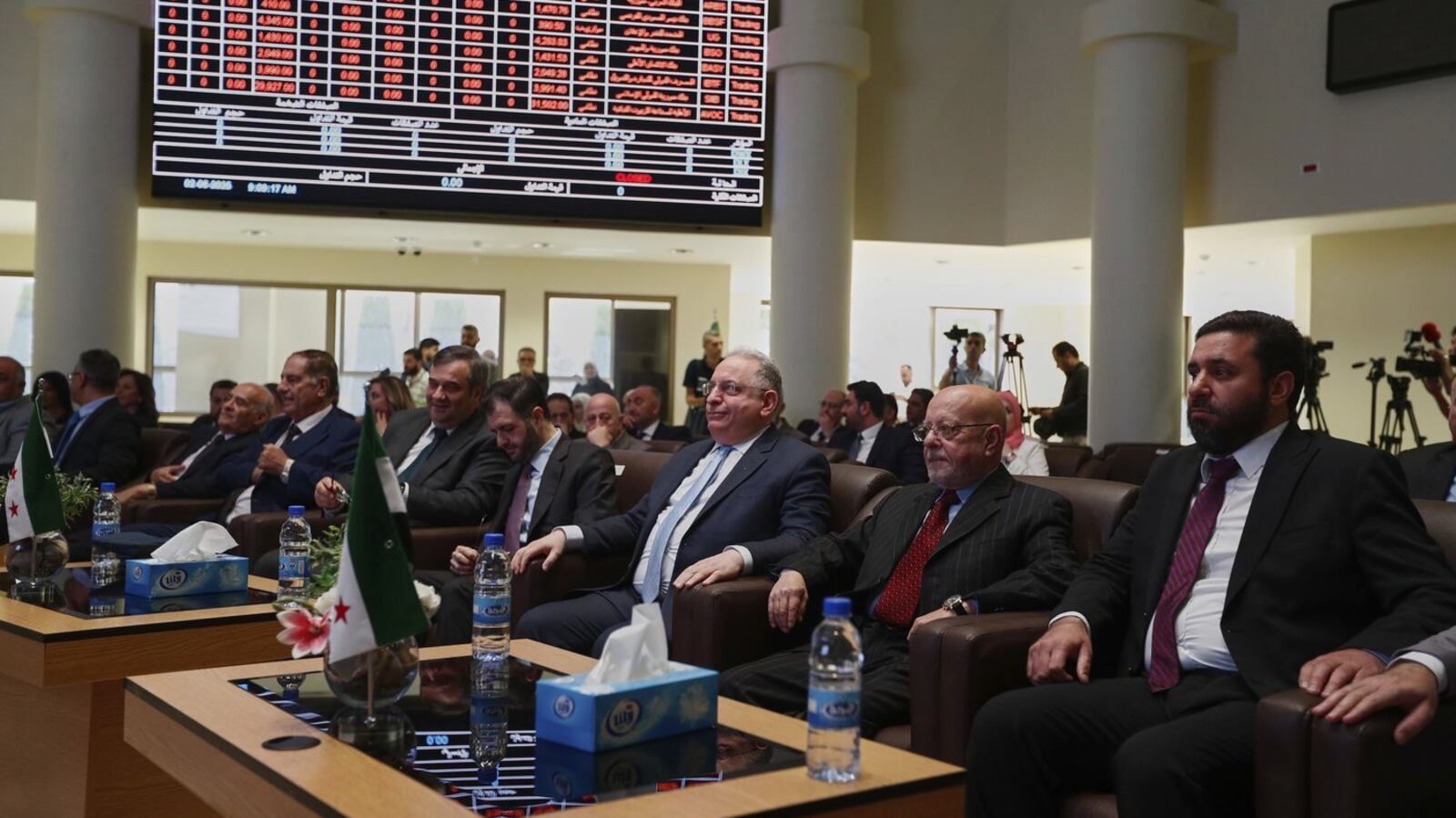
After six months of closure, the Damascus Securities Exchange officially resumed trading on Monday, signaling a cautious but determined step toward economic recovery in Syria following the collapse of the Assad regime. The reopening comes as Syria’s new leadership looks to stabilize the nation’s battered financial system and encourage domestic and foreign investment in a country still reeling from nearly 14 years of civil war.
Syrian Finance Minister Mohammed Yisr Barnieh presided over the reopening ceremony, hailing the event as a “milestone” in Syria’s transition to a post-conflict economy. Speaking to reporters and state media, Barnieh emphasized the exchange’s revamped vision as a privately operated hub focused on digital infrastructure and business growth. According to the state-run SANA agency, Barnieh said the new administration is committed to “facilitating business operations and opening doors to promising investment opportunities.”
The Damascus exchange had suspended operations during the chaos of a swift rebel offensive last year that culminated in the dramatic ousting of longtime president Bashar al-Assad. Now, under new governance and with key institutions being restructured, the reopening of the stock market is being presented as a symbol of the country’s economic rebirth.
The move comes just weeks after sweeping sanctions imposed during Assad’s rule were lifted by both the United States and European Union, providing Syria with much-needed financial breathing room. The easing of restrictions has already begun to attract international interest, most notably in the energy sector.
In a landmark deal last week, Syria signed a $7 billion agreement with a multinational consortium to rebuild parts of its devastated power grid. The deal, involving Qatar’s UCC Concession Investments, Power International USA, and Turkey’s Kalyon GES Enerji Yatirimlari and Cengiz Enerji, will bring four combined-cycle gas turbine plants online with a projected capacity of 4,000 megawatts, along with a 1,000-megawatt solar power facility. The project aims to restore energy access to millions of Syrians and boost industrial recovery.
With investor confidence slowly returning, Syria’s new economic strategy hinges on building transparent financial systems and encouraging innovation and private sector participation — a sharp departure from the centrally controlled policies of the past. While many challenges remain, including infrastructure damage and political uncertainty, Monday’s reopening of the Damascus Securities Exchange marks a tentative but important shift in Syria’s path toward reconstruction and reintegration into the global economy.