

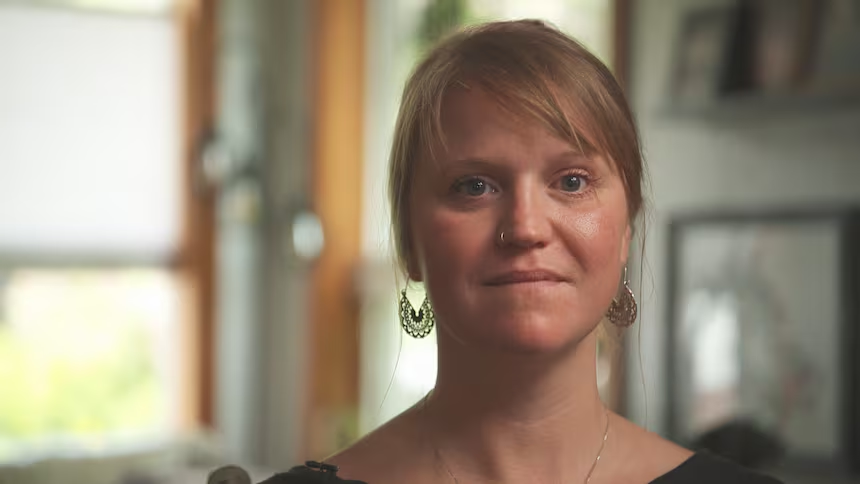
A British Columbia nurse whose identity was stolen in a major Canada Revenue Agency fraud scheme says she is frustrated that years after her CRA account was hacked, no criminal charges appear to have been laid directly related to the tax fraud.
Leslie Warner, who works in Fernie, says her identity was stolen in 2020 after an impostor falsely claimed she had moved to Alberta and accessed her Canada Revenue Agency account to obtain a fraudulent tax refund.
Warner said she first had to convince authorities that she was the victim rather than the person responsible for the bogus refund. While her account was eventually restored, she says she has seen little indication the agency aggressively pursued those behind the fraud.
Her concerns intensified after learning an Edmonton-area woman, Christina Cherpak, has now been charged in a separate alleged social services fraud case involving Warner’s stolen identity.
Court documents filed in Alberta reportedly allege Cherpak used Warner’s identity in connection with fraudulent social assistance claims. Warner says the development suggests authorities may already possess evidence linking suspects to broader identity theft operations involving hacked CRA accounts.
A wider investigation by CBC News and the fifth estate previously revealed that at least 26 health-care workers in British Columbia had their CRA accounts compromised through what appeared to be a sophisticated fraud network operating out of Alberta.
The investigation traced fake companies and fraudulent T4 slips to addresses in the Edmonton area. In several cases, impostors allegedly used fake identification at H&R Block Canada locations to obtain instant tax refunds linked to stolen identities.
Former CRA investigator Shawna Roy said the agency may not be doing enough to aggressively pursue criminal enforcement, warning that systemic weaknesses in fraud detection continue to leave Canadians vulnerable.
Roy said she repeatedly raised concerns internally before leaving the agency in 2024, arguing stronger oversight and fraud prevention measures could have stopped many cases before taxpayer money was lost.
The CRA has stated it takes fraud seriously and that its criminal investigations division focuses on the “most serious cases” of tax-related offences, but it declined to comment on whether active investigations are underway.
Warner says the ordeal turned her life upside down, including being wrongly charged and fingerprinted in Alberta before authorities later realized someone else had used her identity.
She now plans to testify during Cherpak’s scheduled 2027 trial and says she hopes authorities eventually uncover everyone involved in what she believes was a larger organized fraud operation targeting health-care workers and taxpayers across Canada.