

A new international study is challenging the long-held belief that counterfeit luxury goods are purchased mainly by people seeking cheaper alternatives. Researchers have found that fake designer products are popular among both low-income consumers and wealthy shoppers, while middle-income buyers are less likely to purchase them.
The study, conducted by researchers from the National University of Singapore, examined millions of counterfeit purchases made by Americans across more than 24,000 zip codes through a major cross-border online marketplace. The findings reveal that demand for fake luxury goods is strongest at opposite ends of the income spectrum, suggesting that factors beyond affordability influence buying habits.
According to the researchers, consumers with lower incomes tend to purchase counterfeit versions of entry-level luxury products, while affluent buyers are more inclined toward replicas of prestigious brands such as Hermès and Chanel. Wealthier consumers were also found to favour more expensive and higher-quality counterfeit items, indicating that appearance, status and social perceptions may be driving their choices.
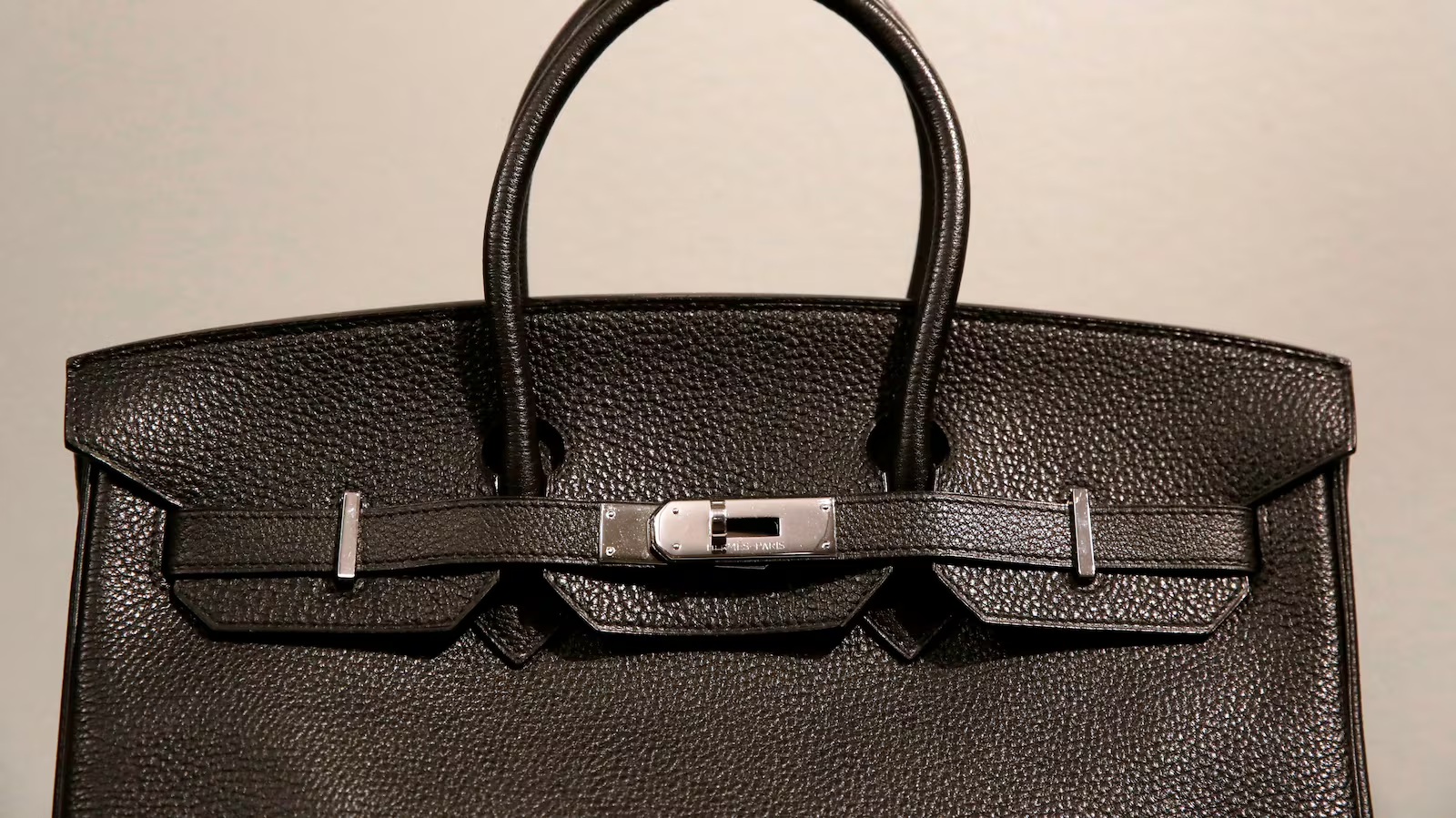
Classic and widely recognized products, including the Hermès Birkin bag and the Chanel Classic Flap, proved more popular among buyers than newer or lesser-known collections. Researchers say the increasing accessibility of cross-border e-commerce platforms has made counterfeit products easier to obtain, contributing to their growing appeal.
The findings challenge the assumption that counterfeit purchases are driven solely by financial constraints. Instead, the study suggests that social, psychological and status-related motivations play a significant role in influencing consumer behaviour.
Researchers say understanding who buys counterfeit goods and the reasons behind those purchases is essential for luxury brands and enforcement agencies. They argue that strategies aimed at combating counterfeiting should recognize that demand exists among both economically constrained consumers and affluent shoppers, rather than focusing on a single buyer profile.
The study was published in the peer-reviewed journal Marketing Science and highlights the evolving dynamics of the global counterfeit luxury market.