

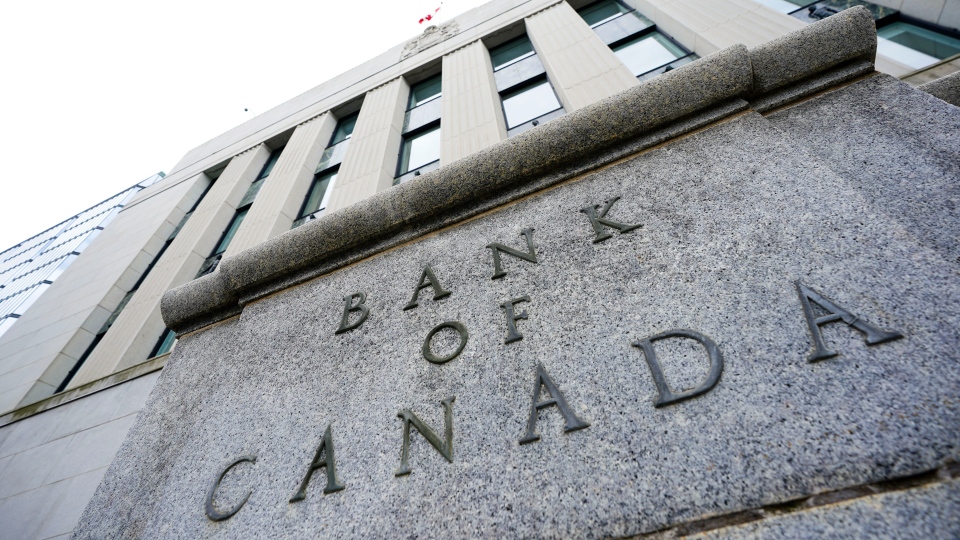
The Canadian Imperial Bank of Commerce (CIBC) forecasts that the Bank of Canada will accelerate its rate cuts in the coming months to stave off a potential recession. According to the new forecast, the central bank is expected to cut its policy rate by 50 basis points in both December and January. This rapid pace of cuts is faster than what most economists had previously anticipated.
CIBC predicts that the central bank, led by Governor Tiff Macklem, will conclude the easing cycle in June 2025, with the policy rate dropping to 2.25%. This is a steeper decline compared to a Bloomberg survey conducted last month, where most economists expected smaller and slower reductions.
“It’s time to declare victory in the fight against inflation and focus on reviving the economy,” said Avery Shenfeld, CIBC’s chief economist. “There’s no reason to delay the process of significantly lowering interest rates.”
The change in forecast comes as concerns grow about the weakening state of Canada’s labor market and economy. Recent data revealed the economy added 22,100 jobs in August, but the unemployment rate rose to 6.6%, with the increase in joblessness spreading beyond young Canadians and newcomers to prime-age workers. Shenfeld expects the unemployment rate could rise to 6.8% or 6.9% in the coming months.
The Bank of Canada began cutting its benchmark overnight rate in June 2024, after it had peaked at 5%. Since then, the rate has been reduced to 4.25%, with additional cuts of 25 basis points in both July and September. Governor Macklem recently reiterated that the bank may cut rates by 50 basis points or more if inflation continues to slow, though he also suggested that pausing cuts is an option if the economy shows unexpected strength.
CIBC’s forecast is more aggressive than other major Canadian banks. While National Bank of Canada also predicts a 50 basis point cut by year-end, it expects the easing cycle to end with a policy rate of 2.75%. Other lenders, such as Bank of Montreal, Toronto-Dominion Bank, Royal Bank of Canada, and Bank of Nova Scotia, anticipate a more cautious approach, expecting rate cuts in 25 basis-point increments.
Former Bank of Canada Governor Stephen Poloz added to the debate, stating that further rate cuts may be necessary if downside risks to the economy materialize. He stopped short of predicting a recession but warned that Canada should be prepared for one.
CIBC’s Shenfeld emphasized that interest rates are currently too high for the Canadian economy, adding that faster cuts could stimulate sectors like housing, which have been struggling amid high borrowing costs.
Canada’s economy grew at an annualized rate of 2.1% in the second quarter of 2024, driven largely by government spending and business investment. However, weak consumer spending, supported mainly by population growth, indicates the country’s growth is expected to slow significantly in the second half of the year. Shenfeld highlighted the rising unemployment rate, which is higher than the level economists believe is sustainable for an economy in balance, a concept known as NAIRU.
While the Bank of Canada has historically been cautious in using NAIRU as a guiding measure, the recent data has spurred discussions about the necessity of faster rate cuts to stabilize the economy.