

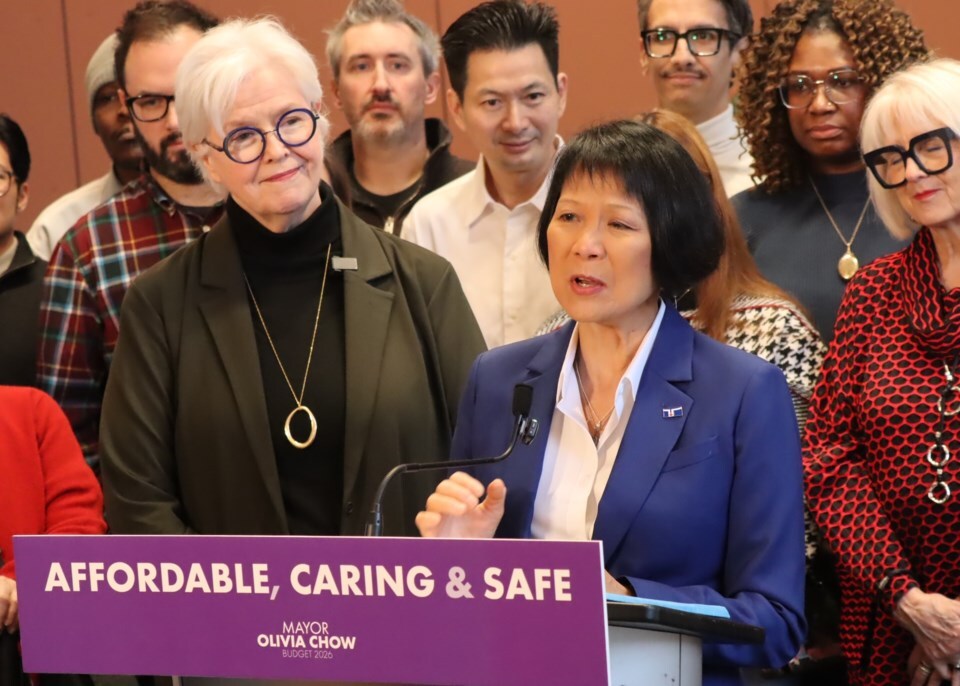
TORONTO — Mayor Olivia Chow has unveiled Toronto’s 2026 municipal budget, striking a cautious balance between affordability and fiscal stability ahead of the October municipal election. The budget holds overall spending largely flat while introducing a modest property tax increase and targeted relief for small businesses.
City spending for 2026 is projected at $18.9 billion, only slightly higher than last year’s $18.7 billion. The proposed 2.2 per cent property tax increase — aligned with inflation — is significantly lower than the hikes of 9.5 per cent in 2024 and 6.9 per cent in 2025. For the average homeowner, the increase translates to approximately $91 annually, or about $7.60 per month.
Speaking at the budget launch alongside Budget Chief Shelley Carroll, Mayor Chow said the approach reflects the financial pressures facing residents. She emphasized that the budget prioritizes affordability while protecting essential city services.
A key new measure includes a five per cent reduction to the small business property tax rate, providing relief to roughly 28,000 businesses across Toronto. The city expects the property tax increase to generate about $35 million in new revenue, while a recently introduced tax on homes sold for more than $3 million is projected to add an additional $14 million.
Major cost pressures in the budget stem from increased staffing for emergency services, higher TTC funding needs, and rising labour costs. Both the Toronto Police Service and the TTC are seeking an additional $94 million each. These increases are partially offset through efficiency measures, line-by-line budget reviews, and continued restraint on non-essential hiring, resulting in more than $780 million in combined savings and offsets.
The budget also relies on a $1.7 billion draw from city reserve funds — higher than in previous years — continuing a post-pandemic trend aimed at avoiding sharper tax increases. While critics argue this approach risks long-term fiscal sustainability, city officials maintain the reserves are being used as intended to manage extraordinary pressures, including costs linked to hosting World Cup events this summer.
Overall, the 2026 budget positions City Hall to maintain service levels, support affordability, and provide targeted economic relief, while setting a more restrained fiscal tone in a pivotal election year.