

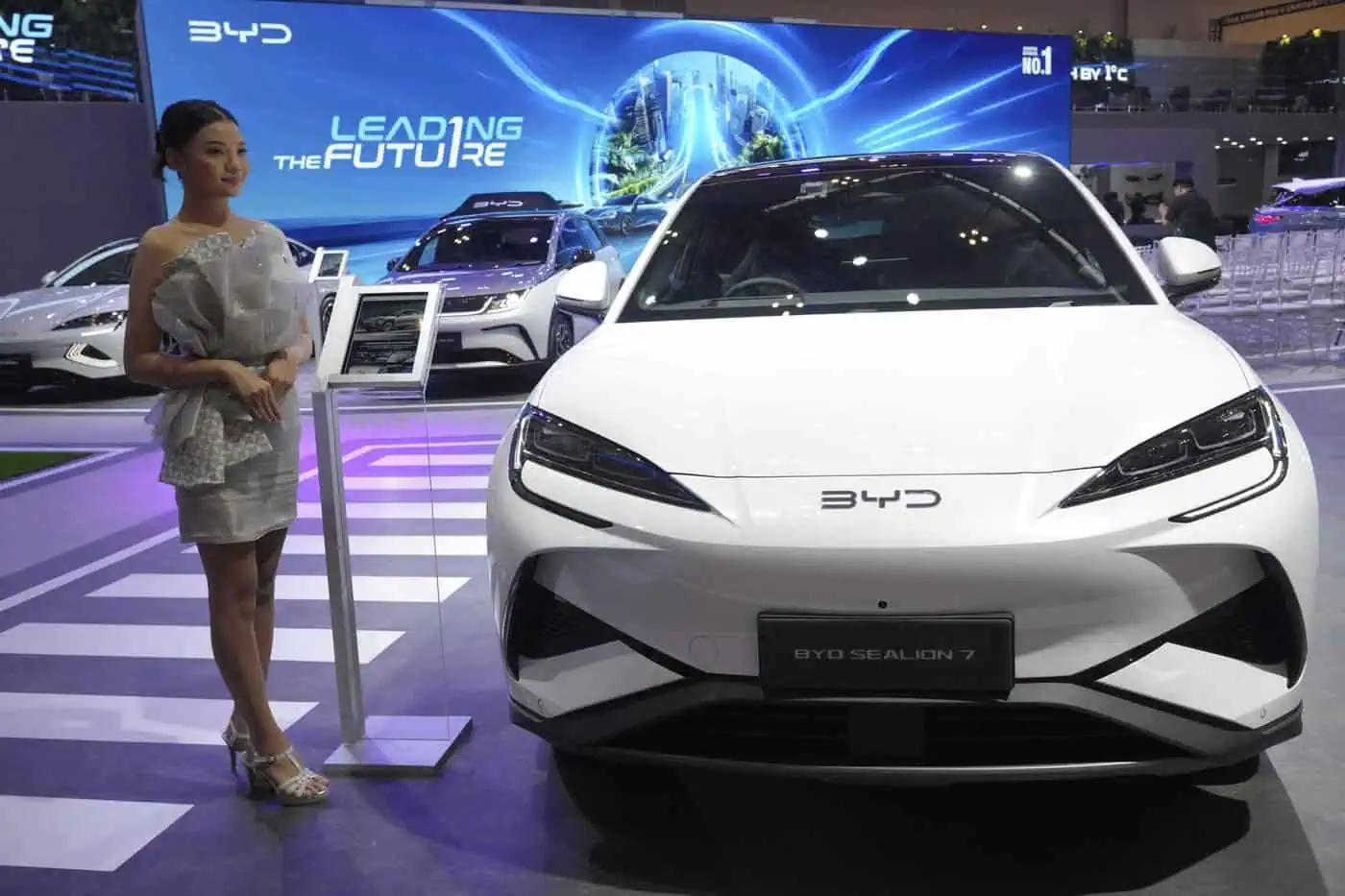
China’s ambassador to Canada says Beijing wants to turn the limited entry of Chinese electric vehicles into a pathway for new manufacturing jobs and more affordable cars for Canadians, pushing back against criticism that Ottawa’s recent agreement risks undermining the domestic auto sector.
In an interview with The Canadian Press, Wang Di said the deal signed last week by Prime Minister Mark Carney and Chinese President Xi Jinping is intended to be the first step toward deeper industrial cooperation. Under the agreement, Canada will allow up to 49,000 Chinese EVs a year at a 6.1 per cent tariff, with half required to be priced under $35,000 by 2030, in exchange for China easing tariffs on Canadian agricultural products.
“Only win-win cooperation can last,” Wang said, arguing that Chinese investment could help build Canada’s EV industry, support job growth and give consumers access to higher-quality, lower-cost vehicles.
The deal marks a sharp shift from 2024, when Canada joined the United States in imposing 100 per cent tariffs on Chinese EVs amid allegations of heavy state subsidies and market dumping. Those measures triggered retaliatory tariffs from Beijing on Canadian farm exports.
Critics remain unconvinced. Ontario Premier Doug Ford has called the agreement lopsided, warning it could flood the market with cheap imports while jeopardizing Canadian automakers’ access to the U.S. market. Unifor president Lana Payne has described the move as a “self-inflicted wound,” saying China could quickly capture market share without guaranteeing local investment.
Wang rejected those concerns, saying Beijing supports Chinese companies investing in Canada, including through joint ventures and factory construction, provided they operate under market rules and are given a fair and predictable business environment. A senior Canadian government source said Ottawa views the deal as part of a longer-term strategy to eventually see Chinese EVs built in Canada.
Analysts remain divided. Critics of China’s industrial policy warn that subsidies have created a global glut of low-cost vehicles that could accelerate deindustrialization, while others point to potential security risks linked to connected vehicle software. Supporters counter that partnerships could mirror existing arrangements abroad, such as deals involving Magna International, which blends Chinese technology with local labour in Europe.
Wang said that same model could work in Ontario, insisting China is not seeking a one-sided outcome. “We don’t want only we win and others lose,” he said, as debate over the future of Canada’s auto industry continues to intensify.