

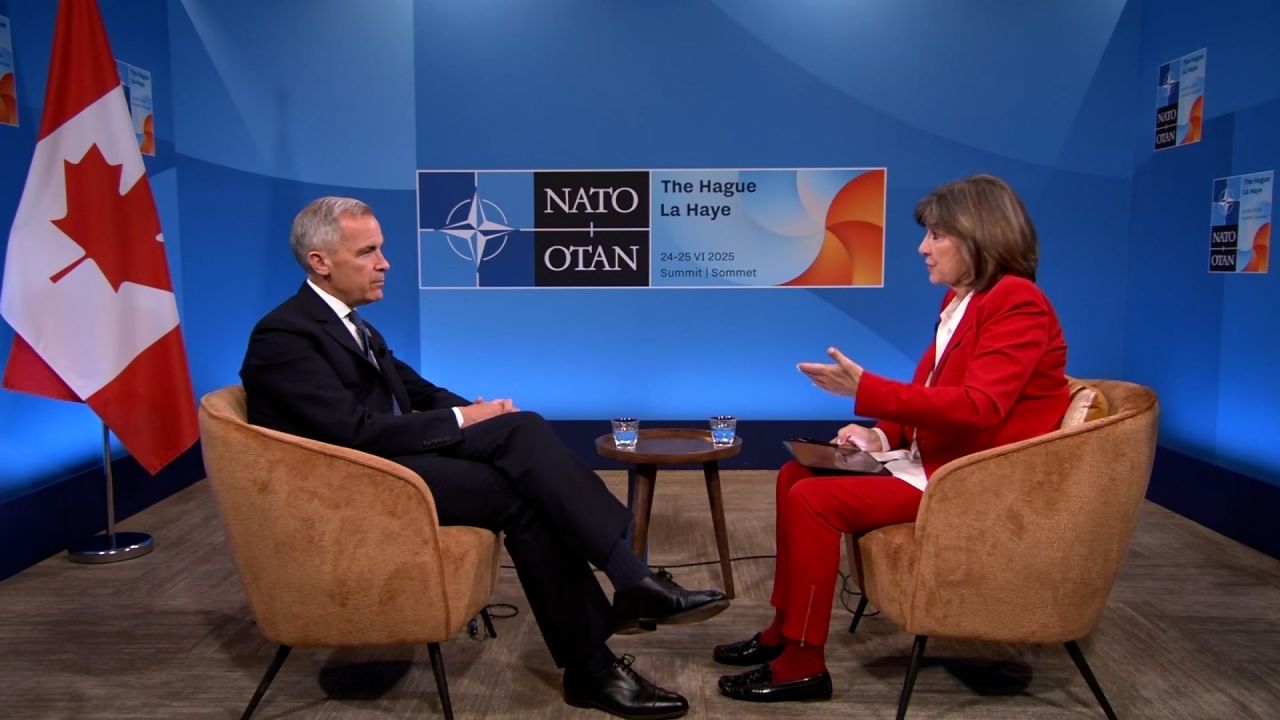
Canadian Prime Minister Mark Carney indicated Tuesday that U.S. President Donald Trump no longer appears interested in annexing Canada to become the 51st state. Speaking to CNN’s Christiane Amanpour on the sidelines of a NATO meeting in the Netherlands, Carney directly responded to a question about Trump’s past rhetoric, stating, “No, he is not.”
“He admires Canada,” Carney added, acknowledging that Trump “maybe for a period of time coveted Canada.” This sentiment echoes a previous statement from U.S. Ambassador to Canada Peter Hoekstra in May, though Trump later contradicted that by posting on social media that Canada should join the U.S. to benefit from his proposed missile defense system.
Despite often characterizing the traditional close partnership between Canada and the U.S. as “over” and actively seeking closer ties with European partners and Australia, Carney credited President Trump for spurring Canada to increase its defense spending. Canada has recently committed to significantly boosting its military budget, aiming to spend 5% of its GDP on defense by 2035, a substantial increase from its current 1.4% and well above NATO’s long-standing 2% target.
“The president is focused on changing a series of bilateral relations,” Carney told Amanpour. “We’re at NATO. He’s been focused on making sure that all members, Canada included… pay their fair share. I think we’re doing that now.” This commitment marks the largest increase in Canadian military capability since the Second World War.
Beyond NATO, Carney also highlighted Trump’s potential “decisive” influence in the Middle East. While a broader regional peace remains the ultimate goal, the immediate priorities, according to Carney, include achieving a ceasefire, ensuring a full resumption of humanitarian aid, and securing the release of all hostages held in Gaza.
Carney further noted that Trump has “used his influence and US power in other situations,” citing recent actions in Iran as creating a “possibility of moving forward” on peace efforts, driven by a “moral imperative.”
The Canadian leader also offered a nuanced assessment of Iran’s recent response to U.S. airstrikes on three of its nuclear sites. Carney described Iran’s retaliatory strike on a regional U.S. military base as “proportionate” and “de-escalatory,” particularly as it appeared to have been “previewed” and was largely intercepted. “The military action was also a diplomatic move by Iran,” Carney concluded, while reiterating that Canada does not welcome hostilities.