

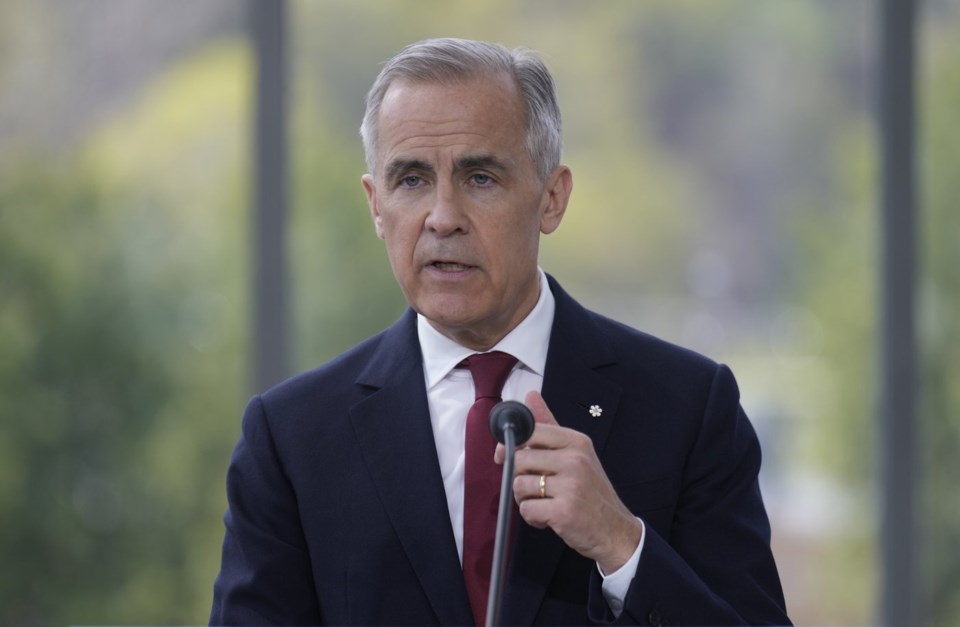
Prime Minister Mark Carney is expected to release the federal government’s long-awaited clean electricity strategy Thursday, outlining a national plan to dramatically expand Canada’s power capacity over the next 25 years.
According to the Prime Minister’s Office itinerary, Carney will announce a strategy focused on delivering “clean, affordable and reliable energy” for Canadians during a news conference on Parliament Hill.
The plan is expected to provide a roadmap for doubling Canada’s electricity grid capacity by 2050 as demand for power continues to rise due to population growth, electric vehicles, industrial expansion and the rapid growth of energy-intensive data centres.
Carney has repeatedly emphasized that modernizing and expanding the country’s electricity infrastructure is essential for Canada’s economic growth, competitiveness and climate goals.
“We’re looking at things where we can knit together the provincial grids much more effectively, be a more sustainable electricity system, more competitive, more affordable for people,” Carney said recently in an interview with The Canadian Press.
The federal Liberal platform last year pledged to build a stronger east-west electricity grid across Canada. Currently, most provincial electricity systems are connected north-south with the United States rather than directly with neighbouring Canadian provinces, limiting the country’s ability to share power resources efficiently.
The strategy is expected to include major investments in:
- Hydroelectric expansion
- Renewable energy projects
- Nuclear energy development
- Interprovincial transmission infrastructure
- Grid modernization and energy storage technologies
The federal government has also signalled increased support for nuclear power as part of the country’s long-term clean energy strategy. Energy Minister Tim Hodgson recently confirmed Ottawa plans to release a national nuclear strategy later this year.
That strategy is expected to focus not only on domestic electricity generation but also on positioning Canada as a global supplier of nuclear technology and uranium resources.
The move comes as studies commissioned by the Canadian Nuclear Association suggest Canada’s electricity demand could double — or even triple — by 2050.
The government is also expected to address energy security challenges in remote and northern communities, many of which still rely heavily on diesel-generated electricity.
Electricity generation currently accounts for approximately seven per cent of Canada’s greenhouse gas emissions, a figure that has declined significantly in recent years as provinces phased out coal-fired power generation.