

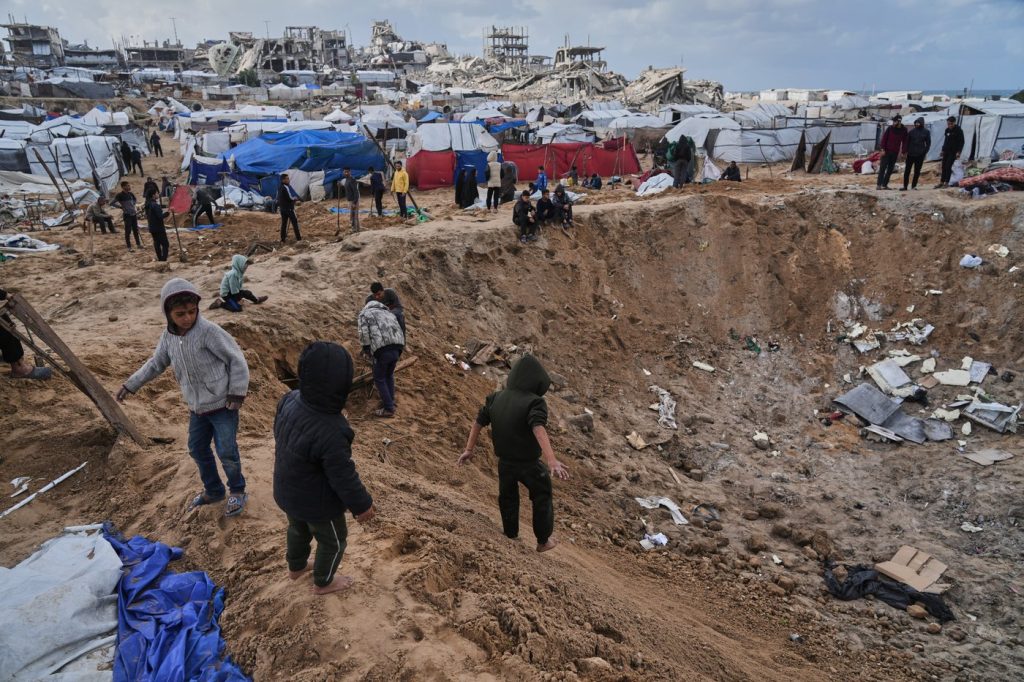
As humanitarian advocates warn that global attention is drifting away from Gaza, a Canadian charity is moving to establish a relief hub aimed at providing traumatized children with mental health support and access to education.
Human Concern International (HCI), a Muslim charity based in Ottawa, is partnering with UNICEF Canada to open an emergency learning and support space in Gaza. The project includes 12 classrooms and is funded through a $3.5 million contribution from HCI to UNICEF.
“The need is so urgent,” said Usama Khan, an adviser to HCI’s leadership.
The hub is expected to serve nearly 1,500 children with psychological needs, including many who have sustained disabilities during Israel’s bombardment of the territory. In addition to education and mental health services, the facilities will also be used to distribute food and medicine supplied by United Nations agencies.
“The emotional health and the psychological well-being of the children is incredibly important, with them being so vulnerable,” Khan said. “These centres will ensure there are experts who can work with children across the varying degrees of needs that they have.”
HCI and UNICEF declined to disclose the precise location of the hub, whether it will be in areas controlled by Israel or Hamas, or a specific opening date. Khan said the initiative is not intended to be a long-term project but is meant to launch as quickly as possible in a location that meets local needs while allowing safe access.
UNICEF estimates that more than one million children in Gaza require mental health support. Gaza’s population of approximately 2.1 million is younger than that of most countries, and UNICEF reports that 97 per cent of schools in the territory have been damaged or destroyed. These conditions persist as countries including Canada and the United States reduce foreign aid spending.
Currently, UNICEF supports 93 emergency education hubs in Gaza, reaching about 111,000 children out of the estimated 700,000 school-aged children who require schooling. Video footage provided by the agency shows makeshift classrooms constructed from tarps or corrugated metal, where children sit on rugs while teachers lead lessons.
Khan emphasized that education remains essential to Gaza’s future, noting that the territory had a high literacy rate before October 2023, when Hamas attacked Israel and the ensuing war began.
“We can provide education and skills so that, years later, these children have a chance at a dignified life,” he said. “We want to ensure children are not out of school for long periods and that they can still feel safe, connected, and happy—like children anywhere else in the world.”
Khan also warned that the humanitarian crisis in Gaza remains severe, despite a ceasefire, and said he fears international audiences are becoming complacent as attention shifts to other global conflicts.
Israel continues to restrict certain goods from entering Gaza, including items that aid workers say are essential for supporting traumatized children. Khan said these limits have prevented access to toys and tools commonly used in psychological treatment programs.
“Since the ceasefire, things are definitely more open and moving,” he said. “But we shouldn’t be deluded into thinking that everything Gazans need is getting through.”
Khan also criticized Israel’s decision to bar some aid groups from operating in the occupied territories after they declined to provide detailed information about staff and operations. Those organizations have argued the requests were excessive and raised safety concerns, citing the deaths of journalists and aid workers in Gaza and the West Bank.
“More attention and advocacy are needed to ensure that Israel allows aid to flow freely,” Khan said.
Israel maintains that it is complying with humanitarian law while working to dismantle Hamas. However, the country has faced sustained international criticism over the high number of civilian casualties, limits on aid delivery, statements by Israeli officials that appear to assign collective responsibility to Gaza’s population, and the destruction of critical civilian infrastructure, including the Canada Well.