

Canadian businesses are caught in limbo ahead of an impending U.S. tariff deadline, creating uncertainty that has halted investments, stalled hiring, and frozen financial planning amid a constantly evolving trade conflict.
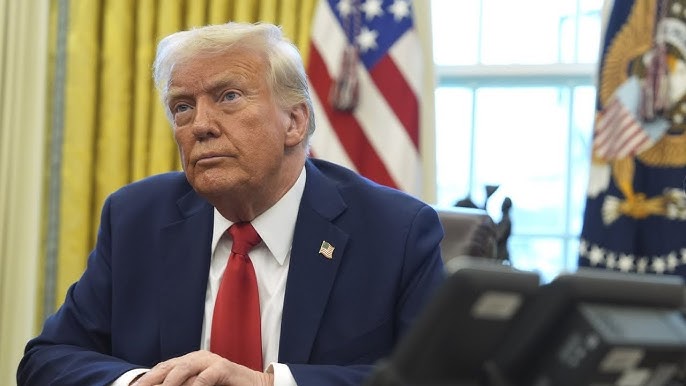
President Donald Trump has vowed to impose sweeping tariffs on global imports, including Canada, beginning this Wednesday. However, shifting details from the White House—highlighted by a recent “constructive” phone call between Trump and Prime Minister Mark Carney—have left businesses scrambling for clarity.
“Nobody knows what the heck is going on,” says Goldy Hyder, CEO of the Business Council of Canada. “We’re dealing with an environment where things are being made up on the fly.”
The U.S. has already applied 25% tariffs on Canadian steel, aluminum, and products not compliant with NAFTA, while a temporary pause on compliant goods ends on April 2. Canada might receive milder treatment, classified among “friendly” nations, according to an Ontario government source. The U.S. is reportedly dividing countries into three categories: “friendly,” “medium,” and “China,” though specifics remain unclear.
The uncertainty has deeply affected Canadian businesses. Matthew Holmes, from the Canadian Chamber of Commerce, notes companies are canceling expansions, delaying product launches, and halting hiring.
“The constant shifting of tariff dates and threats creates a stressful unpredictability,” Holmes said. Recently, Trump’s sudden announcement of a 25% tariff on imported vehicles, effective April 3, further complicated the landscape, catching Canada off guard.
Ontario Premier Doug Ford indicated Canada might face different tariff rates, especially for vehicles with over 50% U.S.-made parts, but timing remains uncertain. As a result, manufacturing sectors are already scaling back operations.
“Two months ago, we had labor shortages,” explained Dennis Darby of Canadian Manufacturers and Exporters. “Now, hiring has stopped and shifts are being cut.”
Canada responded by imposing retaliatory tariffs on $60 billion of U.S. goods and threatens more if tensions escalate. Anticipating tariffs, cross-border cargo surged 58% in February, though this uptick could be temporary.
Economists, including the Bank of Canada, warn of potential recession risks if broad tariffs persist. While recent discussions about a “new economic and security relationship” between Carney and Trump offer hope, substantial damage has already occurred.
“The damage is already here,” Holmes emphasized. “Investment paralysis, price increases, job losses, and canceled contracts are tangible impacts, even without further tariffs.”
Companies like TFI International and BRP Inc. are unable to offer financial forecasts amid the uncertainty. Preetika Joshi of McGill University notes the unpredictability of Trump’s announcements has already opened the door to economic instability.
“We might emerge fine in a few years,” Joshi said, “but the journey ahead will be turbulent, and the reality is that no one knows exactly what to expect next.”