

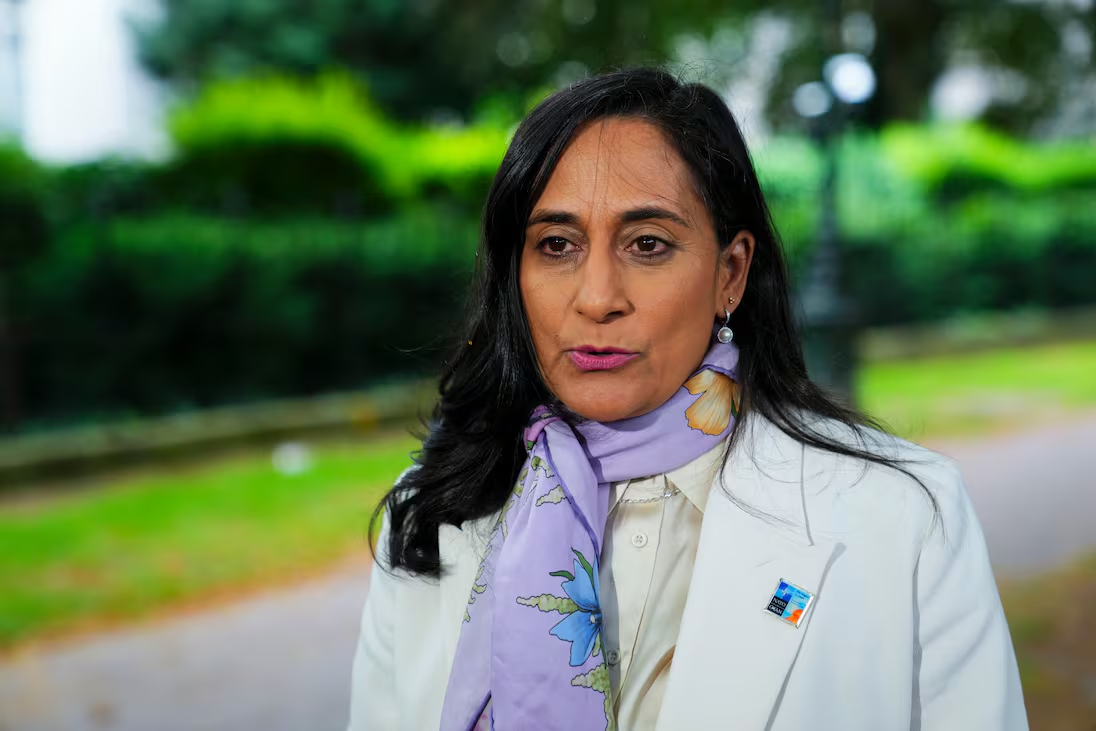
Canada’s decision to formally recognize a Palestinian state is being cast as both a bold step toward peace and a lightning rod for criticism. Speaking at the United Nations, Foreign Affairs Minister Anita Anand emphasized that recognition is not an instant fix but part of a long-term push to revive a two-state solution. “Will that be achieved tomorrow? No,” she said. “But in the medium to long term, that is what we are working towards.”
Prime Minister Mark Carney had pledged in July that Canada would extend recognition during this week’s UN General Assembly. His government tied the decision to conditions for the Palestinian Authority, including governance reforms, elections in 2026 that exclude Hamas, and a commitment to demilitarization. Carney warned that both Hamas’s violence and Israel’s settlement expansion have “steadily and gravely eroded” the chance of peace, while stressing Canada’s move is rooted in principles of self-determination and human rights.
Ottawa’s stance aligns Canada with more than 150 countries, including the U.K., Australia, and France, that now recognize Palestinian statehood. But it puts Canada at odds with Washington. The White House blasted the move, with press secretary Karoline Leavitt saying President Donald Trump “believes it’s a reward to Hamas” and “does nothing to release the hostages or end the conflict.”
Domestically, Conservatives echoed that view, calling Carney’s policy “the recognition of the Hamas State” and accusing him of trying to distract from economic troubles at home. The Israeli embassy in Canada also issued a sharp rebuke, calling the decision “deeply disappointing” and urging Ottawa to reverse course in favor of direct negotiations.
Yet others defended the recognition. Former Canadian ambassador to Israel Jon Allen called it a “positive step,” noting that it sends Palestinians a message of hope and pressures Israel to return to the negotiating table. “With a government that has no interest in negotiating, the West has decided to move unilaterally,” Allen said.
While the recognition alone will not end the war in Gaza or bring hostages home, Canada’s move underscores a growing rift between allies on how to secure peace — and signals Ottawa’s willingness to act even as the path forward remains fraught.