

Canada’s economic performance has sparked growing political debate in recent weeks, but the country’s leading authority on recession assessments says it is still too early to conclude that the nation has entered a recession.
The discussion intensified after Statistics Canada reported that the economy contracted for two consecutive quarters, a benchmark often associated with what is commonly referred to as a “technical recession.” However, economists with the Business Cycle Council of the C.D. Howe Institute caution that the situation is more complex and requires a broader analysis before applying the recession label.
The Business Cycle Council, widely regarded as Canada’s unofficial authority on determining recessions and economic expansions, released a statement emphasizing that two consecutive quarters of declining gross domestic product alone are not enough to declare a recession. The council argues that economic downturns should be assessed using a wider range of indicators, including employment levels, business activity, consumer spending, investment trends, and the overall breadth and duration of economic weakness.
According to the council, the recent economic slowdown has not yet demonstrated the widespread and sustained decline typically associated with a true recession. Economists also note that the first-quarter GDP figures were relatively modest in their decline and may be revised as additional data becomes available in the coming months.
The issue has become a focal point in federal politics. Opposition Conservatives have pointed to the economic contraction as evidence that Canada has entered a recession, criticizing the Liberal government for what they describe as weak economic management. They argue that rising costs, slowing business activity, and declining economic output are signs of deeper economic challenges facing Canadian families and businesses.
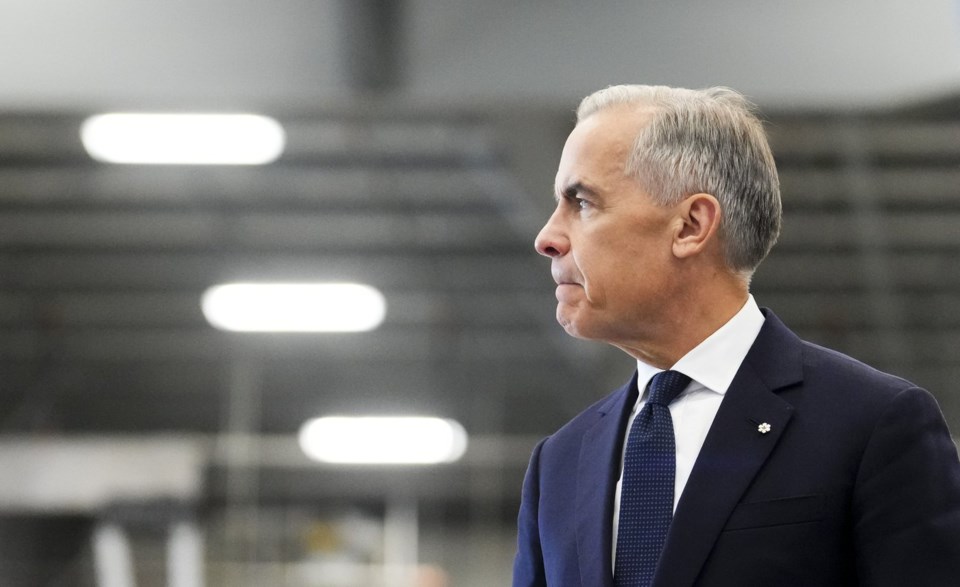
Prime Minister Mark Carney has acknowledged that economic growth may remain uneven in the short term but has defended the government’s strategy. He has argued that Canada is undergoing an important economic transition aimed at reducing excessive dependence on the United States and strengthening domestic economic resilience through diversification, investment, and productivity growth.
Economic analysts note that recession declarations are rarely made immediately after quarterly GDP reports are released. Instead, organizations such as the Business Cycle Council typically wait for a broader collection of economic data to determine whether a genuine recession has occurred. Employment trends, consumer confidence, manufacturing activity, business investment, and future GDP revisions will all play a significant role in shaping that assessment.
For now, economists describe Canada’s economy as slowing rather than definitively contracting into recession. While challenges remain, including trade uncertainty, global economic pressures, and softer domestic growth, the country’s leading economic experts maintain that more evidence is needed before officially declaring that Canada has entered a recession.
The coming months are expected to provide a clearer picture of whether the recent weakness represents a temporary slowdown or the beginning of a broader and more prolonged economic downturn.