

Pakistan Accuses India of Violating Indus Waters Treaty, Calls for Global Mediation
Pakistan Peoples Party (PPP) Chairman Bilawal Bhutto Zardari has warned that India is laying the groundwork for what could be the world’s first nuclear war over water. Speaking at the Middle East Institute in Washington, Bilawal said that India’s decision to suspend the Indus Waters Treaty (IWT) following recent hostilities is a dangerous precedent that threatens regional stability and global peace.
Bilawal emphasized that denying water to Pakistan is not just a diplomatic dispute—it’s an existential threat. “Cutting off our water supply would be an act of war,” he said. “We don’t say it jingoistically, but with the understanding that no country would tolerate having its survival threatened.”
The remarks come in the wake of the April 22 Pahalgam attack in Indian-administered Kashmir, which led to heightened tensions between India and Pakistan. India’s suspension of the IWT in response was met with a series of retaliatory moves by Islamabad, including the closure of the Wagah border, suspension of trade, and a halt to all bilateral agreements with New Delhi.
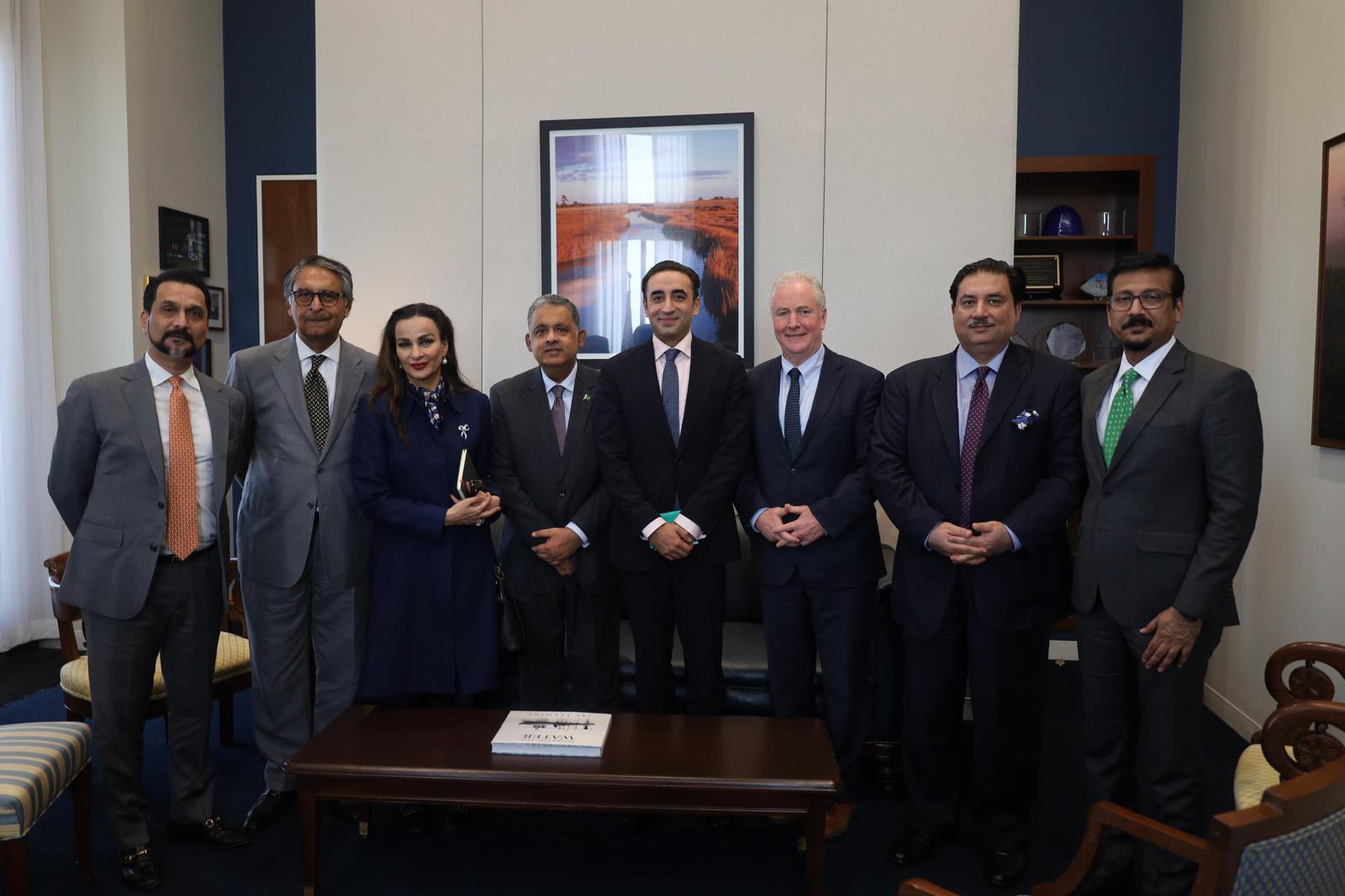
As part of a broader diplomatic campaign, a high-level Pakistani delegation led by Bilawal and including former ministers Hina Rabbani Khar, Khurram Dastgir, and Senators Sherry Rehman, Musadik Malik, and others, met with U.S. lawmakers and officials to present Pakistan’s perspective. Bilawal argued that if India is allowed to break a binding international treaty, other upper riparian countries might follow suit, threatening global water security.

During meetings with members of the U.S. Congress—including Congresswoman Sydney Kamlager-Dove and Senators Jack Bergman, Tom Suozzi, and Ilhan Omar—the delegation called for urgent intervention and reaffirmed Pakistan’s commitment to dialogue, peace, and multilateralism. Bilawal also met with Senator Chris Van Hollen and Congresswoman Sydney Kamlager-Dove to express concern over India’s “increasingly belligerent posture” and refusal to engage in dialogue or accept third-party mediation.
Bilawal insisted that Pakistan’s intention is not to escalate but to prevent future generations from being condemned to war over vital resources. He stated that India and Pakistan, by working together, could combat terrorism, create a more just environment in Kashmir, and collaborate to face shared climate challenges, including devastating droughts and floods.
The delegation also visited the United Nations Headquarters in New York, meeting with Secretary-General Antonio Guterres and permanent members of the UN Security Council. Their message echoed throughout: Pakistan wants peace, but India must honor existing agreements as a precondition to any new dialogue.
Back in Islamabad, Prime Minister Shehbaz Sharif echoed Bilawal’s concerns, describing the recent four-day conflict as a result of India’s unprovoked aggression and reiterating Pakistan’s claim that the Pahalgam incident was a false-flag operation. He praised former U.S. President Donald Trump for his role in brokering a ceasefire and called on him once again to facilitate peace talks between the two nuclear-armed nations.
As tensions continue to simmer, both India and Pakistan have launched diplomatic outreach campaigns in major capitals around the world to present their respective narratives. While Pakistan warns of a humanitarian and environmental crisis, India has yet to respond formally to these latest allegations.