

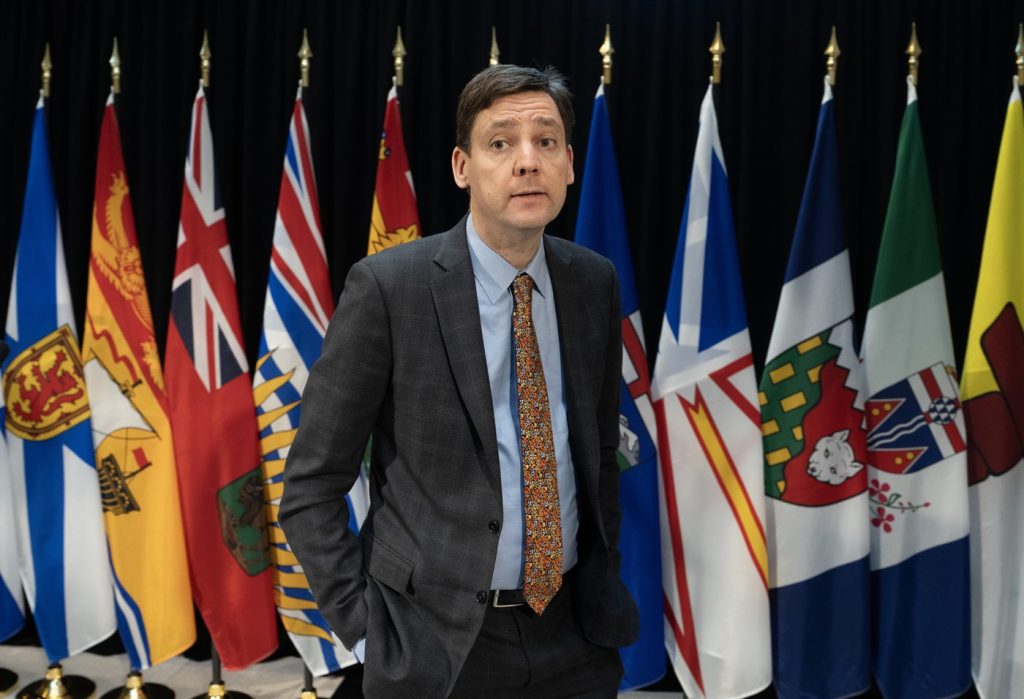
OTTAWA — British Columbia Premier David Eby is calling on Parliament to urgently close immigration and enforcement loopholes as a wave of extortion-related violence targeting homes and businesses continues across Canada.
Speaking in Ottawa following a premiers’ meeting with Prime Minister Mark Carney, Eby described the escalating extortion attacks — many involving gunfire — as a “terror attack in slow motion.”
Eby said current laws allow individuals accused of participating in violent extortion schemes to apply for refugee status in Canada, calling this a serious loophole that must be addressed. He urged swift passage of federal immigration reform legislation, clarifying that he was referring to Bill C-12, which would tighten eligibility rules and accelerate removals for individuals involved in serious criminal activity.
According to the Canada Border Services Agency, at least 15 foreign nationals facing extortion-related charges have applied for refugee protection in Canada.
In response to the growing threat, the federal government announced this week that an additional 20 officers from the Royal Canadian Mounted Police (RCMP) will be deployed to support anti-extortion efforts in Surrey, B.C., one of the hardest-hit communities. Public Safety Minister Gary Anandasangaree also confirmed that helicopter support will be added to enhance enforcement and surveillance.
Eby said premiers and public safety officials from British Columbia, Ontario, Alberta, and Manitoba will meet in Surrey in the coming days with the head of the RCMP’s national extortion task force to coordinate a unified response to the violence.
“This is organized criminal activity designed to intimidate communities and businesses,” Eby said. “Canada’s laws must ensure that those who engage in terrorizing our communities face swift consequences — not protection.”
The extortion wave has raised serious public safety concerns nationwide, prompting calls from provincial leaders for stronger federal tools to disrupt organized crime networks and protect affected communities.